
Airports and aviation
Airport Facility Cleaning Services
Round-the-clock cleaning for passenger terminals, general aviation buildings and hangars, carried out inside airport security rules and around flight schedules.
The short answer
EBS Maintenance provides airport facility cleaning services for passenger terminals, gate areas, restrooms, general aviation buildings and hangars across Southern California. Crews work overnight or around the clock, in uniform and within the airport's badge, escort and tool-control rules, cleaning floors, seating, high-touch surfaces and restrooms and answering spills as they happen. Supervisors log every inspection, and backup staff keep each shift covered.
Airport terminal cleaning, zone by zone
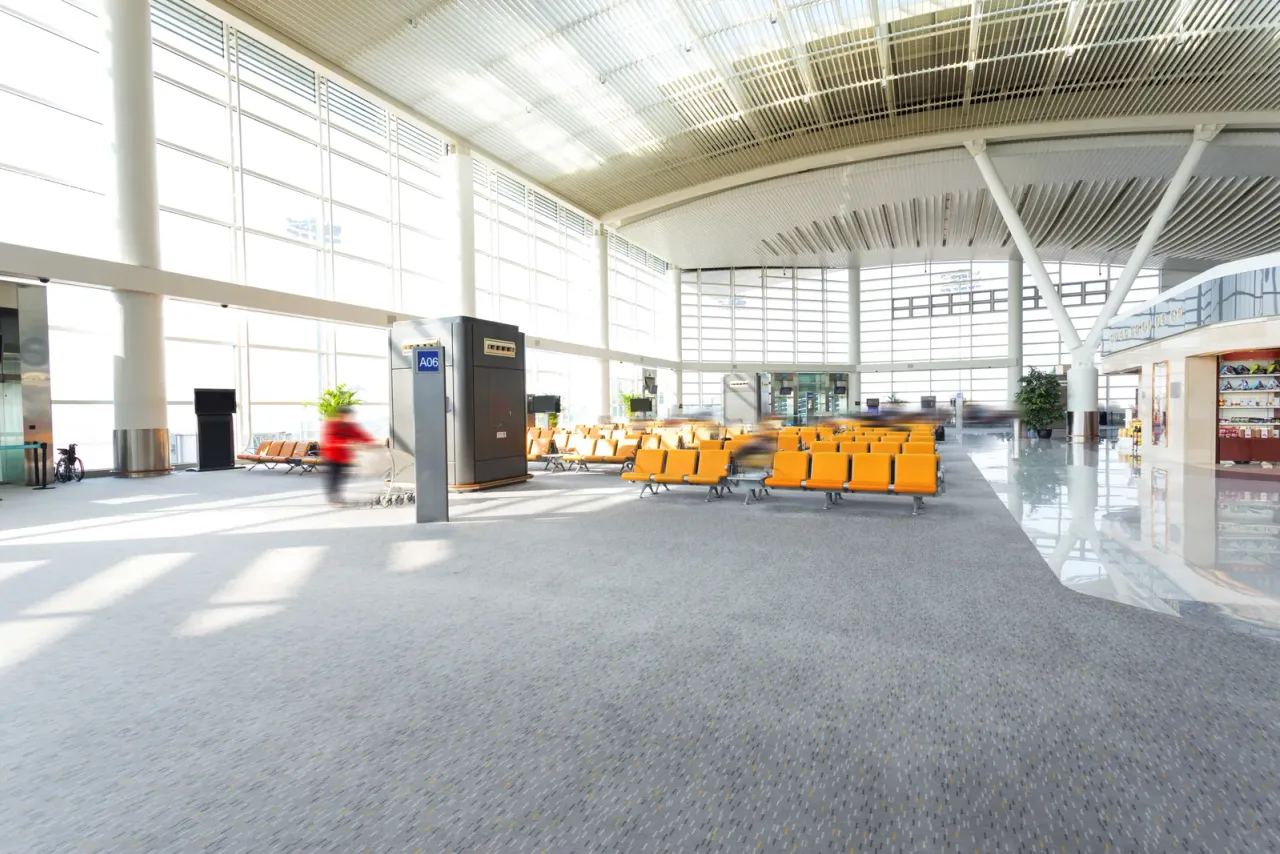
A terminal is many buildings in one: a lobby, a food court, a set of public restrooms and a waiting room for thousands of people, all open at once. The scope is written zone by zone so each area gets the right method at the right hour.
- Gates and concourses: seating rows, counters, charging points and carpet cleaned between departure banks, with deep work overnight
- Waiting areas and lounges: upholstery vacuumed, tables wiped and trash cleared so lounges stay usable at any hour
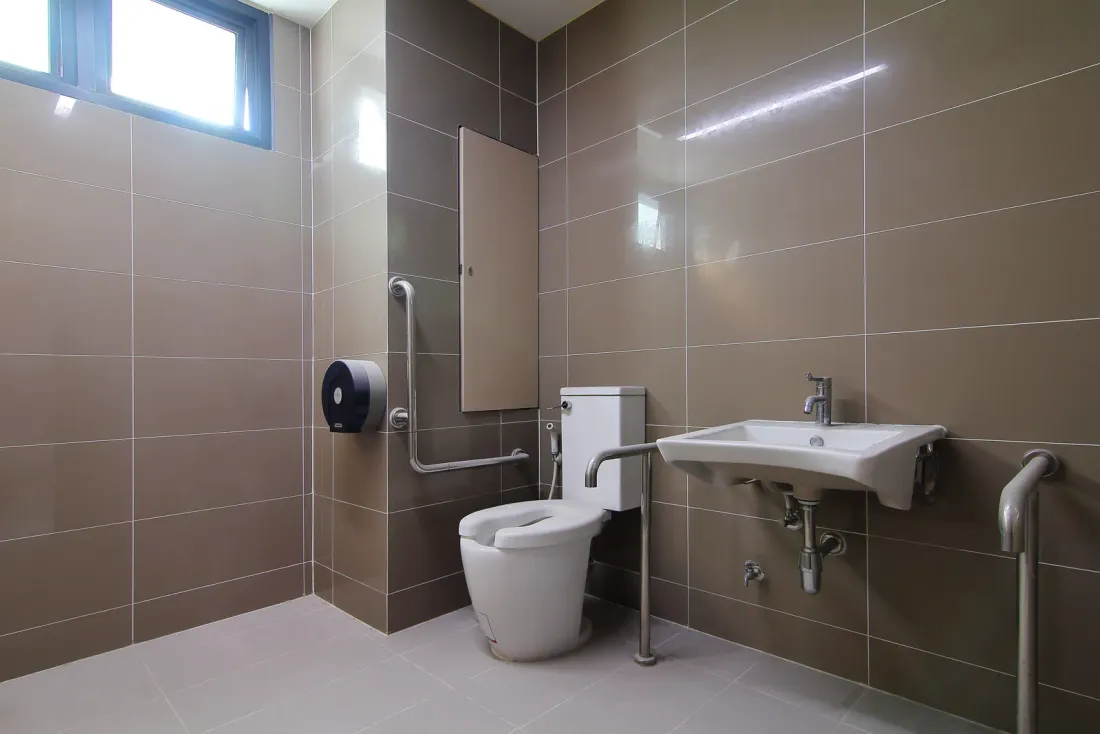
- Restrooms: cleaned, disinfected and restocked on a fixed rotation, with extra rounds when arrivals bunch together
- Floors: terrazzo and tile auto-scrubbed in quiet hours, gate carpet vacuumed daily and extracted on a schedule
- Touch points: handrails, kiosk screens, counters, elevator buttons and drinking fountains wiped with EPA-approved disinfectant
- Trash and liners: bins emptied before they overflow, with recycling kept separate
- Spills and hazards: wet-floor signs out at once, spills removed and the area checked before signs come down
- Coverage: discreet, uniformed staff on overnight and 24/7 shifts
Hangar cleaning services and general aviation buildings
Hangar floors collect oil, hydraulic fluid, tire marks and grit. Crews use absorbents first, then degreasers that suit the floor coating, and collect wash water rather than letting it run toward storm drains. Debris near hangar doors and ramp edges matters because loose objects can be drawn into engines or kicked up by propellers; the FAA's advisory circular on foreign object debris management (AC 150/5210-24) sets out how airports manage that risk, and cleaning crews follow the airport's own FOD procedures.
General aviation sites add pilot lounges, flight school classrooms, FBO lobbies and maintenance offices, and pressure washing for walkways and entries can be added to the same program.
Badges, escorts and tool control
Under TSA rules for airport operators (49 CFR Part 1542), anyone with unescorted access to secured areas needs airport-issued identification, which involves a fingerprint-based criminal history check and airport security training. EBS background-checks its own team members and works through each airport's badging process; at smaller fields, escorted access is sometimes used instead.
Beyond the checkpoint, tools and chemicals are counted in and out, carts are never left unattended, and anything that could be a prohibited item is kept under control. EBS brings experience from high-security and government facilities where the same discipline applies.
Safety rules in public and airside spaces
Airport cleaning carries risks that an office program does not. The written scope assigns a method to each one before the first shift.
| Risk | How the program handles it |
|---|---|
| Wet floors in crowded concourses | Wet work done in quiet hours, signs placed before mopping, low-moisture methods during the day |
| Blood or bodily fluids | A written procedure in line with Cal/OSHA's bloodborne pathogens standard (Title 8 section 5193) |
| Chemicals in public areas | Labeled containers and safety data sheets under the hazard communication standard (Title 8 section 5194) |
| Hot hangars in summer | Water, rest and cooling measures under the indoor heat rule (Title 8 section 3396) |
| Loose debris near aircraft | Bags closed, carts secured and the airport's FOD rules followed outside |
Staffing a building that never closes
Terminals stay open overnight, so programs run in shifts with a handoff at each change and a supervisor who knows what the last crew left open. Daytime staff follow the flight schedule, putting more people on restrooms and gates when departures stack up, while overnight crews take on floor machines, carpet and detail work. Absences are filled by backup staff, inspections are recorded in EBS's eHub system, and a priority line is answered around the clock.
Airport facility cleaning services across Southern California
EBS sends crews from its Corona office to commercial airports, general aviation fields and aerospace hangars in Orange County, Los Angeles County, Riverside County, San Bernardino County, San Diego County and the Coachella Valley. The regional airport cleaning services pages cover local conditions, from air cargo operations in the Inland Empire to coastal salt and desert heat. Every program starts with a free walkthrough.
Last reviewed October 9, 2026 by the EBS Maintenance team.
Questions we hear
Still not sure? A supervisor can answer at the walkthrough.
Request a walkthroughAll questionsDo your cleaners need airport security badges?
For unescorted work in secured areas, yes. The airport issues the badge after its own fingerprint-based background check and training, and EBS runs its own background checks before anyone is put forward. Small general aviation fields may allow escorted access instead, which the walkthrough confirms.
Can you clean hangars as well as terminals?
Yes. Hangar programs cover floor degreasing, debris control around doors and ramp edges, offices, pilot lounges and restrooms. Crews work around aircraft, never on them, and follow the operator's rules on where equipment can go and how wash water is collected.
How do you clean a terminal that never closes?
In shifts, with the heaviest work at night. Overnight crews handle floor machines, carpet care and detail cleaning while concourses are quiet, and day crews concentrate on restrooms, gates and spills as flights come and go, with a supervisor managing each handoff.
What happens when a passenger is sick in a gate area?
The area is blocked off and cleaned right away. Staff follow a written bodily fluid procedure, using protective equipment and an EPA-registered disinfectant with the right contact time, then reopen the space once it has been checked. Cleanup is logged so the supervisor can follow up.
Do you work at small general aviation airports?
Yes. Many programs at general aviation fields cover FBO lobbies, pilot lounges, flight school classrooms, maintenance offices and hangar floors, often on a few scheduled visits a week rather than continuous shifts. The scope is sized at the walkthrough.
Related services and guides
Free site walkthrough
Request a walkthrough
A few details and a supervisor calls you back the same business day.
- Call(949) 375-3305
- Emailinfo@ebsmaintenance.com
- HoursDaytime, evening, overnight and weekend schedules