
Round-the-clock operations
How Do You Clean a 24/7 Facility That Never Closes?
Dispatch centers, call centers, distribution buildings and terminals never empty out. Cleaning has to move around the operation instead of waiting for it to stop.
The short answer
Cleaning a 24/7 facility works by dividing the building into zones and cleaning each zone during its own lowest-use window, rather than waiting for a closed building that never comes. Restrooms, break rooms and entries get light passes on every shift, while heavy work such as floor scrubbing, carpet care and high dusting rotates through one zone at a time behind signage and barriers. Staffing follows the operation, usually a day crew, an evening crew and a smaller overnight crew, each with its own task list.
Cleaning a 24/7 facility starts with zones, not floor plans
A floor plan shows rooms; a zone plan shows use. Walk the site with the operations lead and mark each area by occupancy pattern, sensitivity and the window when it is quietest. That window, not the clock on the wall, sets when each zone is cleaned.
| Zone | Quietest window | Cleaning approach |
|---|---|---|
| Dispatch or control room | Mid-shift lulls, never at shift change | Detail cleaning by escort, one console bank at a time, no wet work near equipment |
| Call center floor | Overnight, when staffing is lowest | Clean vacant rows and rotate as agents move; vacuum with quiet, battery-powered equipment |
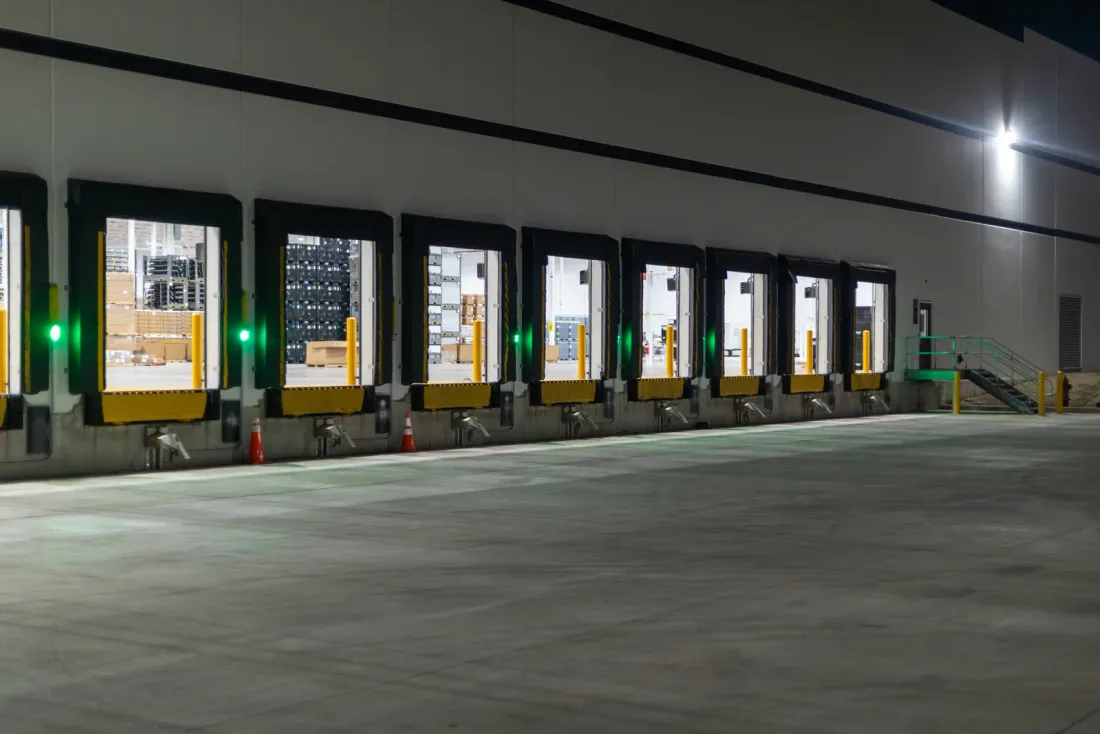
| Distribution floor and docks | Between waves or during shift handover | Ride-on scrubbing in lanes released by the operations lead |
| Terminal or public waiting area | Late night, between departures or arrivals | Section-by-section floor care with barriers; constant litter and restroom patrol |
| Restrooms and break rooms | No true quiet window | Short, frequent passes on every shift; deep cleans done one room at a time with an alternate open |
| Offices and training rooms | Evenings and weekends | Conventional nightly cleaning |
Rolling schedules and the three-shift split
Round-the-clock janitorial work is easiest to manage when each shift owns a defined list, so tasks are neither skipped nor done three times. A common split looks like this:
- Day crew: restroom and break room checks, lobby and entry glass, spill response, trash at peak points
- Evening crew: full cleaning of offices and support areas as day staff leave, restroom detail, break room reset
- Overnight crew: floor scrubbing and burnishing in released zones, carpet care, high-touch disinfection, restocking before the morning rush
- Weekend or low-volume days: periodic projects such as high dusting, extraction and refinishing
Heavy floor work while people keep working
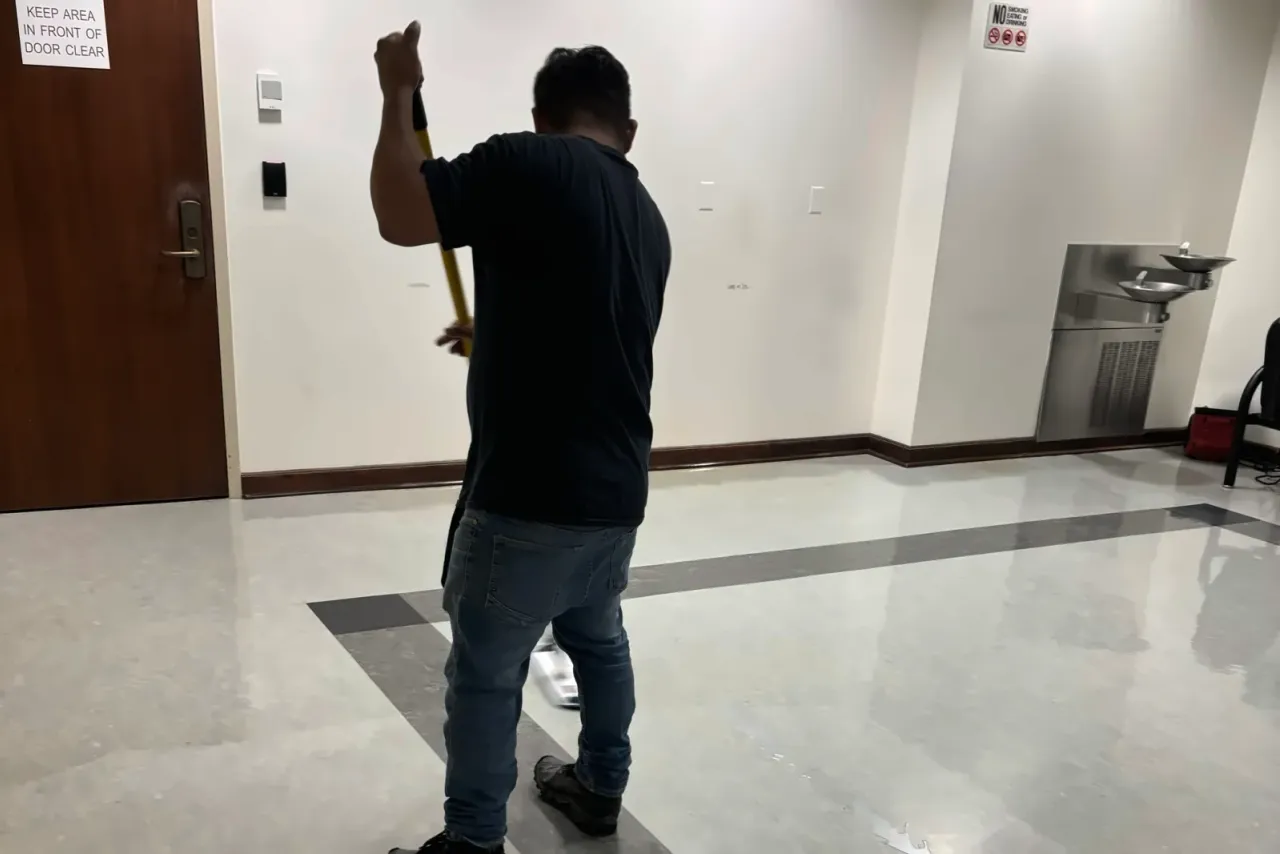
Floor care in a building that never closes is done in sections. The crew barricades one corridor or bay, posts wet-floor signs at every approach and leaves an alternate route open. Auto-scrubbers that pick up water as they go are far safer than a mop and bucket because the floor is dry within moments behind the machine.
Carpet in occupied areas suits low-moisture methods that dry quickly, with full hot water extraction scheduled for the quietest weekend window. Strip-and-refinish work needs the longest closure of any task, so it is planned around the operation's own maintenance or low-volume periods and phased one area at a time.
Shift handoffs, keys and logs
When three crews share one building, information gets lost between them. A written handoff log, kept at the janitorial closet or in the inspection app, records what each shift finished, what it could not reach and why, and any spill, damage or supply problem the next crew should know about.
Access control matters more in a facility with no closing time. Each crew member should carry only the keys and badges their zone requires, sign them out and back in, and know which rooms need an escort. Operations supervisors should know who is on site from the cleaning team at any hour.
How EBS staffs facilities that never close
EBS Maintenance runs daytime, evening, overnight and weekend schedules, so a 24/7 facility can be covered by crews matched to each window rather than one crew stretched across the clock. Field supervisors check work across shifts, eHub records inspections and corrective actions, and backup staff fill absences so a shift is not left uncovered.
For urgent problems at any hour, EBS offers 24/7 priority support with supervisor escalation. Crews come from the Corona office, are background-checked and uniformed, and are briefed on the operation's restricted areas before their first shift.
Related questions
Still not sure? A supervisor can answer at the walkthrough.
Request a walkthroughAll questionsWhen is the best time to clean a call center that never closes?
Overnight, when the fewest agents are on the floor. Supervisors usually consolidate agents into one section so the crew can clean vacant rows, then swap. Restrooms and break rooms still need short passes during the busy daytime shifts, when use is heaviest.
Can hard floors be refinished in a building that never closes?
Yes, in phases. The crew closes one section at a time, strips and applies finish, and keeps traffic off until the finish has dried enough to walk on, while an alternate route stays open. Larger areas are spread over several nights or weekends to keep the operation moving.
How do you keep cleaners out of restricted operational areas?
Write the restricted areas into the scope, limit keys and badges to the zones each crew member needs, and require an escort for control rooms, secure storage and equipment spaces. Brief every new cleaner on site rules before the first shift and record any escorted entries.
Does a 24/7 site need a day porter as well as a night crew?
Usually yes. In a building that is busy around the clock, restrooms, break rooms and entries need attention during daytime peaks, not only after hours. A day porter or daytime cleaner handles those checks and responds to spills while the evening and overnight crews do the heavier work.
Keep reading
Free site walkthrough
Talk to EBS about your facility
A few details and a supervisor calls you back the same business day.
- Call(949) 375-3305
- Emailinfo@ebsmaintenance.com
- HoursDaytime, evening, overnight and weekend schedules