
Life sciences
Pharmaceutical and Biotech Cleanroom Cleaning in Orange County
What pharma and biotech quality teams should expect when a contract crew cleans their controlled rooms, from written procedures to the log entry.
The short answer
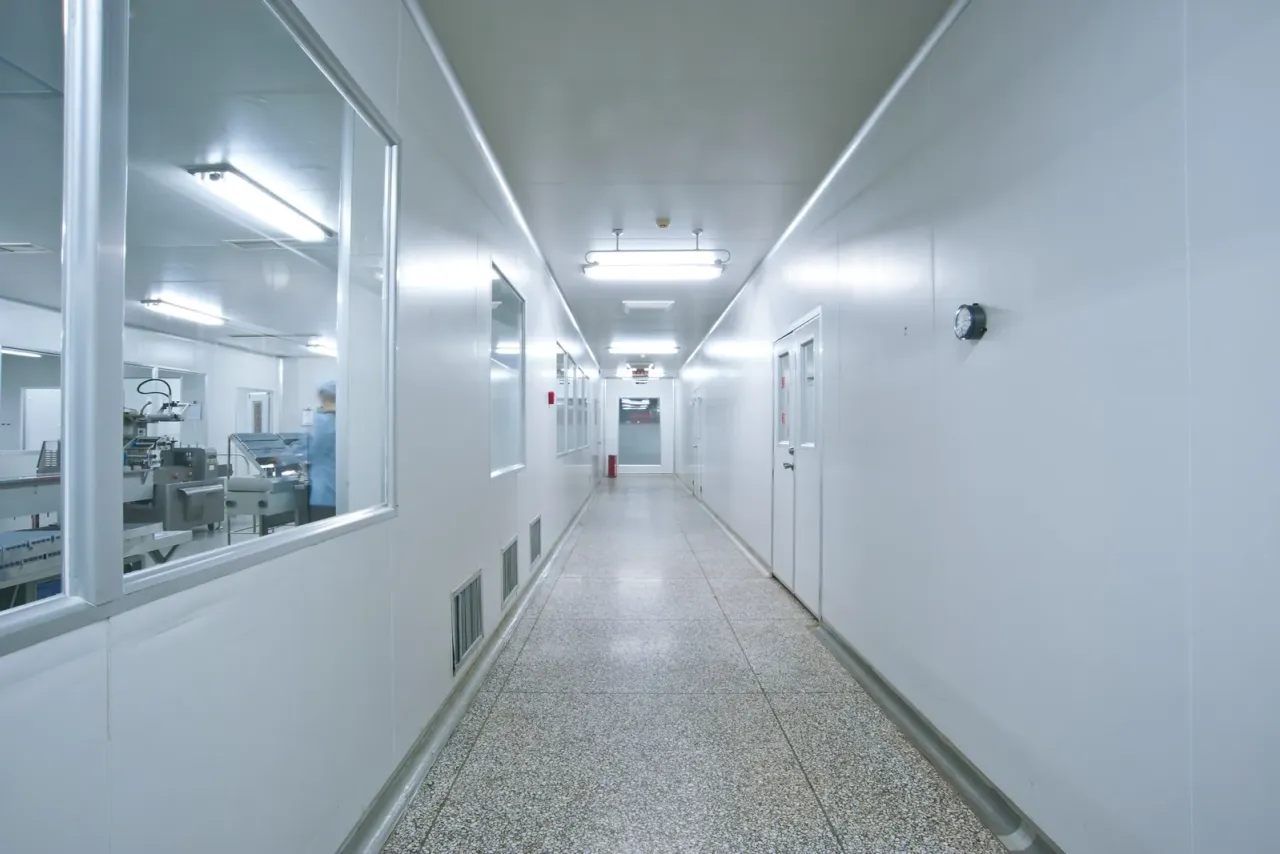
Pharmaceutical and biotech cleanroom cleaning in Orange County is part of each company's quality system, not a janitorial add-on. The contract crew follows the site's written sanitation procedures, gowns to the room's classification, cleans in a fixed order with approved disinfectants and sporicides, and records every task so it can be shown to an FDA investigator or a customer auditor. Production equipment and cleaning validation stay with the manufacturer; the crew owns the room surfaces.
Why pharma and biotech rooms are cleaned differently
In an office, a missed surface is a complaint. In a drug or biologics suite it can be a deviation, an investigation and, in the worst case, a rejected batch. That is why regulators treat cleaning as a controlled process. Under the FDA's drug manufacturing rules, 21 CFR 211.56 requires written procedures that assign responsibility for sanitation and describe schedules, methods, equipment and materials, and it states that those procedures apply to contractors as well as employees.
In practice, that means a cleaning contractor in a GMP facility works from the client's procedures, is trained on them before entering, and leaves a record of what was done. A crew that improvises, even with good products, creates a gap in the quality system.
Where pharmaceutical and biotech cleanroom cleaning happens in Orange County
Much of Orange County's life sciences activity sits in Central County, around the Irvine Spectrum and the research community near UC Irvine, with medical device manufacturing spread through South County. The rooms that need controlled cleaning range widely: fill-and-finish and compounding suites, cell culture labs, device assembly rooms, and smaller biotech companies leasing lab suites in multi-tenant research buildings.
Hospital and outpatient pharmacies that prepare sterile compounded medications add another group, governed by USP chapter 797 rather than manufacturing rules. Each of these settings asks for a different program, which is why a contractor's first job is to learn which rules apply to each room.
The rules behind a contract cleaning program
The table lists the main references a crew may be asked to work under. Your quality team decides which apply; the cleaning program follows from them.
| Setting | Main reference | What it means for cleaning |
|---|---|---|
| Drug and biologics manufacturing | 21 CFR Parts 210 and 211 (current good manufacturing practice) | Written sanitation procedures that cover contractors; documented schedules and materials |
| Sterile products sold in Europe | EU GMP Annex 1 | A contamination control strategy with defined disinfectant and sporicide use by cleanroom grade |
| Medical devices | 21 CFR Part 820 (FDA quality system requirements for devices) | Controls on the work environment wherever it could affect the product |
| Sterile compounding pharmacies | USP chapter 797 | Minimum frequencies for cleaning, disinfecting and sporicidal treatment by area |
| Research labs handling biological agents | Biosafety in Microbiological and Biomedical Laboratories (CDC and NIH) | Lab staff decontaminate work surfaces; cleaners do defined non-hazardous tasks |
| Any classified cleanroom | ISO 14644-1 classes | The particle class sets gowning, tools and how intensive the method is |
Step by step: a cleaning visit in a controlled suite
A visit in a controlled suite follows the same discipline every time. The order matters because cleaning moves particles, and the goal is to move them away from the product and out of the room.
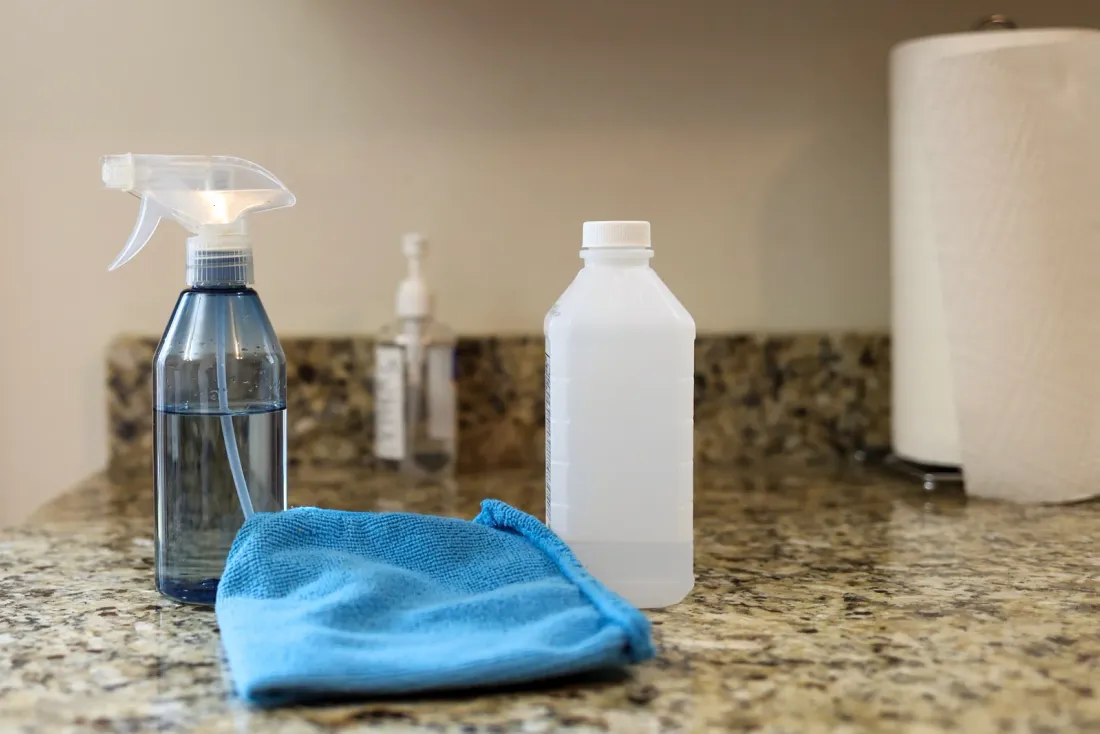
Disinfectant rotation is usually set by the client: a routine disinfectant for daily use and a sporicidal agent on a defined schedule, because spore-forming organisms survive many everyday products. Prepared solutions are labeled with the date and expiry, and the crew records the product and lot used so the log can be traced if an environmental monitoring result comes back high.
- Gown in the airlock to the site's procedure for that room's class
- Wipe down every bottle, bucket and tool before it passes into the suite
- Clean ceilings and walls before work surfaces, and surfaces before floors
- Work from the cleanest area toward the exit, with overlapping strokes
- Use separate mops and buckets for clean and soiled solution
- Leave the room with surfaces wet for the full contact time on the label
- Complete the log entry before leaving: room, tasks, product, lot, time, initials
Questions to ask before you sign with a cleaning provider
Experience with offices or even hospitals does not automatically carry into a GMP suite. These questions separate providers that understand controlled environments from those that will learn on your floor.
Ask who prepares and labels disinfectant solutions, and how training on your procedures is recorded for each person who enters, including backup staff. Ask how a deviation is reported (a dropped wipe in a Grade B room, a missed sporicide day) and how quickly your quality team hears about it. Ask whether crews ever touch product-contact equipment; in most facilities the answer should be no. Finally, ask to see a sample log and service report, since that document is what your auditors will review.
EBS cleanroom programs for Orange County sites
EBS Maintenance runs cleanroom programs aligned with ISO and GMP requirements: crews gown and follow the site's entry and exit procedures, use HEPA-filtered vacuums and lint-free materials, and complete cleaning logs and service reports for audit readiness. Team members are trained and background-checked, and supervisors stay in contact with your quality lead. Crews reach Irvine and the rest of Orange County from the Corona office. Call (949) 375-3305 to arrange a walkthrough.
Related questions
Still not sure? A supervisor can answer at the walkthrough.
Request a walkthroughAll questionsCan an outside contractor clean a GMP cleanroom?
Yes, and many manufacturers use contractors. FDA rules require the same written sanitation procedures for contractors as for employees, so the contractor must be trained on your procedures, follow them exactly and keep records your quality team can review.
Who cleans the production equipment in a pharma suite?
Normally the manufacturer's own trained staff. Product-contact equipment is covered by validated cleaning procedures, which sit outside a contract cleaning scope. The contract crew cleans room surfaces such as floors, walls, ceilings, pass-throughs and non-product-contact fixtures.
Do biotech research labs need cleanroom-level cleaning?
Not always. Many research labs are not classified cleanrooms and need careful lab cleaning rather than full gowning. Labs working with biological agents follow biosafety practices in which researchers decontaminate benches, while the cleaning crew handles floors, sinks, trash outside biohazard streams and shared areas.
Keep reading
Free site walkthrough
Talk to EBS about your facility
A few details and a supervisor calls you back the same business day.
- Call(949) 375-3305
- Emailinfo@ebsmaintenance.com
- HoursDaytime, evening, overnight and weekend schedules