
GMP recordkeeping
What Does GMP Require for Cleaning Records?
In a GMP facility, a clean that was not recorded properly is treated as a clean that did not happen. Here is what the record has to show.
The short answer
GMP cleaning documentation must prove that approved written procedures exist and were followed: who cleaned which room or piece of equipment, when, with which agent and lot, and who checked the work. For U.S. drug makers, 21 CFR 211.56 requires written sanitation procedures that also bind contractors, 21 CFR 211.182 requires signed and dated equipment cleaning logs, and 21 CFR 211.180 sets retention. Entries must be attributable, legible, contemporaneous, original and accurate, on paper or in a system that meets 21 CFR Part 11.
Which rules require GMP cleaning documentation?
For finished pharmaceuticals, the requirements sit in 21 CFR Part 211, the current good manufacturing practice regulation. Medical device makers now work under FDA's Quality Management System Regulation in 21 CFR Part 820, which since February 2, 2026 incorporates ISO 13485:2016 by reference. In Europe, EudraLex Volume 4 and its Annex 1 apply.
| Section | What it requires |
|---|---|
| 21 CFR 211.56(b) | Written sanitation procedures naming who is responsible and describing schedules, methods, equipment and materials, and those procedures must be followed |
| 21 CFR 211.56(d) | Sanitation procedures apply to contractors and temporary staff as well as full-time employees |
| 21 CFR 211.67 | Written procedures for cleaning and maintaining equipment, with records kept |
| 21 CFR 211.182 | Equipment cleaning and use log showing date, time, product and lot, signed or initialed by the person who cleaned and the person who checked |
| 21 CFR 211.180 | Retention and availability of records for inspection |
| 21 CFR Part 11 | Controls for electronic records and electronic signatures |
What belongs in a GMP cleaning log?
A room or equipment log should let an auditor reconstruct the clean without asking anyone. If a field is not needed for a given room, the form should say so rather than leaving a blank that invites questions.
- Room or equipment identifier, matching the SOP and floor plan
- Date, start time and finish time
- Tasks completed, or the SOP number and the steps performed
- Agent name, concentration, lot number and expiry
- Preparation date and in-use expiry of any diluted solution
- Whether the sporicide step was performed
- Signature or initials of the person who cleaned
- Signature of the verifier, where the SOP requires a second check
- Comments, including anything not completed and why
Supporting records auditors ask for next
A clean log rarely stands alone. An auditor who samples a day of entries will often ask for the disinfectant preparation log for the same day, the version of the SOP that was in effect, and the training record showing that each person who signed was trained on that version. Training in the specific operations and in CGMP is required by 21 CFR 211.25, and the training file is how a firm proves it for contractors as well as employees.
Beyond that, expect requests for gowning qualification records, deviation reports and corrective actions linked to cleaning, disinfectant efficacy study reports, change control records for any new agent or frequency, and environmental monitoring trends for the rooms in question. Equipment status labels, showing when an item was cleaned and how long it may stand before reuse, are part of the same paper trail.
Good documentation practice at the point of cleaning
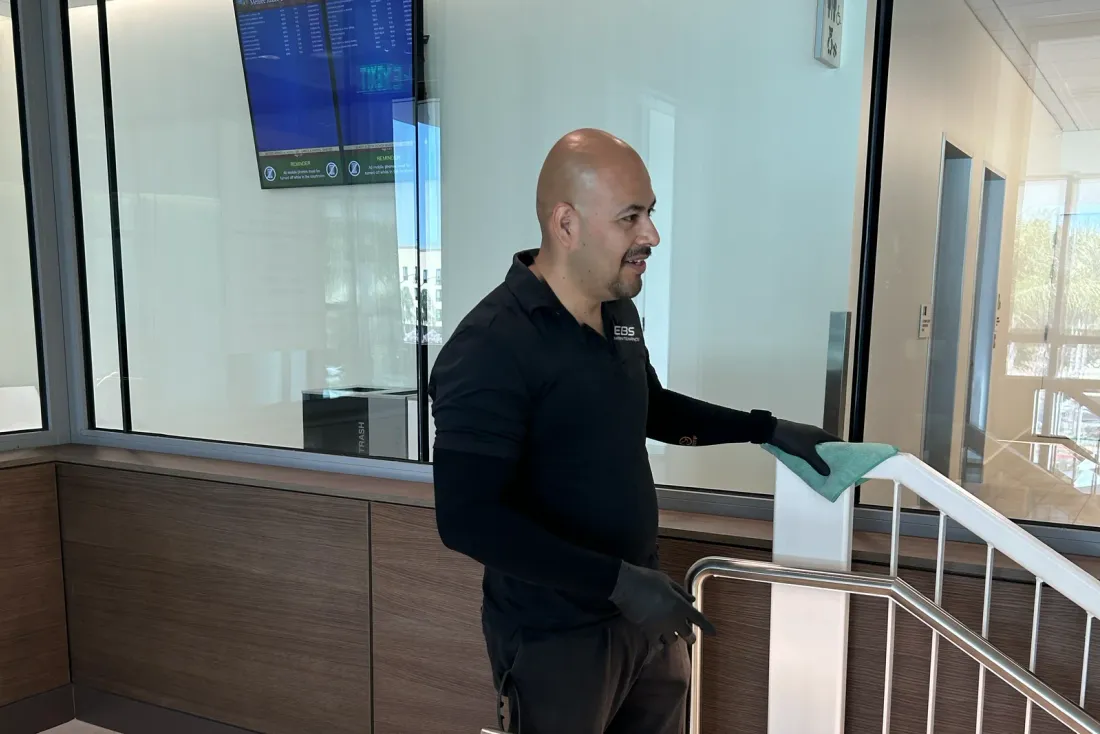
FDA's 2018 guidance on data integrity describes the standard with the acronym ALCOA: records must be attributable, legible, contemporaneously recorded, original or a true copy, and accurate. On a cleaning crew that translates into a handful of habits, and most audit findings come from breaking one of them.
| Error | Correct practice |
|---|---|
| Signing the log before the task is done | Record each entry at the time the work is completed |
| Filling in a missed entry the next day | Leave it, report it, and handle it as a deviation |
| Correction fluid or overwriting | Single line through the error, with initials, date and reason |
| Blank fields | Enter N/A with initials where a step does not apply |
| Initials nobody can identify | Keep a signature log matching initials to names |
| Shared logins on an electronic system | Unique credentials and an audit trail for every user |
Cleaning validation records are a separate file
Cleaning validation proves that a cleaning process for product-contact equipment removes residues of the previous product, detergent and microorganisms to set limits, usually by swab or rinse sampling. FDA's inspection guide on validation of cleaning processes has shaped expectations here since 1993. Those protocols and reports belong to the manufacturer's validation program. Routine facility cleaning of floors, walls and room surfaces is documented through logs and monitoring instead, and a cleaning contractor's records sit on that side of the line.
How EBS documents cleanroom visits
Every EBS cleanroom program comes with detailed cleaning logs and service reports, so the record of each visit exists when an auditor asks for it. Supervisors inspect through the eHub system, which tracks follow-up and corrective actions to completion. If your quality unit requires its own log forms, those forms are written into the scope at the walkthrough so crews complete them as part of each clean.
Related questions
Still not sure? A supervisor can answer at the walkthrough.
Request a walkthroughAll questionsHow long must GMP cleaning records be kept?
Records tied to a batch must be kept at least one year after the batch's expiration date under 21 CFR 211.180, or three years after distribution for certain over-the-counter products without expiration dating. Many firms keep cleaning logs longer under their own retention schedules, and the records must be available at the site for inspection throughout.
Can a cleaning contractor use its own log forms?
Yes, if the facility's quality unit approves them. Under 21 CFR 211.22 the quality control unit approves procedures that affect product quality, which includes the forms used to record them. Many sites simply require contractors to complete the site's own controlled forms so every room log looks the same.
Are electronic cleaning logs acceptable under GMP?
Yes, when the system meets 21 CFR Part 11. That means a validated system, unique user credentials, secure audit trails that record who changed what and when, and electronic signatures linked to the person. A tablet app without audit trails or individual logins does not meet the standard.
What should happen when a scheduled clean is missed?
It should be recorded as a deviation, not covered over. The quality unit assesses whether product or the room was affected, decides whether extra cleaning or monitoring is needed, and documents the corrective action. Backfilling the log to make the missed clean look complete is a data integrity violation.
Keep reading
Free site walkthrough
Talk to EBS about your facility
A few details and a supervisor calls you back the same business day.
- Call(949) 375-3305
- Emailinfo@ebsmaintenance.com
- HoursDaytime, evening, overnight and weekend schedules