
Secure industrial sites
Aerospace and Defense Contractor Cleaning
Aerospace and defense sites ask more of a cleaning crew than most buildings: who may enter which room, what may be touched, and what a stray rivet or a dropped wipe can cost.
The short answer
Aerospace and defense contractor cleaning is ordinary commercial cleaning carried out inside a security and quality system that the site defines. Crews work only where their badge or escort allows, keep production floors free of foreign object debris, use approved methods in static-controlled and clean areas, and never handle controlled documents. A capable vendor treats those rules as the scope itself rather than as an add-on to it.
Why aerospace and defense contractor cleaning is its own discipline
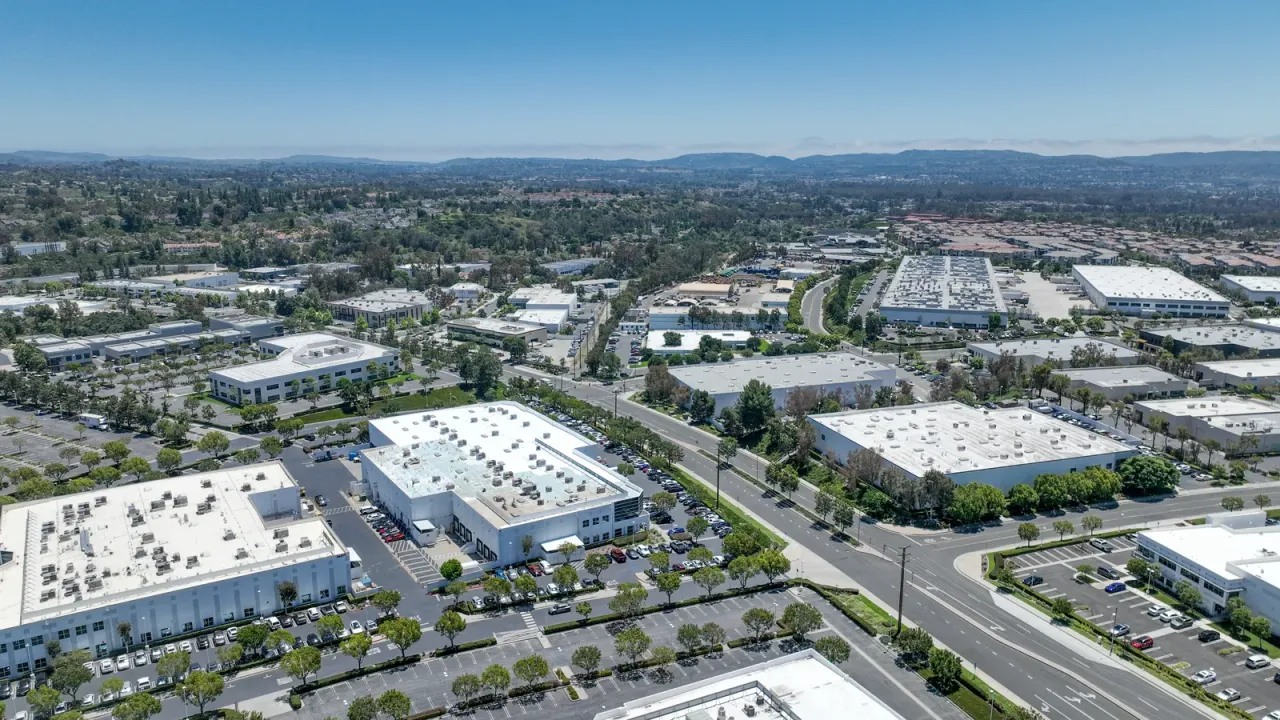
Southern California has a long-established aerospace and defense base, from the South Bay to San Diego County, and many of its facilities combine office space, production floors, labs, hangars and restricted program areas under one roof. A single building can hold a lobby anyone may enter, an engineering floor limited to employees, a gowned assembly room and a closed area that cleaners enter only under escort, if at all.
The tasks are familiar: trash, restrooms, floors, break rooms and high-touch surfaces. What changes is the envelope around them. Each zone has its own access rule, its own list of permitted products and tools and sometimes its own records. A crew that cleans the whole site the same way will sooner or later break one of those rules.
Access, escorts and the zone map
Begin with a zone map agreed with the site's security office: open areas, employee-only areas, escort-required areas and areas cleaners never enter. Note which zones are cleaned at night, which only in daytime when escorts are available, and who signs off on each. Badges go to named individuals and come back when a person leaves the account.
Staffing criteria come from the contractor's own obligations. Sites that hold export-controlled technical data under ITAR may restrict who can be present in certain areas based on U.S. person status, and cleared facilities set their own entry requirements for restricted space. The vendor's job is to supply people who meet the stated criteria, record how that was verified, and never send an unvetted substitute on a short-staffed night.
- Phones and cameras stay out of areas where the site prohibits them
- Doors, cages and cabinets are left exactly as they were found
- A lost badge or a propped door is reported to security right away
- Sign-in logs and escort records are kept current every shift
- Restricted rooms are never entered to finish a task early
Foreign object debris on production floors and hangars
In aircraft and spacecraft work, foreign object debris is anything that does not belong in the product or the work area: a rivet, a cable-tie tail, a fragment of scrubbing pad, a loose label. Debris like that can cause foreign object damage, and aerospace quality systems built on the AS9100 standard treat its prevention as a production control. Cleaning supports that control, and careless cleaning can become a source of debris itself.
FOD discipline for a cleaning crew looks like this: supplies and tools counted into and out of FOD-control zones, nothing loose in pockets, tethered or marked tools where the site asks for them, sweeping and vacuuming patterns that gather debris instead of scattering it, and liners tied before they are lifted. Crews should know the walk-down boundaries and follow the site's sweep schedule rather than their own.
Static-controlled assembly areas and cleanrooms
Electronics assembly and test areas are often ESD-protected, which means the floor, benches and carts form part of a static-control program, commonly run to ANSI/ESD S20.20. Standard floor finish or the wrong cleaner can change how static-dissipative flooring performs. Those rooms need products and methods approved by the flooring manufacturer and the site's ESD coordinator, and no stripping or refinishing without written sign-off.
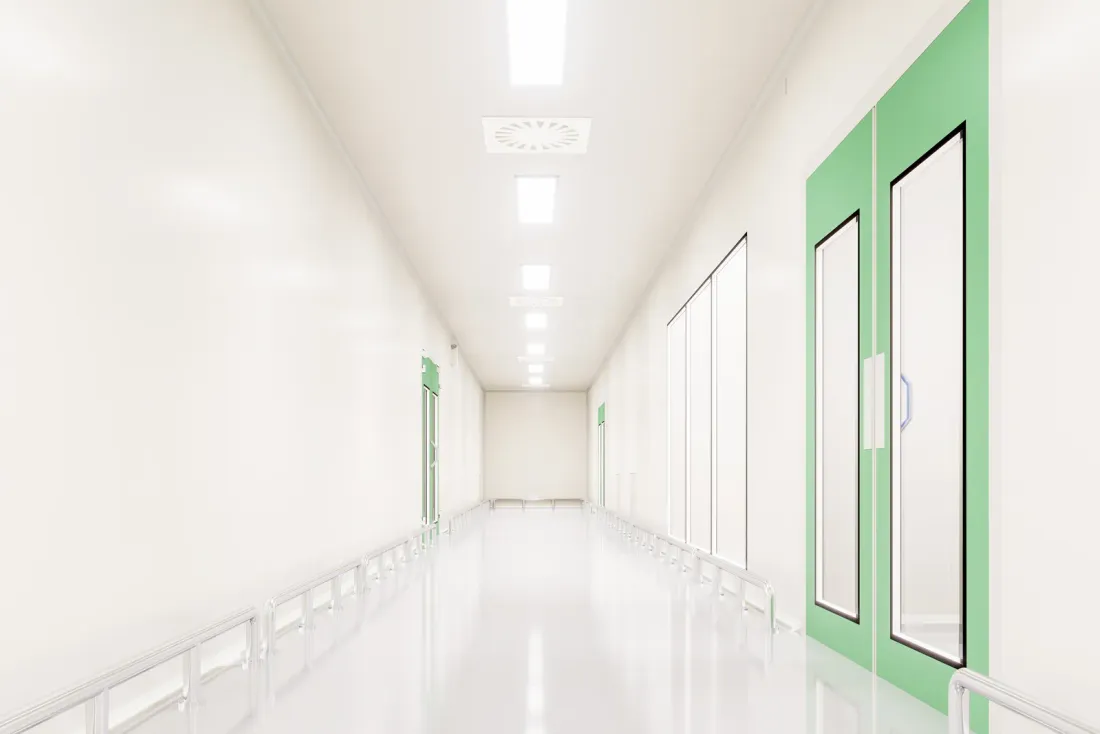
Optics, satellite and sensor programs may run in cleanrooms classified under ISO 14644. Those spaces call for gowning, non-shedding wipes and mops, filtered vacuums, a set cleaning sequence from the cleanest zone outward and a record of every session. They work best as a separate cleanroom program within the site contract, not as one more stop on the nightly janitorial route.
Drawings, screens and confidential trash
Engineering offices are full of drawings, printouts and notes that cleaners should neither read, move nor discard. The rules are simple and strict: wipe desks only where the occupant has cleared them, leave paper where it lies, do not wake screens or shift keyboards on engineering workstations, and empty only the containers marked as general trash. Shred bins and controlled waste follow the site's own disposal process, and the crew stays out of it.
How EBS approaches aerospace and defense sites
EBS Maintenance has experience in high-security and access-controlled environments, including government and secure-facility work, and L3Harris is among the client logos shown on the EBS site. At an aerospace or defense facility, EBS walks the site with your security and safety contacts, writes the zone rules into the scope and briefs background-checked, uniformed crews on them before the first shift. Supervisors record inspections and corrections in eHub, and gowned areas can sit under an ISO and GMP aligned cleanroom program with cleaning logs.
Related questions
Still not sure? A supervisor can answer at the walkthrough.
Request a walkthroughAll questionsDo cleaners need a security clearance to work at a defense contractor?
Not always. It depends on the area and the contract. Many sites clean unclassified space with background-checked staff and handle restricted rooms under escort, during escorted daytime windows, or with personnel who meet the site's own criteria. The contractor's security office sets the rule, and the cleaning vendor's job is to staff to it and document how each person was screened.
Can the regular janitorial crew clean an aerospace production floor?
Often, yes, for general floor care, trash and break areas, provided the crew is trained on the site's FOD and safety rules and cleans around equipment rather than on it. Machine surfaces, tooling, process equipment and anything under lockout belong to the operator's own trained staff, and the scope should say so plainly.
What belongs in a cleaning contract for a defense or aerospace site?
The zone map and access rules, staffing criteria and how they are verified, badge and key control, FOD and ESD requirements, the approved product list, record-keeping for gowned areas, and who inspects the work. Writing these down at the start prevents the most common failure: a well-meaning crew cleaning a room it was never cleared to enter.
Keep reading
Free site walkthrough
Talk to EBS about your facility
A few details and a supervisor calls you back the same business day.
- Call(949) 375-3305
- Emailinfo@ebsmaintenance.com
- HoursDaytime, evening, overnight and weekend schedules