
Cleanroom entry
What Is the Gowning Procedure for Cleanroom Cleaning Staff?
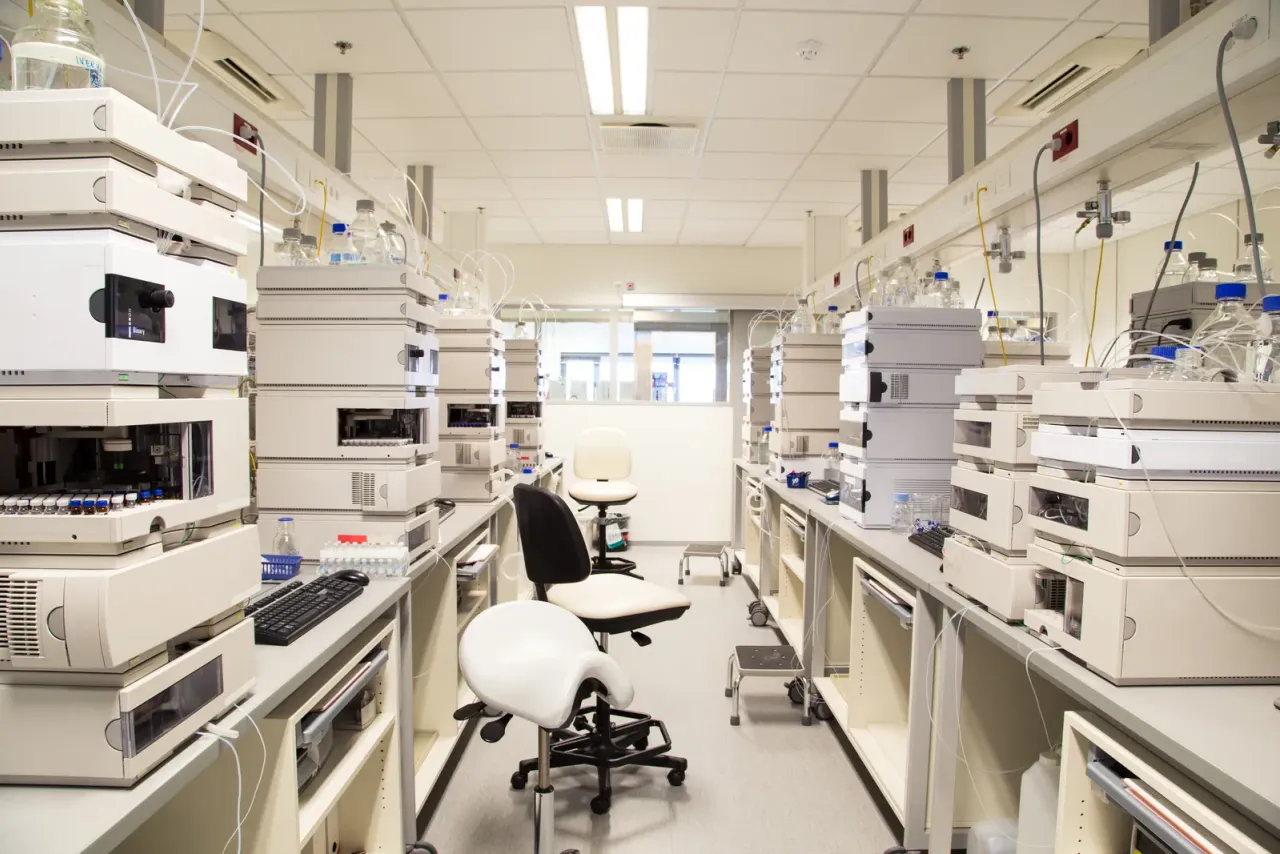
Cleaning staff gown like everyone else, with one extra problem: they bring carts, buckets and supplies through the same doors. Both need a procedure.
The short answer
A cleanroom gowning procedure puts garments on from the least clean item to the cleanest, so each layer covers the one beneath without touching anything dirty. Cleaning staff remove jewelry and outer clothing, wash their hands, then typically put on shoe covers, hair and beard covers and a mask, followed by a hood, coverall, boots, goggles and gloves, sanitizing gloves before entry. Leaving reverses the order in a set area. The exact garments and sequence come from the facility's SOP for each room class.
Before the gowning room: what stays outside
Gowning starts before anyone touches a garment. Personal items shed particles and carry microorganisms, so the preparation rules are strict and they apply to cleaning staff exactly as they apply to production staff.
- Jewelry, watches, phones, earbuds and badges on lanyards removed and stored
- Makeup, nail polish, artificial nails and strong fragrances avoided, as the SOP directs
- Outer jackets and street shoes left in the locker area; dedicated shoes or undergarments where required
- No food, drink, gum or tobacco brought past the entry point
- Rashes, sunburn, open sores or respiratory infections reported to a supervisor before entry
- Hands and forearms washed and dried with low-lint towels
The cleanroom gowning procedure, step by step
The sequence below reflects a common order for an ISO 7 room with a step-over bench. Hooded systems, ISO 8 rooms and sterile suites vary it, so the posted procedure at your door always wins. The principle never changes: work from head to toe, keep garments off the floor and touch the outside of a clean garment as little as possible. Garments are inspected before use: a torn package, a stained coverall or a size that bunches at the ankle goes back rather than into the room.
- Put on shoe covers, or cross the step-over bench one foot at a time as the SOP sets
- Put on a hair cover, and a beard cover where needed
- Put on the face mask
- Wash or sanitize hands again; some SOPs add a first pair of gloves here
- Put on the hood, tucking its skirt inside the coverall collar
- Step into the coverall without letting it touch the floor, and zip fully
- Put on boots over the coverall legs, fastening each on the clean side of the bench
- Put on goggles if the room requires them
- Put on gloves, pulled over the coverall cuffs
- Check the full gown in the mirror, then sanitize gloves before entering
Getting carts, tools and supplies through the door
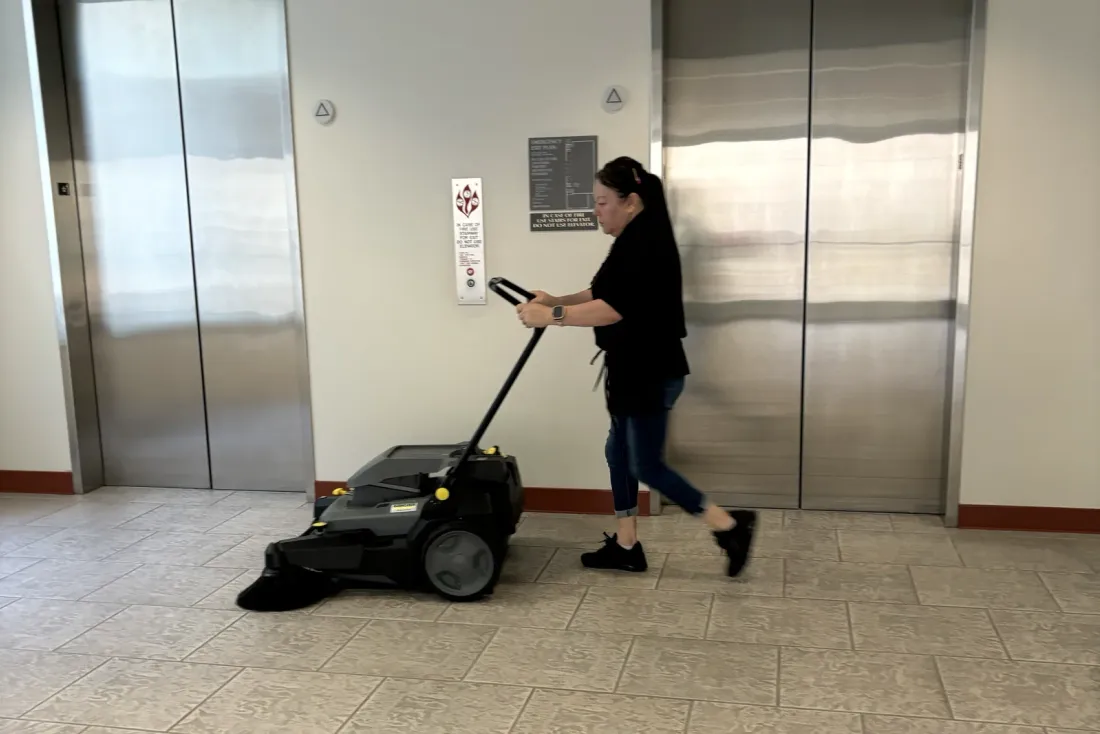
This is where cleaning crews differ from everyone else. Each item that goes in must be clean enough for the room it enters. Carts, buckets and mop frames are usually dedicated to the classified area and stored inside it. Supplies that must travel are wiped down with an approved agent and passed through an airlock or pass-through chamber, and outer packaging is removed in stages: the outer bag at the first transfer, the inner bag at the next.
Cardboard never enters, and neither do paper towels from the restroom dispenser or tools with wooden handles. Chemistry containers are wiped on the outside before transfer, and waste leaves by its own route, never back through the clean side of the gowning room.
Working gowned, and leaving
Once inside, movement stays slow and deliberate. Gloved hands do not touch the face, mask or goggles, staff do not lean on walls or sit on work surfaces, and gloves are sanitized often, especially after touching a door or waste container. A torn glove or garment means leaving and gowning again, not taping it up.
De-gowning reverses the order in the designated exit area: outer gloves first, then goggles to the cleaning bin, boots, coverall rolled inside-out away from the body, hood, mask and inner gloves, followed by hand washing. Single-use items go to waste; reusable garments go into the laundry bin for the cleanroom laundry. Re-entry normally means a fresh gown.
Gowning qualification and retraining
Reading the SOP does not qualify anyone to gown. Most facilities require a trainer to observe the full sequence, and aseptic manufacturers often add contact-plate sampling of gloves and garments to show the person can gown without contaminating the outside. Sterile compounding pharmacies follow USP chapter 797, which requires staff who clean and disinfect, even if they never compound, to be trained and qualified before working on their own.
Requalification typically follows a failed sample, a long absence, a change in garments or procedure, or the interval the SOP sets. A contractor's backup staff need the same qualification before their first shift, not after.
How EBS crews handle gowning
Full gowning and strict entry and exit procedures are standard in every EBS cleanroom program, alongside non-shedding tools, HEPA-filtered vacuums and lint-free cloths. EBS team members are trained and background-checked before assignment. At the walkthrough, a supervisor reviews your gowning procedure and transfer routes so the crew's equipment plan matches the airlocks and pass-throughs you actually have.
Related questions
Still not sure? A supervisor can answer at the walkthrough.
Request a walkthroughAll questionsDo cleaning staff gown differently from production staff?
Usually not. They follow the same garment sequence for each room class, because particles and microorganisms do not care who is wearing the coverall. The difference is the extra transfer procedure for carts, tools and supplies, and the waste route out of the room.
Can a cleanroom coverall be worn again after a break?
Only if the SOP allows it, and many do not. Some ISO 8 areas permit a frock or coverall to be hung in a designated spot and reused within a shift. Aseptic and ISO 7 suites typically require a fresh gown for every entry.
Why are gloves pulled over the coverall cuffs?
To close the gap at the wrist. A glove tucked under the sleeve leaves skin or an inner layer exposed when the arm extends, and that gap can release particles and skin flakes. Glove over cuff keeps a continuous barrier while the cleaner reaches for walls and ceilings.
How long does cleanroom gowning take?
It depends on the room and the person's practice, but it is never quick. Rushing is the most common cause of a gowning failure, so schedules should allow time to gown properly at the start of a shift and after every break.
Keep reading
Free site walkthrough
Talk to EBS about your facility
A few details and a supervisor calls you back the same business day.
- Call(949) 375-3305
- Emailinfo@ebsmaintenance.com
- HoursDaytime, evening, overnight and weekend schedules