
ISO 7 and ISO 8 compared
How Does ISO 7 Cleanroom Cleaning Differ From ISO 8?
The task list looks almost the same on paper. The difference is how tightly each step is controlled, and why the cleaner room is always done first.
The short answer
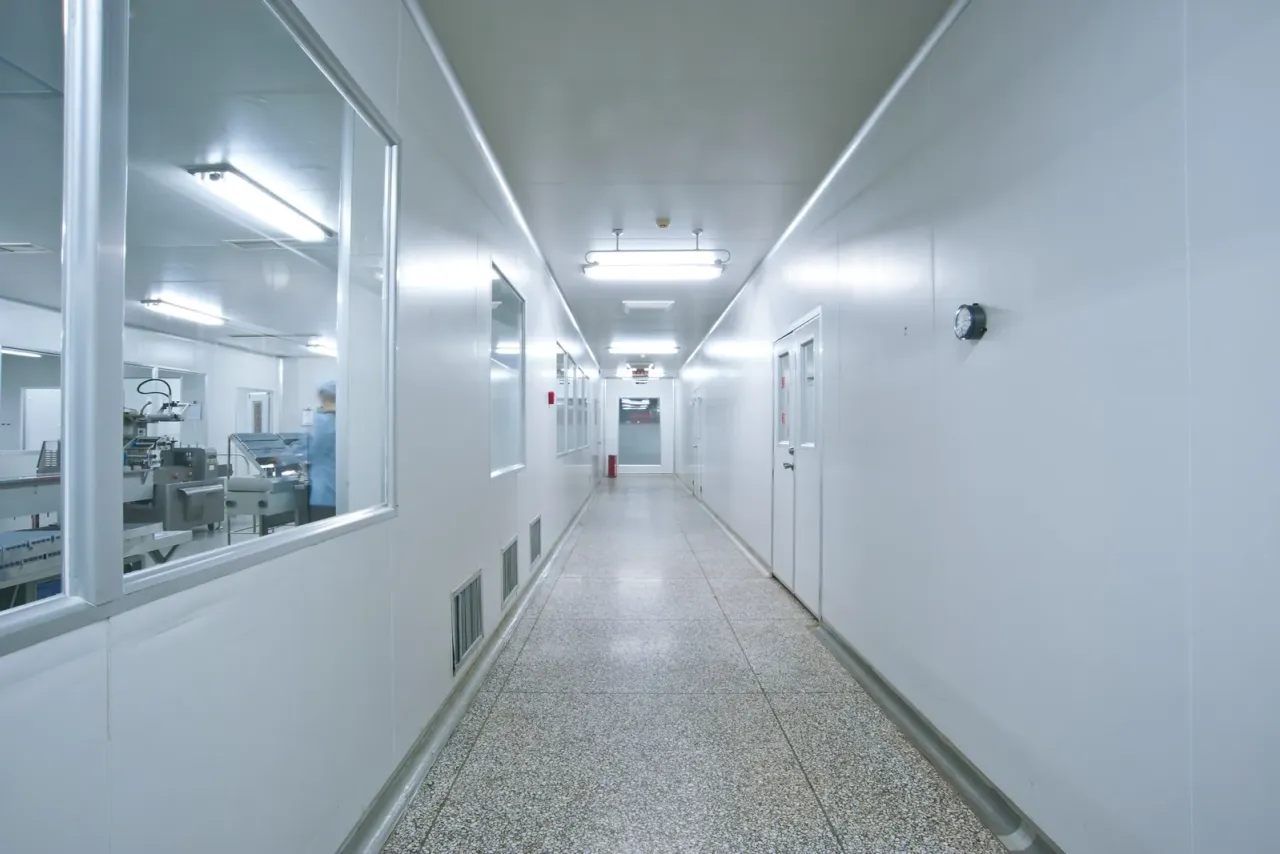
ISO 7 vs ISO 8 cleanroom cleaning differs mainly in control rather than in the task list. Both rooms get floors, walls, work surfaces and touchpoints cleaned, but an ISO 7 room allows one-tenth the airborne particles of an ISO 8 room, so it usually calls for fuller gowning, non-shedding or sterile wipers, a tighter disinfectant and sporicide schedule, more frequent cleaning and stricter records. ISO 8 rooms are often the ante-rooms and gowning rooms that protect the ISO 7 space next door.
What separates an ISO 7 room from an ISO 8 room?
Under ISO 14644-1, an ISO 7 room may hold up to 352,000 particles of 0.5 micron and larger per cubic meter and 2,930 of 5 microns and larger. ISO 8 allows 3,520,000 and 29,300. The cleaner room gets there with more filtered air: USP chapter 797, for example, sets a minimum of 30 air changes per hour for ISO 7 compounding rooms and 20 for ISO 8.
The rooms also play different roles. In a compounding pharmacy the ISO 7 buffer room holds the hood where sterile preparations are made, and the ISO 8 ante-room is where staff wash and garb. In sterile manufacturing under EU GMP Annex 1, Grade C rooms are ISO 7 at rest and Grade D rooms are ISO 8 at rest.
ISO 7 vs ISO 8 cleanroom cleaning, side by side
The comparison below shows how most quality teams separate the two classes. Individual SOPs differ, and a room's use can matter more than its class: an ISO 8 room with open product may be treated like an ISO 7 room.
| Factor | ISO 8 | ISO 7 |
|---|---|---|
| Typical role | Ante-rooms, gowning rooms, packaging, component prep | Buffer rooms, background to aseptic work, controlled processing |
| Gowning | Frock or coverall, hair cover, shoe covers, gloves, often a mask | Full coverall, hood or hair and beard covers, dedicated boots, mask, gloves, sometimes goggles |
| Wipers and mop heads | Low-lint; laundered systems are common | Non-shedding, often single-use or presaturated; sterile where work is aseptic |
| Disinfectant | Approved agent, sterility decided by risk assessment | Approved agent, sterile in aseptic suites |
| Sporicide | Monthly or longer if data supports it | Weekly to monthly |
| Walls and ceilings | Monthly to quarterly | Weekly to monthly |
| USP 797 surface action level | More than 50 CFU per sample | More than 5 CFU per sample |
| Records | Room log per clean | Room log plus agent lot, preparation date and verifier signature |
Where the two rooms meet
Most cross-contamination happens at the boundary. The rule is simple: clean the ISO 7 room first, then move outward to the ISO 8 room, never the reverse. Tools are dedicated by class, so a mop used in the ante-room never crosses into the buffer room, and buckets and handles are stored on the side of the door they belong to.
In compounding pharmacies, a line of demarcation in the ante-room separates the dirtier side from the side that opens into the buffer room, and garbing steps are arranged around it. Doors, door frames and pass-through chambers sit on the boundary too, so both faces need cleaning, and pass-through interiors are wiped before and after supplies move through.
When an ISO 8 room needs ISO 7 treatment
Some rooms that are certified ISO 8 or adjoin an ISO 7 space carry more risk than their class suggests. Treat them with the stricter program, or reclassify them, when any of these apply.
- The ante-room opens into a negative-pressure hazardous drug buffer room, where USP chapters 797 and 800 require the ante-room itself to be ISO 7
- Open product, components or sterile supplies are exposed in the room
- The room is a Grade C space that drops to ISO 8 in operation but must be ISO 7 at rest
- Monitoring shows recurring excursions or organisms also found in the adjacent ISO 7 room
- Maintenance or construction has just finished nearby
Staffing both classes with EBS
EBS cleanroom crews work to strict entry and exit procedures and full gowning, so moving from an ISO 7 room to an ISO 8 room follows the same order every shift. Programs are aligned with ISO and GMP requirements, use non-shedding tools and lint-free cloths, and keep cleaning logs and service reports for audits. A supervisor walks both classes with you before service starts and builds the scope around each room's procedure.
Related questions
Still not sure? A supervisor can answer at the walkthrough.
Request a walkthroughAll questionsCan the same cleaner work in ISO 7 and ISO 8 rooms on one shift?
Yes, if the sequence and garments are right. The cleaner finishes the ISO 7 room first, then moves to the ISO 8 room with that class's dedicated tools. Going back into the ISO 7 room afterward usually means de-gowning and gowning again in full, as the facility's procedure requires.
Do ISO 8 rooms need sterile disinfectants?
Not always. EU GMP Annex 1 expects sterile agents in Grade A and B areas and asks manufacturers to decide by risk assessment for Grade C and D. Many sites still use sterile or sterile-filtered agents in ISO 8 rooms that feed aseptic suites, because the cost difference is small compared with an investigation.
Why does ISO 7 cleaning take longer than ISO 8?
Each step is slower and more controlled. Gowning takes longer, wipers are folded and turned to a fresh face more often, strokes are slower to avoid stirring particles, and more detail is recorded on the log. Walls and overheads also come around more often, which adds labor across the month.
Is ISO 7 always required for sterile compounding?
For the buffer room, yes. Under USP chapter 797 the hood or isolator provides the ISO 5 work zone, the buffer room around it must be at least ISO 7, and the ante-room at least ISO 8, rising to ISO 7 when it opens into a negative-pressure hazardous drug room.
Keep reading
Free site walkthrough
Talk to EBS about your facility
A few details and a supervisor calls you back the same business day.
- Call(949) 375-3305
- Emailinfo@ebsmaintenance.com
- HoursDaytime, evening, overnight and weekend schedules