
Strip and wax pricing
How Much Does Commercial Floor Stripping and Waxing Cost?
A full strip and refinish is one of the most labor-heavy jobs in floor care. Knowing what drives it helps you buy the right service at the right interval.
The short answer
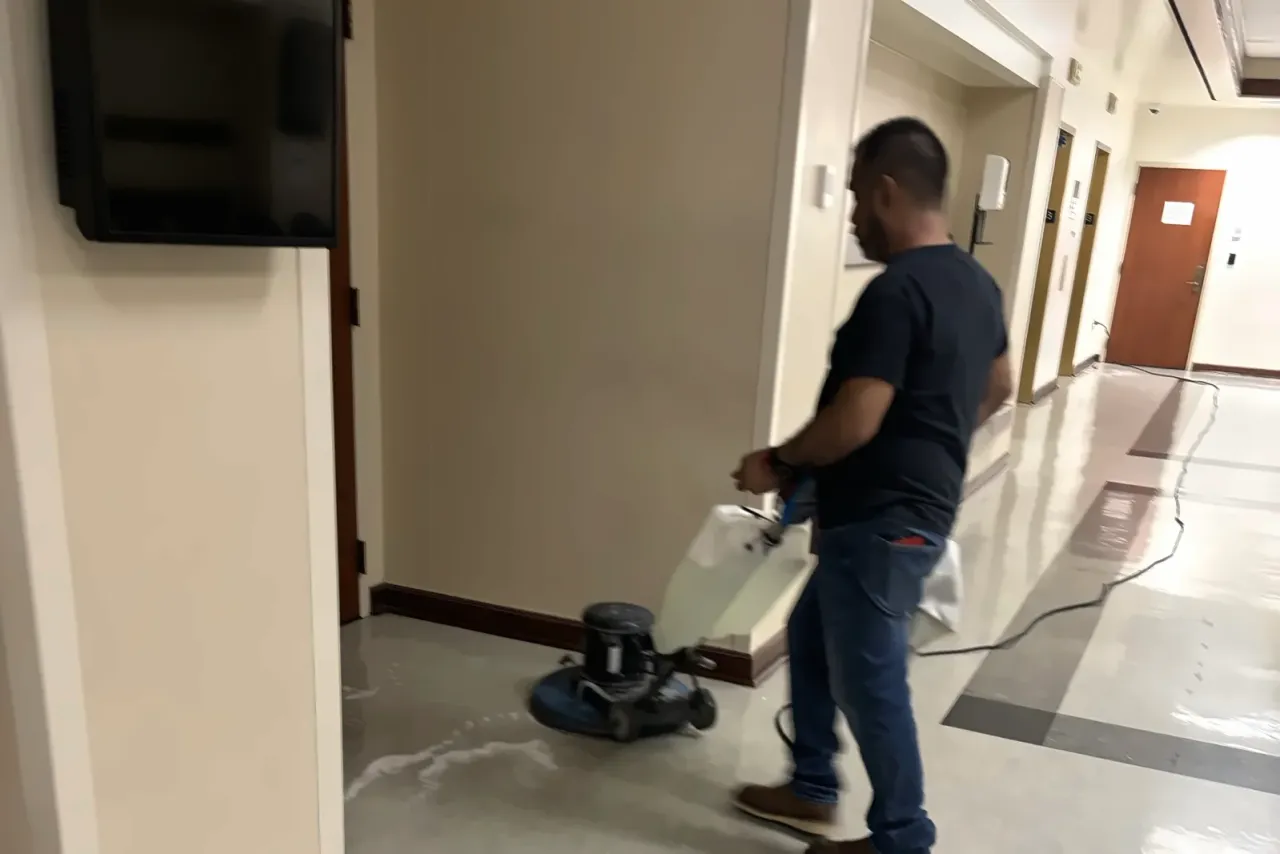
Floor stripping and waxing cost is driven by square footage, how much old finish has built up, how many coats of new finish go down, how much furniture must be moved and when the crew can get in, since stripping usually happens after hours or on weekends. Many small rooms cost more per square foot than one open corridor, and neglected floors take longer. A scrub and recoat between full strips costs less and is often all a floor needs.
What a full strip and refinish involves
The price reflects a long sequence of steps, and drying time between coats is the real bottleneck. A crew of two or three can spend a whole night on an area that takes minutes to vacuum. The usual order of work is below; skipping a step, especially the rinse, is the most common reason a new finish fails early.
- Move furniture and protect walls, baseboards and carpet edges
- Dust mop and apply stripper, letting it dwell as the label directs
- Scrub with a low-speed machine and stripping pads, then hand-strip the edges
- Pick up the slurry with a wet vacuum and rinse, usually twice
- Let the floor dry fully, then apply sealer if specified
- Apply several thin coats of finish, with drying time between each
- Return furniture and let the finish cure before any burnishing
What drives floor stripping and waxing cost?
Area is the obvious starting point, but layout and condition often matter more. Corridors and open rooms let a machine run in long passes, while small offices, exam rooms and classrooms full of furniture are mostly edge work. A floor with years of built-up or yellowed finish may need two strip passes.
| Driver | Why it changes the price |
|---|---|
| Area and layout | Open space is fast; many small rooms mean slow edge work |
| Finish buildup | Heavy or contaminated layers may need a second strip pass |
| Coats specified | Each coat adds drying time and labor |
| Furniture and fixtures | Moving desks, shelving or displays can rival the floor work |
| Floor condition | Damaged tiles, open seams and stains slow the job |
| Access window | Nights and weekends, plus drying time before reopening |
| Job size | Small jobs carry setup, travel and minimum crew costs |
Strip and wax, scrub and recoat, or burnish?
The cheapest full strip is the one you postpone with good maintenance. A scrub and recoat removes the scuffed top layers and adds fresh coats without going down to bare tile, and regular burnishing restores gloss between visits. Together they can stretch the interval between full strips considerably, which is where most of the savings in a floor program come from. Interval planning by traffic level is covered in a separate answer on VCT cycles.
| Service | What it does | When it fits | Relative cost |
|---|---|---|---|
| Strip and refinish | Removes all finish to the tile, then reseals and recoats | Finish worn through, yellowed or heavily built up | Highest |
| Scrub and recoat | Abrades the top coats and adds new ones | Finish dull and scuffed but intact at the base | Moderate |
| Burnish | High-speed buffing to restore gloss | Routine upkeep between the other two | Lowest per visit |
VCT strip and wax cost compared with other floors
Vinyl composition tile is the floor strip-and-wax programs were built for, and it is the easiest to price. Sheet vinyl is similar but needs care at seams. Many luxury vinyl tile and plank products are not meant to be stripped and waxed at all; their manufacturers specify a factory wear layer and gentler maintenance, so check the product guide before buying the service. Terrazzo, stone and concrete use different chemistry, such as sealers or polishing, and are quoted differently.
Older buildings need one more check. Federal and Cal/OSHA asbestos rules treat asphalt and vinyl flooring installed in 1980 or earlier as asbestos-containing unless testing shows otherwise, and Title 8 section 5208 restricts how such floors may be maintained: no sanding, wet stripping with low-abrasion pads at low machine speed, and burnishing only where enough finish protects the tile. Testing and method limits can change both the price and the schedule.
What to write into a strip and wax work order
Most disputes after a floor job come from what was assumed rather than what was written down. A one-page work order that covers these points keeps every bid comparable and gives you something specific to inspect against when the crew finishes.
- Square footage by room, floor type and approximate age
- Number of sealer and finish coats
- Who moves furniture and who resets it
- Access window and the dry time needed before re-entry
- Protection for walls, baseboards and adjoining carpet
- How stripper slurry is disposed of (never into a storm drain)
- Burnishing or recoat schedule after the finish cures
How EBS handles periodic floor refinishing
Floor care at EBS runs on its own calendar, separate from nightly cleaning: vinyl and tile are stripped and waxed or burnished, carpets are extracted, and cycles are set quarterly, semi-annually or annually. Work is booked for evenings, overnight or weekends so the finish has time to dry before the building reopens. During the walkthrough a supervisor notes floor type, condition and furniture, and the proposal sets out the area and the method.
Related questions
Still not sure? A supervisor can answer at the walkthrough.
Request a walkthroughAll questionsIs floor refinishing cost per square foot lower on bigger jobs?
Usually. Setup, travel, equipment and a minimum crew cost roughly the same whether the job is a single suite or a whole floor, so larger and more open areas spread those costs further. Small jobs often carry a minimum charge.
Can the building stay open while floors are stripped?
Partly. Work can be phased zone by zone with barriers and signage, but each zone stays closed until the finish is dry and safe to walk on, and stripper odor can drift into occupied areas. That is why most commercial stripping is scheduled after hours.
How many coats of finish should we pay for?
It depends on traffic. Busier floors benefit from more coats, which give the finish depth to survive burnishing and scuffing longer. Whatever the number, ask each bidder to state it in writing, because a quote with fewer coats will always look cheaper.
Does floor wax make a floor slippery?
Not if the finish is put down properly. Many commercial finishes are labeled slip resistant based on ASTM D2047 testing. Slippery floors usually come from too much finish, stripper residue left by poor rinsing, or buffing a finish that has not cured.
Keep reading
Free site walkthrough
Talk to EBS about your facility
A few details and a supervisor calls you back the same business day.
- Call(949) 375-3305
- Emailinfo@ebsmaintenance.com
- HoursDaytime, evening, overnight and weekend schedules