
Carpet cleaning pricing
How Much Does Commercial Carpet Cleaning Cost?
Carpet pricing comes down to how much soil has to come out, how the crew gets to it and how long the area can sit wet.
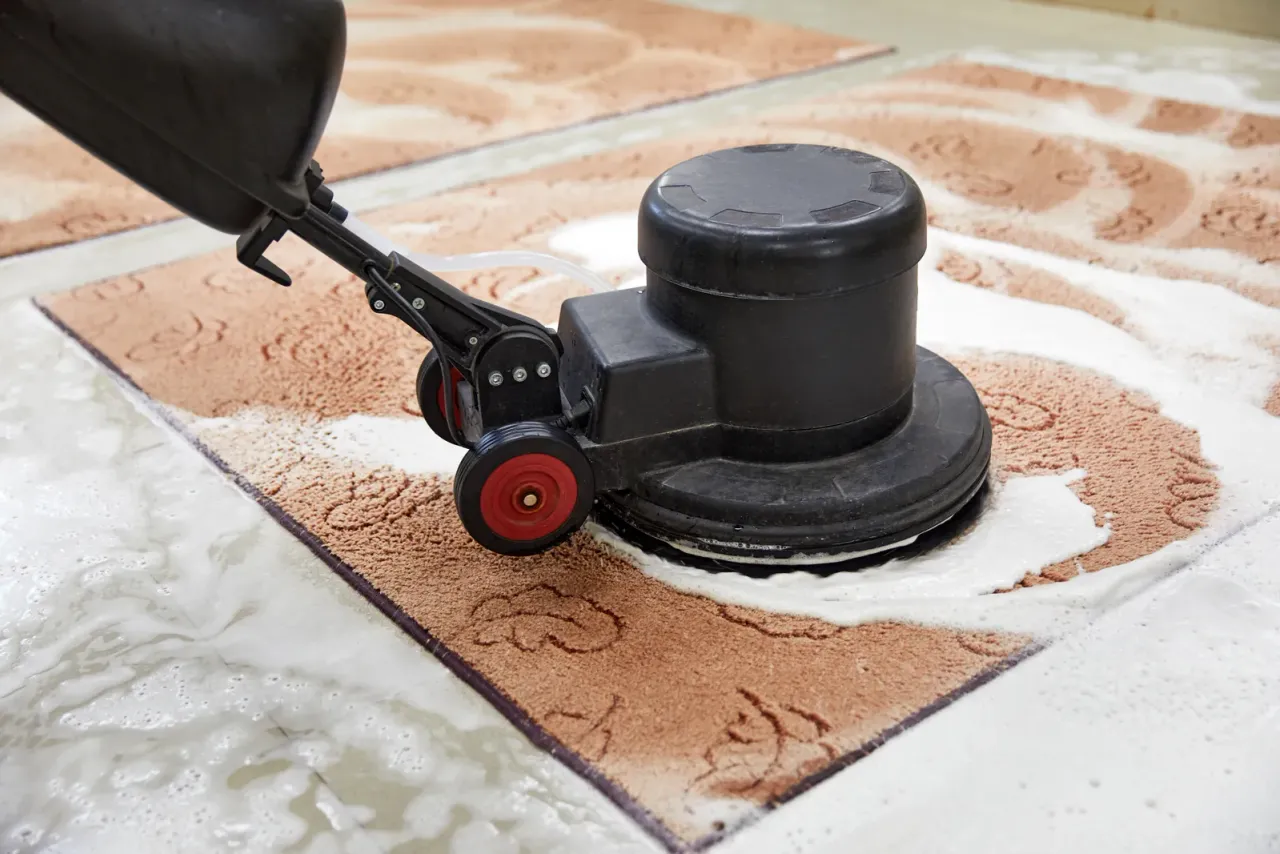
The short answer
Commercial carpet cleaning cost depends on the method (hot-water extraction or low-moisture encapsulation), how soiled the carpet is, how much spotting it needs, what furniture is in the way and how long the area can stay out of use while it dries. Large open floors cost less per square foot than private offices. A scheduled program usually costs less over a year than waiting until the carpet needs restorative cleaning.
Extraction or encapsulation: how the method sets the price
Hot-water extraction injects heated water and cleaning solution into the pile and pulls it back out with strong suction. It removes the most soil and is the method many carpet manufacturers name in their warranties, but it uses more equipment and leaves the carpet damp for hours. Encapsulation is a low-moisture method: a polymer-based solution is worked into the fibers, dries around the soil, and the residue is vacuumed out. It dries quickly and costs less per visit, but it is a maintenance method, not a cure for heavily soiled or oily carpet.
| Method | Dry time | Best use | Cost per visit |
|---|---|---|---|
| Hot-water extraction | Several hours, depending on airflow | Restorative cleaning and warranty schedules | Higher |
| Encapsulation | Short | Frequent interim cleaning of traffic lanes | Lower |
| Rotary shampoo | Longer, with residue risk if not extracted | Largely replaced by the two above | Varies |
How soil level and spotting change the quote
Lightly soiled carpet on a regular cycle cleans in one pass. Carpet that has gone a long time between cleanings needs a pre-spray, agitation with a brush machine, slower extraction passes and sometimes a second pass, which can double the labor for the same area. Entry zones, elevator lobbies and the paths to break rooms soil fastest, especially where people walk in from parking lots and carry oily residue on their shoes.
Spotting is the other variable. Coffee, toner, ink, rust and gum each take a different chemistry and time, and some stains are permanent dye damage that no cleaning will remove. Ask whether spotting is included up to a set amount of time or billed separately, and whether the vendor will flag stains it does not expect to lift before starting.
Furniture, layout and access
Systems furniture and cubicles are normally cleaned around rather than moved, so the open floor between workstations is fast while private offices full of chairs, credenzas and cables are slow. Moving furniture adds labor and risk, and the quote should say who does it. Access matters as well: a truck-mounted extractor needs parking close to the building and a hose route, which upper floors of mid-rise and high-rise buildings may not allow, so crews there use portable units that cover less area per hour.
Carpet tile and broadloom behave differently. Tiles can be swapped individually when one is damaged, but their adhesive can release if the carpet is over-wetted, which is one more reason to match the cleaning method to the product rather than to habit.
Drying windows and scheduling
The area has to stay out of use until it is dry, so the schedule often drives the method. Weekend extraction gives carpets time to dry with the HVAC running and air movers placed in the room. Sites that operate around the clock, or that cannot close a floor, lean on encapsulation and clean in sections. Over-wetting is the risk to avoid: slow drying invites odor, wicking of old stains back to the surface and, in the worst cases, mold or adhesive failure.
Program pricing versus one-time commercial carpet cleaning cost
A program spreads the work: encapsulation on traffic lanes between visits, and full extraction on a longer cycle. Because the carpet never gets badly soiled, each visit is faster, and the annual total is usually lower than paying for occasional restorative cleans. Before you compare bids, ask each vendor the same questions.
- Which method, and why for this carpet?
- Is pre-vacuuming included?
- How much spotting is included, and how is extra priced?
- Who moves and resets furniture?
- How long until the area is usable again?
- Does the method and chemistry match the carpet maker's warranty guidance?
How EBS schedules and prices carpet work
EBS handles carpet as part of its floor and carpet service, using hot-water extraction with spot treatment for carpets and rugs. Work can run as a recurring cycle or as a one-time project, booked for evenings, overnight hours or weekends so carpets dry before people return. The supervisor on the walkthrough notes carpet type, soil level, layout and furniture, and green, non-toxic products are available on request for occupants who prefer them.
Related questions
Still not sure? A supervisor can answer at the walkthrough.
Request a walkthroughAll questionsIs commercial carpet shampoo cost lower than extraction?
Sometimes per visit, but rotary shampooing can leave sticky residue that attracts soil if it is not fully extracted, so carpets resoil faster. That is why most commercial programs now pair hot-water extraction with low-moisture encapsulation instead of shampooing. Ask any vendor proposing shampoo how the residue will be removed.
How is carpet extraction cost per square foot worked out?
The vendor measures the carpeted area, then adjusts for layout, soil level, furniture, access and any minimum charge. The result is usually a per-square-foot price per visit, with heavy spotting, furniture moves or after-hours premiums listed as separate lines. Ask for each line in writing.
How long before people can walk on cleaned carpet?
After encapsulation, usually soon after the crew finishes. After hot-water extraction, several hours, depending on how wet the carpet got, humidity, temperature and airflow. Air movers and running the HVAC shorten the wait considerably. Plan extraction for the end of the week when you can.
Can the wrong cleaning void a carpet warranty?
It can. Many commercial carpet warranties expect periodic hot-water extraction with products of an appropriate pH, and some name approved products or equipment. Keep the cleaning records and the vendor's invoices, and check the warranty before changing methods. Ask the vendor which methods it will use.
Keep reading
Free site walkthrough
Talk to EBS about your facility
A few details and a supervisor calls you back the same business day.
- Call(949) 375-3305
- Emailinfo@ebsmaintenance.com
- HoursDaytime, evening, overnight and weekend schedules