
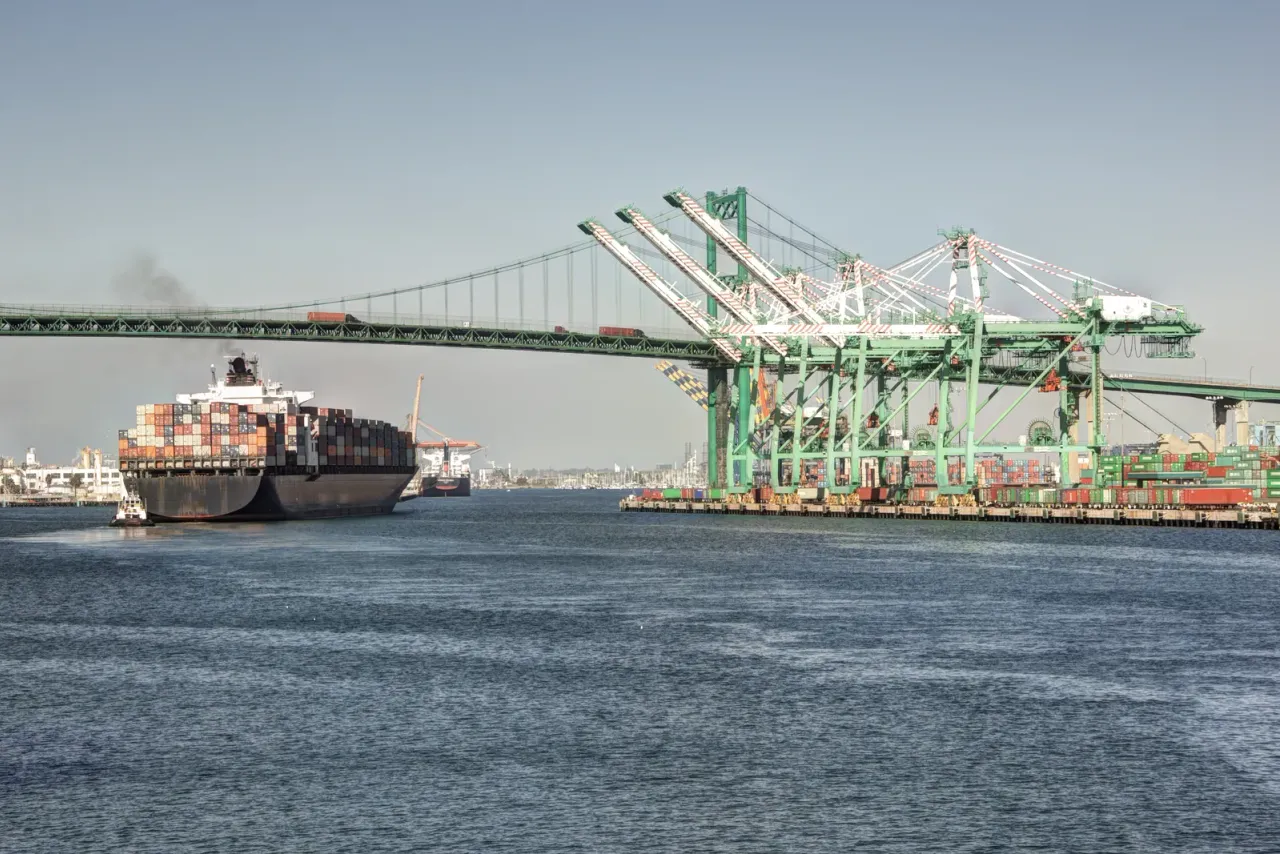
Los Angeles harbor
Port and Terminal Cleaning in Los Angeles County
Terminal offices, gate complexes, shops and cruise buildings along the Port of Los Angeles waterfront, plus the rail and cargo sites that feed it, cleaned around round-the-clock operations.
The short answer
EBS Maintenance provides port and terminal cleaning in Los Angeles County for buildings at and around the Port of Los Angeles: terminal administration offices, gate facilities, maintenance shops, locker rooms and passenger areas in San Pedro, Wilmington and on Terminal Island, along with rail, trucking and warehouse sites inland along the Alameda Corridor. Crews work day, night and weekend shifts, follow terminal security and safety rules, and travel from EBS's Corona office.
San Pedro, Wilmington and Terminal Island
The Port of Los Angeles is formed by two harbor neighborhoods of the City of Los Angeles. San Pedro holds the World Cruise Center, the West Harbor waterfront redevelopment and Fort MacArthur, and the I-110 Harbor Freeway ends there. From San Pedro, SR-47 crosses the Vincent Thomas Bridge to Terminal Island. Wilmington forms the rest of the working waterfront and sits beside the Wilmington Oil Field and several major refineries, with Los Angeles Harbor College nearby.
That mix gives the harbor an unusual range of buildings in a small area: container terminal offices and gatehouses, crane and equipment shops, cruise passenger halls, waterfront public spaces, and port-related industrial buildings, all served by the same few freeways and bridges.
Inland along the Alameda Corridor
Cargo leaves the harbor by truck and by rail. The Alameda Corridor freight line runs north from Wilmington past Compton, Lynwood and South Gate, and the BNSF and Union Pacific yards in Commerce handle port freight. Carson, part of the Los Angeles Harbor region, adds refinery operations, manufacturing and distribution employers. Rail yard offices, trucking terminals, transload warehouses and driver facilities along this route share the harbor's schedule, so EBS plans them the same way: around the flow of containers rather than a 9-to-5 day.
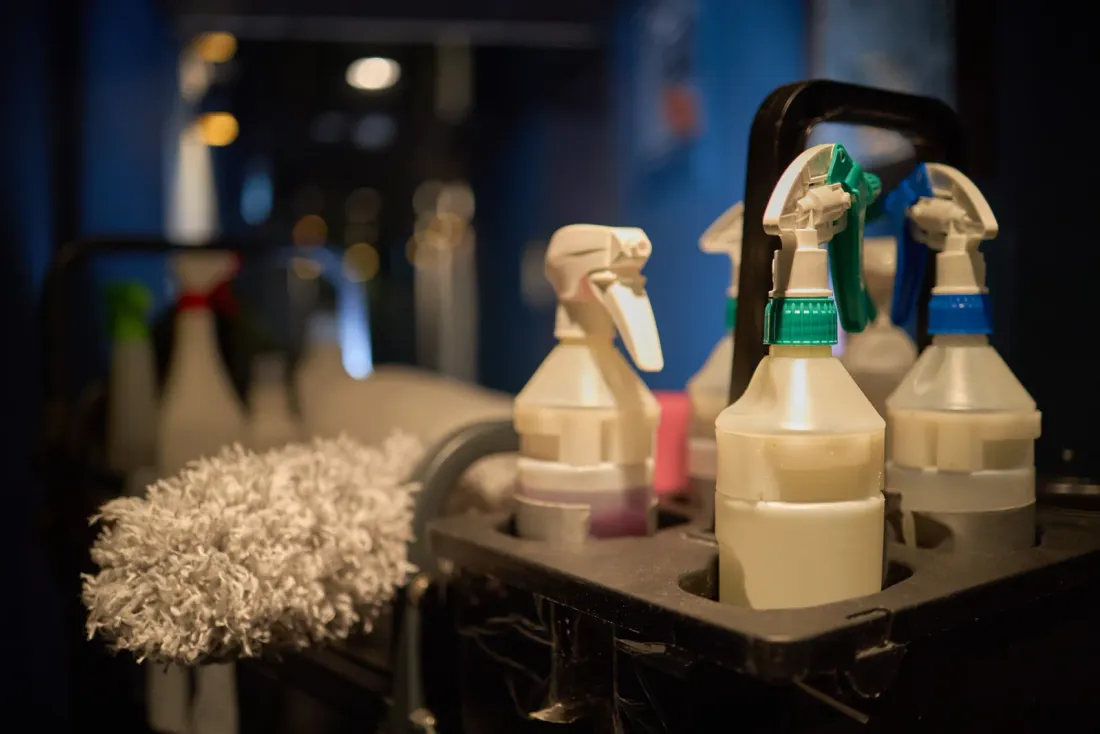
Port and terminal cleaning in Los Angeles County, building by building
Each building type on and near the harbor gets its own frequency and timing, because a gatehouse, a crane shop and a cruise hall are busy at completely different hours. This is how a typical program breaks down after the walkthrough:
| Building | Main cleaning needs | Usual timing |
|---|---|---|
| Terminal administration and vessel planning | Offices, conference rooms, kitchens, restrooms | Evening, plus a daytime porter |
| In-gate and out-gate facilities | Driver restrooms, counters, kiosks, floors | Several passes a day during gate hours |
| Maintenance and repair shops | Oily floors, locker rooms, tool cribs | Between shifts, weekends for scrubbing |
| Cruise terminal passenger areas | Halls, seating, restrooms, baggage zones | Before and after each ship day |
| Rail yard and trucking offices | Dispatch rooms, restrooms, break rooms | Overnight or early morning |
| Near-dock warehouses | Dock floors, debris, racking dust | Zone cleaning around appointments |
Diesel soot, salt air and refinery neighbors
Harbor buildings get dirty in ways inland offices do not. Diesel exhaust from trucks, yard equipment and vessels leaves a gray film on window sills, vents and entry floors. Salt air spots glass and dulls metal fixtures. Oily grime from shops and yards rides indoors on boots, so entry matting and frequent scrubbing at doorways do more here than almost anywhere else.
Sites near the Wilmington and Carson refineries, and port facilities in general, often require a safety orientation and specific protective equipment before work starts. Those rules are written into the scope. Wash water from degreasing is recovered rather than rinsed outside, because a storm drain on the harbor leads straight to the water.
Access rules and getting started
Terminals on the harbor operate under federal facility security plans, and unescorted entry to their secure areas requires a TWIC credential. Staffing is planned around those rules at the walkthrough. EBS team members are background-checked and uniformed, and the company has experience in access-controlled and public-sector facilities.
Crews travel to the harbor from EBS's only office, in Corona, by SR-91 and I-110. To set up a program, request a walkthrough or call (949) 375-3305. A supervisor maps each building with your facility or security contact, and EBS sends a written scope, schedule and price.
Last reviewed October 9, 2026 by the EBS Maintenance team.
Questions we hear
Still not sure? A supervisor can answer at the walkthrough.
Request a walkthroughAll questionsDo you clean cruise terminal passenger areas in San Pedro?
Yes, as part of a port program the scope defines. Passenger halls, seating, restrooms and baggage areas are cleaned before and after ship days, with restroom and trash passes during embarkation and disembarkation peaks. Staffing scales up on ship days and back down between sailings, so the terminal is ready for each call.
Can you service buildings on Terminal Island?
Yes, subject to each terminal's access rules. Buildings on Terminal Island are reached across the Vincent Thomas Bridge, and many sit inside secure areas, so the walkthrough confirms escorts or credential requirements before a schedule is set. Crews then follow the terminal's traffic routes and protective equipment rules on every visit.
Do you also clean rail yard and trucking offices inland?
Yes. Dispatch offices, driver facilities, break rooms and restrooms along the Alameda Corridor and around the rail yards in Commerce are part of EBS's Los Angeles County coverage. They usually run on the same around-the-clock pattern as the harbor, so cleaning is scheduled overnight or between shift changes.
How often should a gate restroom be cleaned?
More than once a day at a busy gate. Restrooms used by truck drivers during peak gate hours can need several passes per shift for cleaning, restocking and floor drying, plus a full disinfection at least daily. The walkthrough sets the exact frequency from your gate volume and hours, and supervisors adjust it if use changes.
Related services and guides
Free site walkthrough
Request a walkthrough
A few details and a supervisor calls you back the same business day.
- Call(949) 375-3305
- Emailinfo@ebsmaintenance.com
- HoursDaytime, evening, overnight and weekend schedules