
Cleaning around collections
Museum and Cultural Center Cleaning in Southern California
Practical guidance for facility teams and crews who clean galleries, theaters and community spaces in cultural buildings, where the building is cleaned but the collection is never touched.
The short answer
Museum and cultural center cleaning is built around two risks to collections: dust and moisture. Good practice means HEPA vacuuming and dry methods in galleries, products applied by cloth and never sprayed near objects, wet work scheduled with facilities staff watching humidity, and crews trained to leave objects, mounts and pest traps alone. In Southern California, plans also cover dust after Santa Ana winds, soot after wildfire smoke, salt air near the coast and seismic mounts that must not be disturbed.
Museum and cultural center cleaning starts with dust and moisture
Dust is more than a cosmetic problem in a gallery. It is abrasive, it holds moisture and pollutants against surfaces, and it feeds the insects that damage textiles, paper and wood. That is why conservators care about how floors and case exteriors are cleaned, not only whether they look clean. Methods that capture dust, such as HEPA-filter vacuums and microfiber, are preferred over brooms and feather dusters that move it around.
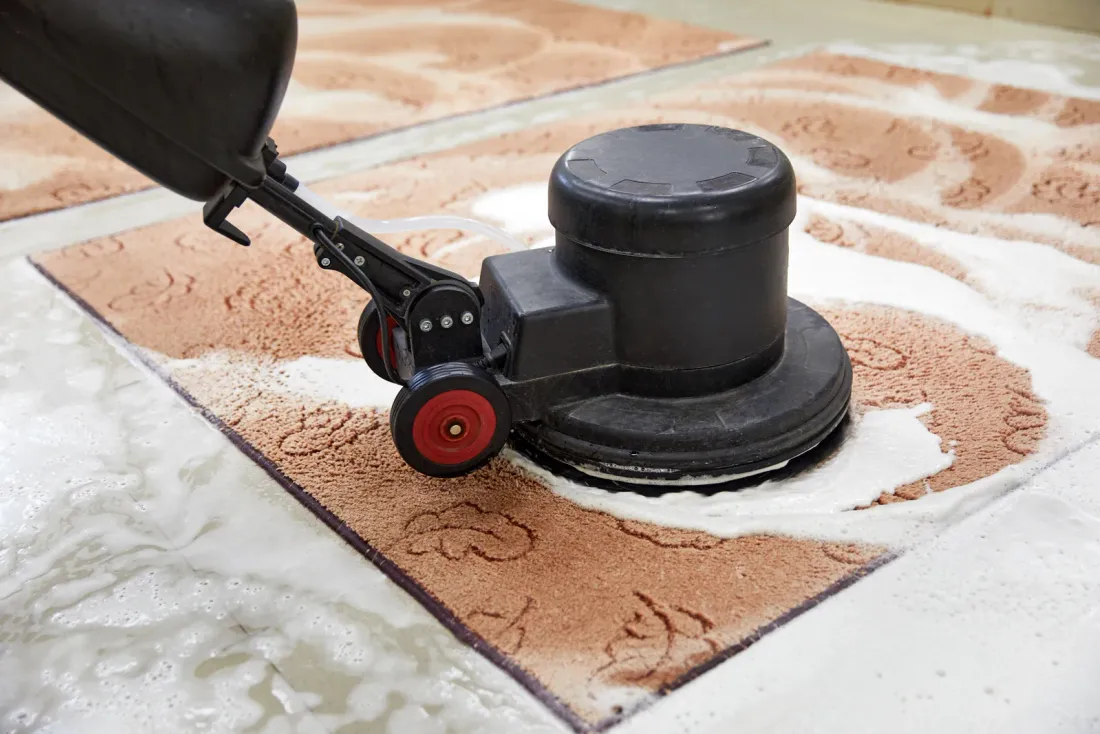
Moisture is the second risk. Mopping, carpet extraction and wet scrubbing all release water into the air, and many collections are kept within a narrow relative humidity range. Wet work in or near galleries should be scheduled with the facilities or collections team so they can watch the readings.
Museum cleaning tips by surface
The building's own surfaces each need their own approach. These tips apply outside the collection boundary set by your registrar or conservators:
- Stone and terrazzo floors: neutral cleaners only, since acids etch marble and limestone
- Wood gallery floors: dust-mop daily and use as little water as possible
- Gallery carpet: HEPA vacuum on a schedule, with extraction planned around humidity readings
- Acrylic case exteriors: soft microfiber and an acrylic-safe cleaner, never ammonia-based glass cleaner
- Glass cases and vitrines: product on the cloth first, then wipe away from seams and locks
- Interactive exhibits and touch screens: frequent wiping with products the exhibit maker approves
- Seating in theaters and lecture halls: vacuum fabric seats, wipe arms and backs
Southern California conditions: wind, smoke, salt and earthquakes
Santa Ana winds push fine dust through every door and seam, so entry mats work harder and gallery vacuuming may need an extra pass in the days after. Wildfire smoke brings soot and fine particles indoors even when the fire is far away; after a smoke event, ask conservators before cleaning anything near objects, and expect entry areas and air returns to need more attention. Institutions near the coast fight a salt film on exterior glass and metal doors.
Earthquakes shape gallery layouts across the region. Objects may sit on seismic mounts, tethers or isolation platforms, and cleaning crews should never bump, adjust or clean beneath them. Mark those zones on the gallery protocol so new staff know where to stop.
Cultural center janitorial: galleries plus everything else
Cultural centers often combine exhibition rooms with theaters, classrooms, community halls, kitchens and outdoor courtyards. That mix means one building may need museum-style care in the galleries, venue-style turnover after performances and classroom cleaning for workshops, all on the same night. A single scope should name each space type and its standard, rather than applying gallery rules everywhere or office rules everywhere.
Train crews to report rather than remove certain things. Dead insects near cases are a pest signal the collections team wants to know about, and monitoring traps placed for integrated pest management should never be thrown away or moved.
A cleaning calendar for exhibition spaces
Museum cleaning follows the exhibition and event calendar as much as the clock. This outline is a starting point to adapt with your facilities and collections staff.
| When | What gets done |
|---|---|
| Before opening each day | Entry glass, restrooms, lobby and visitor service areas |
| After close each night | Gallery floors dust-mopped or HEPA vacuumed, case exteriors, touch points, trash |
| Weekly | Theater and classroom detail, upholstery vacuuming, entry mat cleaning |
| Between exhibitions | Top-down cleaning of released galleries, floor work while rooms are empty |
| After events and rentals | Food and drink waste removed the same night, spaces reset |
| After wind or smoke events | Extra HEPA vacuuming, mat changes, returns and entries checked |
EBS and cultural institutions
EBS Maintenance cleans museums, galleries and cultural spaces with non-abrasive methods and museum-safe products, working discreetly during closed hours under custom protocols for sensitive and restricted areas. Its teams are background-checked and experienced in access-controlled buildings. Our museum and cultural institution page sets out the full service; to discuss your building, call (949) 375-3305.
Related questions
Still not sure? A supervisor can answer at the walkthrough.
Request a walkthroughAll questionsShould cleaners remove insect traps they find in galleries?
No. Sticky traps and other monitors are part of the museum's integrated pest management program, placed and checked by collections or facilities staff. Crews should clean around them, leave them in place and report any trap that is damaged, moved or full.
Can carpet in museum galleries be extracted?
Yes, with planning. Extraction adds moisture to the room, so it is scheduled with the collections team, often between exhibitions or with sensitive objects off view. Low-moisture methods and longer drying with the air handling running help keep humidity steady.
How should acrylic display cases be cleaned?
Gently, from the outside only. Use a clean, soft microfiber cloth and a cleaner made for acrylic, applied to the cloth rather than the case. Ammonia-based glass cleaners and paper towels can cloud or scratch acrylic over time.
Keep reading
Free site walkthrough
Talk to EBS about your facility
A few details and a supervisor calls you back the same business day.
- Call(949) 375-3305
- Emailinfo@ebsmaintenance.com
- HoursDaytime, evening, overnight and weekend schedules