
Office programs
Commercial Cleaning for Offices: What a Good Program Covers
A checklist tells a crew what to do tonight. A program decides what gets done, when, by whom, and how anyone knows it happened. This is the program view, written for office managers.
The short answer
Commercial cleaning for offices works best as a program rather than a task list: a written scope for each zone of the office, a staffing model that fits your hours, a calendar for periodic floor, carpet and glass work, rules for adjusting service to occupancy, and a quality system with inspections and a request channel. Every part should be written down so it survives staff changes on either side of the contract.
Scope by zone, not by square footage
An office is a collection of very different rooms. Writing the scope zone by zone makes sure each gets the attention it needs instead of an average that over-cleans storage rooms and under-cleans kitchens. The table shows what matters most in each zone and the mistake programs most often make there.
| Zone | What matters most | Common mistake |
|---|---|---|
| Reception and lobby | First impression: glass, seating, floors at entry | Cleaned only at night, untouched by midday |
| Open workstations | Trash, floors, cleared desk surfaces | Wiping around clutter or moving papers |
| Private offices | Trash, vacuuming, dusting reachable surfaces | Same frequency as busy shared areas |
| Conference rooms | Tables, whiteboards, chairs reset | Missed after late meetings |
| Kitchens and break rooms | Counters, sinks, appliances, organics sorting | Fridge and microwave left to staff |
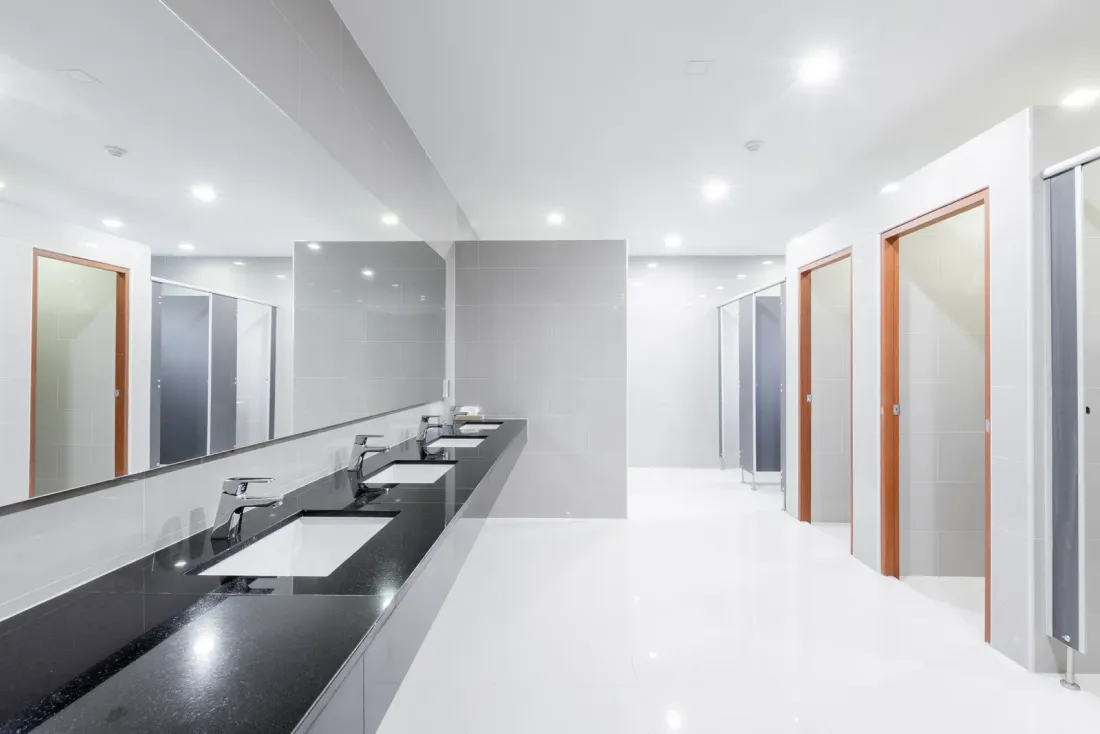
| Restrooms | Disinfection, restocking, odor control | Restocked at night, empty by afternoon |
| Server and IT closets | Floor dust only, with permission | Crew entering without clearance |
Night crew, day porter or both
Most offices start with a night crew that cleans after people leave, which is efficient because rooms are empty. Larger or busier offices add a day porter who restocks restrooms, resets conference rooms, wipes high-touch points and handles spills while the office is open. Some offices move most of the work into the day, which suits buildings with tight after-hours security or a culture that likes cleaners to be visible and approachable.
The right model depends on headcount, visitor traffic, how many restrooms and kitchens you have, and how often problems appear before lunch. If the same complaints arrive every afternoon, the program has a timing gap rather than a cleaning gap, and more night hours will not fix it.
The periodic calendar
Nightly cleaning keeps an office presentable; periodic work keeps it from wearing out. A good program puts carpet extraction, hard-floor scrubbing or refinishing, interior glass and partitions, high dusting of vents and light fixtures, and upholstery cleaning on a published calendar. Schedule the heavy items for long weekends or quiet weeks, tell staff in advance, and record completion so you can see whether the cycle suits your traffic.
Commercial cleaning for offices that flexes with occupancy
Hybrid schedules have made attendance uneven, and a fixed nightly scope no longer fits many offices. Match full service to the days people are in, and lighten it on quiet days, while keeping restrooms, kitchens and high-touch points on a steady rhythm. Shared hot desks need a clear-desk rule and wipe stations so each user starts clean. Review the pattern each quarter, because occupancy keeps shifting.
Closed floors or sublet space can drop to a minimal check, but do not stop entirely: dust, pests and plumbing problems build up quietly in empty rooms, and reopening a neglected floor costs more than keeping it ticking over with a light weekly visit.
Quality checks, requests and security
A program needs a way to know it is working. That means scheduled inspections against the written scope, a single channel for staff requests that the supervisor actually reads, and a regular review with the office manager. Security belongs in the same section: a key and badge log, a rule that cleaners never move papers or touch screens, and clear instructions for locking doors and setting alarms on the way out.
How EBS runs office programs
EBS Maintenance writes each office scope after a supervisor walks the space, then staffs it with night crews, day porters or a mix, scheduled during the day, in the evening, overnight or at weekends. Floor, carpet and glass work runs on its own calendar. Supervisors check the work through eHub inspections and keep in contact with your office manager, and team members are background-checked and wear EBS uniforms.
Related questions
Still not sure? A supervisor can answer at the walkthrough.
Request a walkthroughAll questionsHow often should a commercial office be cleaned?
Most occupied offices need restrooms, kitchens and trash handled every working day, with workstations and private offices cleaned daily or a few times a week depending on traffic. Very small offices sometimes manage with two or three visits a week. Periodic work such as carpet extraction runs on a separate calendar.
Should office cleaners wipe employees' desks?
Only cleared desk surfaces, and only if the scope says so. Cleaners should never move papers, files or personal items, or touch keyboards and screens unless specifically asked. A clear-desk habit, at least on the nights desks are scheduled for wiping, lets the crew do the job properly.
What should an office manager review each month?
Look at inspection results by zone, the request log and how quickly requests were closed, any supply outages, and whether periodic work happened as scheduled. A short monthly conversation with the supervisor about those four things catches most problems before staff start complaining.
Keep reading
Free site walkthrough
Talk to EBS about your facility
A few details and a supervisor calls you back the same business day.
- Call(949) 375-3305
- Emailinfo@ebsmaintenance.com
- HoursDaytime, evening, overnight and weekend schedules