
Workplace restrooms
Office Bathroom Etiquette: A Guide for Workplaces
A practical guide for employees, office managers and facility teams: the courtesy rules that keep shared restrooms pleasant, and the cleaning routine that backs them up.

The short answer
Good office bathroom etiquette comes down to leaving the restroom the way you would want to find it: flush, wipe splashes off the counter, put paper towels in the bin, report empty dispensers or leaks, keep phone calls out and give colleagues privacy. Facilities can make those habits easier with touchless fixtures, well-placed bins, hooks and clear signs. Etiquette only holds up when the cleaning program keeps restrooms stocked and checked throughout the day.
Office bathroom etiquette: the basic rules
Most restroom friction at work comes from a handful of habits. Share this list with new hires or post a shorter version by the sinks:
- Flush every time, and check that it worked before you leave
- Wipe splashes from the seat and the counter
- Only toilet paper goes in the toilet; everything else goes in the bin
- Wash with soap for at least 20 seconds, as the CDC recommends
- Use the receptacles provided for feminine hygiene products
- Report empty dispensers, leaks or clogs instead of leaving them for the next person
- Keep phone calls and video meetings out of the restroom
- Respect privacy: no conversations through stall doors
- Skip strong personal sprays and fragrances, since colleagues may be sensitive
- Keep grooming quick at busy times and wipe the sink afterward
- Take personal items with you
Handling awkward restroom situations at work
When the same mess keeps appearing, resist the urge to tape an angry note to the mirror. A general reminder to the whole team, or a neat permanent sign, works better and embarrasses nobody. Maintenance problems such as clogs, leaks and broken locks should go straight to the office or facility manager, and repeated conduct issues belong with HR rather than in the group chat.
California adds two rules every office manager should know. Single-user toilet facilities in businesses must be identified as all-gender under Health and Safety Code section 118600, so check the signs on any single-occupancy restroom. State employment rules also protect each employee's right to use the restroom that matches their gender identity.
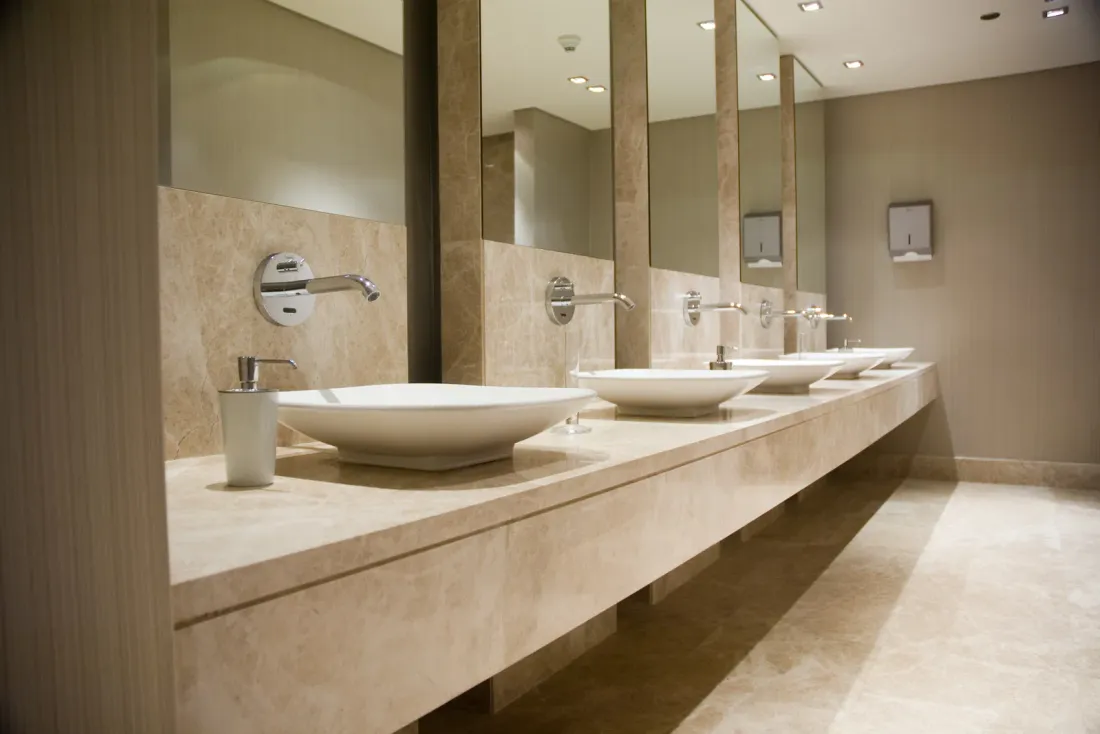
Office restroom rules facilities can build in
Etiquette is easier when the room is designed for it. Many recurring problems have a simple facility fix that works better than another reminder email.
| Problem | What people can do | What the facility can do |
|---|---|---|
| Wet, messy counters | Wipe up splashes | Towels within reach and a bin at counter height |
| Clogged toilets | Flush only toilet paper | Receptacles in every stall and a short sign |
| Empty dispensers | Report them right away | High-capacity dispensers and daytime checks |
| Lingering odors | Flush and run the exhaust fan | Working ventilation, primed floor drains, nightly cleaning |
| Touching the door handle | Use a paper towel | Touchless fixtures and a bin beside the door |
| Calls and lingering | Take calls elsewhere | Phone booths or quiet rooms nearby |
Restroom cleaning checklist for offices
Etiquette keeps a restroom pleasant between cleanings; it cannot replace them. A workable routine has three layers: daytime checks, a full nightly clean and periodic deep work.
- Daytime: restock toilet paper, towels, soap and seat covers
- Daytime: wipe counters and mirrors, pick up floor litter, dry wet spots
- Daytime: check for leaks, clogs and running toilets, and empty bins before they fill
- Nightly: clean and disinfect toilets, urinals, seats and flush handles
- Nightly: clean sinks, faucets, counters, mirrors and dispensers
- Nightly: disinfect partitions, door handles, locks and light switches
- Nightly: empty and reline trash and sanitary receptacles
- Nightly: mop with disinfectant and pour water into floor drains to keep traps sealed
- Monthly or quarterly: machine-scrub floors and grout, descale fixtures
- Monthly or quarterly: wash walls and partitions, dust exhaust vents
How EBS keeps workplace restrooms ready
EBS Maintenance builds restroom care into every janitorial program: toilets, sinks, partitions and fixtures are disinfected with EPA-approved products, with attention to contact time and coverage, and supplies are refilled on each visit. Day porters can keep paper goods and hygiene supplies topped up during business hours, and recycled paper products and refillable soap dispensers are available on request. Supervisors inspect restrooms as part of routine quality checks. Call (949) 375-3305 to arrange a walkthrough.
Related questions
Still not sure? A supervisor can answer at the walkthrough.
Request a walkthroughAll questionsHow do you politely address bad bathroom etiquette at work?
Address the group, not a suspected individual. A short reminder in a team message or a tidy permanent sign usually solves it. Send maintenance problems to the facility manager, and take repeated conduct issues to HR privately rather than discussing them in shared channels.
Should office restrooms have air fresheners?
Fix odors at the source first. Persistent smells usually come from dry floor drains, weak ventilation, urine on grout or bins left too long. Scented sprays and plug-ins can bother people with allergies or chemical sensitivities, so if you use them, choose low-fragrance options.
Who should restock the office restroom during the day?
In a busy building, a day porter. In a smaller office, assign one person to check at midday. The night crew should restock fully every evening, and the cleaning contract should state who buys paper, soap and liners so nothing runs out.
Keep reading
Free site walkthrough
Talk to EBS about your facility
A few details and a supervisor calls you back the same business day.
- Call(949) 375-3305
- Emailinfo@ebsmaintenance.com
- HoursDaytime, evening, overnight and weekend schedules