
Industrial and manufacturing
Industrial and Manufacturing Facility Cleaning
Plant cleaning that works around production: dust off the overhead steel, floors cleared between shifts, and every area ready when an auditor or customer walks through.
The short answer
EBS Maintenance provides industrial and manufacturing facility cleaning for production plants, machine shops, assembly buildings and distribution centers across Southern California. Crews handle dust control from floor level to the roof structure, production floor care, cleaning around machinery, spill and debris removal, and the restrooms, break rooms and offices every shift depends on. Work is timed to shift gaps, weekends and planned shutdowns, and each visit follows a written scope that a supervisor inspects.
What industrial and manufacturing facility cleaning covers
Every plant scope draws on the same eight core tasks, weighted to the operation. A machine shop needs more degreasing, a packaging line more dust control, a plant with a busy lobby more attention up front. The walkthrough sets the weighting and the written scope records it.
| Task | How it is done | Why it matters |
|---|---|---|
| Dust control and high surfaces | HEPA vacuums and lifts on beams, ducts and fixtures | Settled dust falls onto product and can fuel a fire |
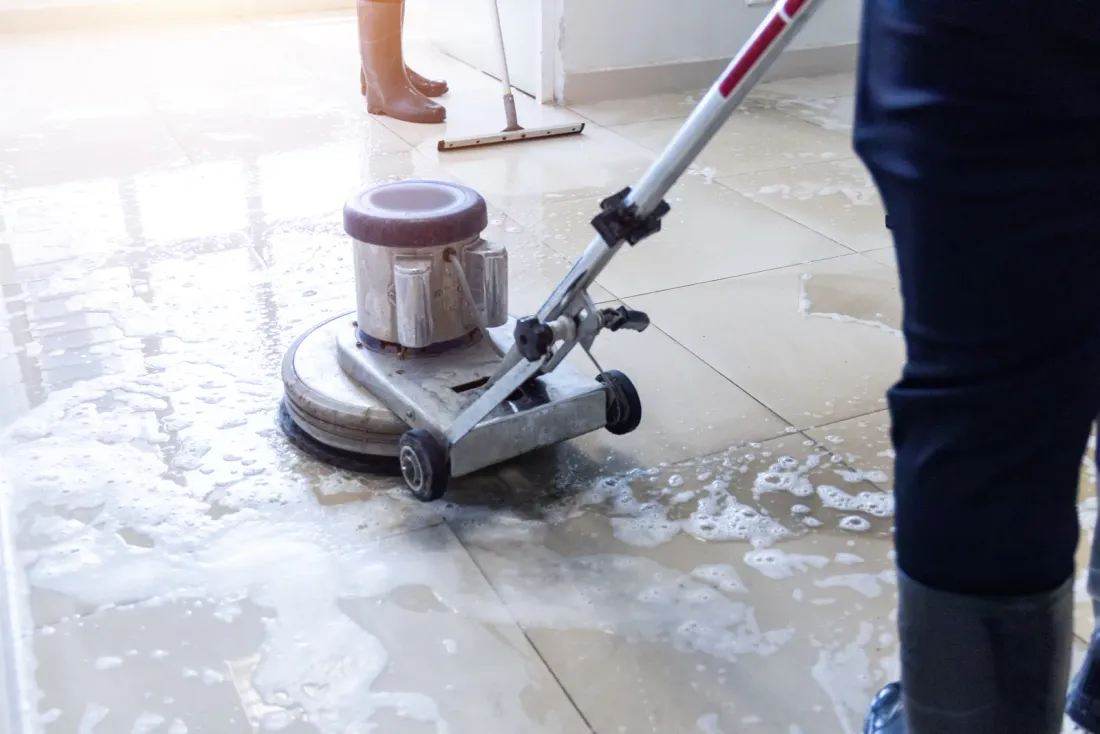
| Production and warehouse floors | Scrubbers matched to sealed concrete, epoxy or coatings | Fewer slips, less grit tracked by forklifts |
| Around machinery | Exteriors and surrounding floor, guards left in place | Clear work cells without touching energized parts |
| Spills and debris | Absorbents, scrap pickup, wet-floor control | Removes slip hazards, protects floor coatings |
| Restrooms and break rooms | Daily cleaning, restocking, EPA-approved disinfectant | Every shift shares them |
| Entries and hallways | Matting and scrubbing where plant meets office | Keeps production grit out of visitor areas |
| Inspection-focused cleaning | Pre-audit work on a calendar, documented | Auditors read housekeeping as process control |
| Deep and emergency cleaning | Shutdown cleans and urgent calls via 24/7 priority support | Big jobs fit the windows when lines are down |
Safety rules that shape plant cleaning
Fine organic, plastic or metal dust can be combustible. NFPA 652, the Standard on the Fundamentals of Combustible Dust, asks owners to complete a dust hazard analysis and keep accumulations under control, which is why overhead dust is vacuumed with suitable equipment instead of blown down with compressed air. Other rules decide what crews may touch and where wash water goes:
- Cal/OSHA Title 8 section 3314 covers hazardous energy control during cleaning and servicing of machinery; anything needing lockout stays with your authorized employees.
- Title 8 section 5194, hazard communication, requires safety data sheets and labels for every chemical crews bring in.
- Sites under California's Industrial General Permit for stormwater must keep wash water and debris out of storm drains.
- California SB 1383 requires organic waste separation, which changes how break room trash is sorted.
Static-safe floors, FOD control and cleanrooms
Electronics assembly often sits on static-dissipative flooring that needs compatible cleaners, because ordinary floor finish can insulate it. Aerospace shops under AS9100 quality systems treat stray fasteners and packaging scraps as foreign object debris, so crews account for what they carry in and out.
Cleanrooms are classified under ISO 14644, and drug and device makers add GMP expectations. EBS runs cleanroom programs aligned with ISO and GMP practice, follows your gowning procedure and keeps cleaning logs and service reports for audits. In food plants, product-contact sanitation normally stays with your own sanitation team.
Scheduling around shifts and shutdowns
Single-shift plants are usually cleaned in the evening or overnight, when scrubbers can run aisle to aisle. Multi-shift operations are cleaned in zones, one taped-off area at a time, with break rooms turned over at shift change. Weekend crews take heavy work such as high dusting from lifts, and planned shutdowns are the time for degreasing and floor recoating.
Some plants also add a daytime porter for restrooms, break rooms and spills while lines run. EBS keeps the same team on a plant where possible, covers absences with backup staff, and supervisors log inspections and corrective actions in EBS's eHub system.
Plants across five Southern California counties
Teams travel from EBS's single office in Corona to plants in Orange, Los Angeles, Riverside, San Bernardino and San Diego counties, and each county page covers its own industrial mix. To start, request a walkthrough or call (949) 375-3305: a supervisor walks the floor with your plant or safety lead and EBS returns a written scope, schedule and price.
Last reviewed October 9, 2026 by the EBS Maintenance team.
Questions we hear
Still not sure? A supervisor can answer at the walkthrough.
Request a walkthroughAll questionsWill your crews clean inside our machines?
No. EBS cleans machine exteriors, the outside of guards and the floor around equipment. Tasks that require opening guards or isolating energy belong to your authorized employees under your energy control procedure, as Cal/OSHA Title 8 section 3314 sets out. The scope lists which equipment surfaces crews clean.
How do you handle combustible dust on beams and ductwork?
Overhead dust is removed with vacuums suited to the dust and the area, working from lifts or extension tools, not blown down with compressed air. Frequency comes from your dust hazard analysis and how fast dust builds up on horizontal surfaces. If your analysis names specific methods, the scope adopts them.
Can you clean while production is running?
Yes, in zones. Crews close off one area at a time, finish it and move on, staying clear of forklift routes and active cells. Restrooms and break rooms are turned over between shifts, and heavier work such as a full floor scrub is saved for weekends or shutdowns.
What records do we get for audits?
You get documented completion for scheduled tasks and supervisor inspection records from EBS's eHub system, including corrective actions. Cleanrooms and other controlled areas also get cleaning logs and service reports, which help show auditors that housekeeping runs on a schedule.
Are your crews screened for secure or defense-related plants?
Yes. EBS team members are trained, vetted, uniformed and background-checked, and the company is licensed and insured. EBS has worked in high-security and access-controlled facilities, including government sites, and staffs each plant within its own badge, escort and restricted-area rules.
Related services and guides
Free site walkthrough
Request a walkthrough
A few details and a supervisor calls you back the same business day.
- Call(949) 375-3305
- Emailinfo@ebsmaintenance.com
- HoursDaytime, evening, overnight and weekend schedules