
Dental practices
What Should Dental Office Cleaning Cover?
In a dental practice, the people who disinfect the chair between patients are not the people who mop the operatory at night. A good scope draws that line clearly.
The short answer
Dental office cleaning should cover every housekeeping surface in the practice: operatory and sterilization-room floors, reception and waiting areas, restrooms, staff rooms, private offices, glass, trash and recycling, cleaned nightly with EPA-registered products. It should not cover clinical contact surfaces, dental unit waterlines, instruments, sharps or amalgam waste, which belong to the licensed dental team under the practice's infection control program. The written scope should name who cleans each item so nothing falls between the two groups.
Clinical contact surfaces vs housekeeping surfaces
CDC's Guidelines for Infection Control in Dental Health-Care Settings (2003) sort environmental surfaces into two groups, and that split is the cleanest way to divide the work. Clinical contact surfaces are the ones touched by gloved hands, instruments or spatter during treatment: light handles, chair switches, the bracket tray, the x-ray tube head, operatory keyboards and drawer pulls. The dental team covers them with barriers or cleans and disinfects them between patients.
Housekeeping surfaces are floors, walls, sinks and the rest of the building. They carry less risk and are cleaned on a routine schedule, which makes them the janitorial crew's territory. In California, the Dental Board's Minimum Standards for Infection Control (California Code of Regulations, Title 16, section 1005) govern what the licensed team does between patients, so a cleaning contract should never be written as a stand-in for those duties.
A dental office cleaning checklist, room by room
Use a table like this as the starting point for your scope, then adjust it to your floor plan and your infection control lead's preferences.
| Area | Janitorial crew (after hours) | Dental team |
|---|---|---|
| Operatories | Floor wet-mopped with disinfectant, cabinet exteriors, chair base, hand sink, trash, walls in the spatter zone on a schedule | Chair upholstery and controls, delivery unit, light, tray, x-ray head, barriers, waterlines |
| Sterilization and instrument processing | Floor, hand sink, trash, cabinet fronts | Instrument sink, ultrasonic, autoclave, counters used for processing |
| In-office lab | Floor and trash | Benches, lathes, model trimmer, impression handling |
| Reception and waiting room | Seating, counters, pens, door hardware, glass, floors, magazines straightened | Check-in devices if the practice prefers |
| Patient and staff restrooms | Full clean, disinfect and restock | None |
| Staff lounge and kitchenette | Counters, sink, appliance exteriors, tables, floor | Refrigerator clean-out by agreement |
| Business office and consult room | Desks where cleared, phones, trash, recycling, floors | Files and screens left untouched |
Operatory floors, sinks and walls
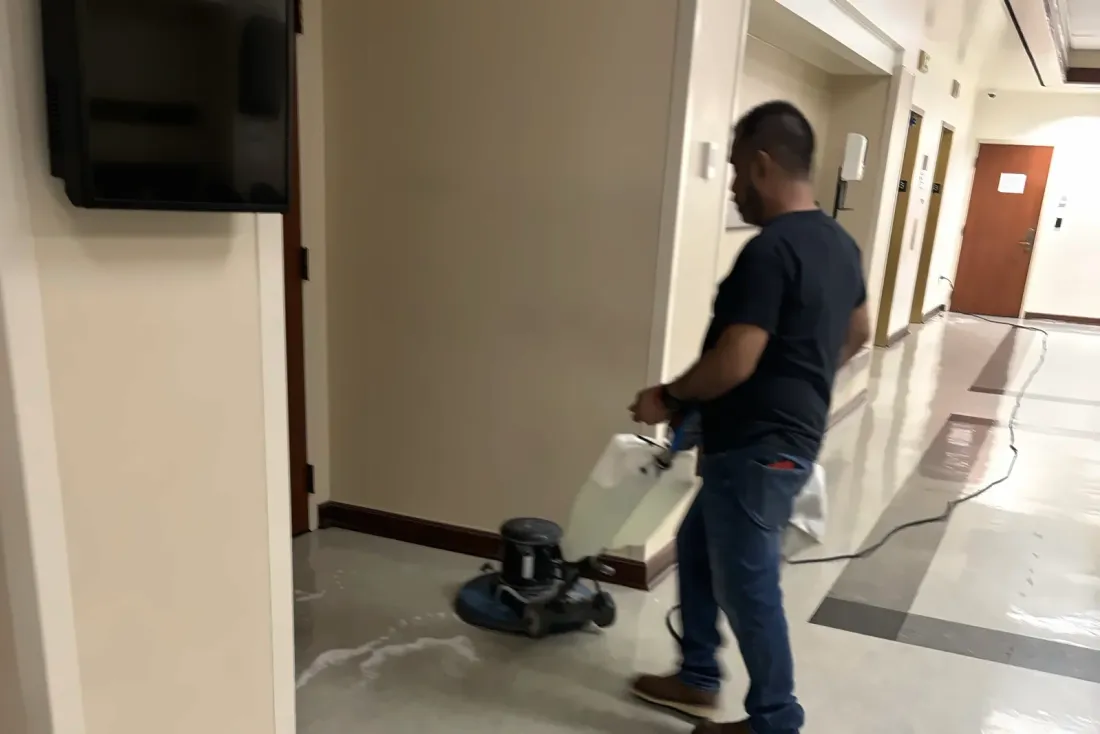
Treatment-area floors should be hard, with welded or sealed seams where possible. The same CDC guideline advises against carpet and cloth-upholstered furniture in operatories, labs and instrument processing areas, because they cannot be disinfected reliably. Nightly, the crew dust-mops and then wet-mops with a detergent or an EPA-registered disinfectant-detergent, starting at the far wall and finishing at the door.
Mop heads and cloths matter as much as the product. The guideline calls for cleaning mops and cloths after use and letting them dry before reuse, or using single-use disposable heads. A fresh microfiber pad per operatory is a simple way to meet that. Spatter-zone walls near the chair, baseboards and floor edges under cabinets need a scheduled pass, typically weekly or monthly, and sheet vinyl or tile floors need periodic machine scrubbing and refinishing.
What the cleaning crew should leave alone
A janitorial crew working in a dental office needs a short, firm list of things it does not touch. These items carry regulatory duties that sit with the practice:
- Sharps containers: never opened, emptied or swapped by cleaning staff
- Regulated medical waste, which the practice manages with its hauler under California's Medical Waste Management Act (Health and Safety Code section 117600 and following)
- Amalgam waste, chairside traps and the amalgam separator, covered by EPA's dental effluent rule (40 CFR Part 441)
- Dental unit waterlines, handpieces and suction lines
- Autoclaves, ultrasonic cleaners, instrument cassettes and sterilized pouches
- Patient charts, radiographs and open screens, left exactly as found
Dental clinic janitorial schedules
Most practices are cleaned after the last patient, once the sterilization area has been shut down for the day. Early-start practices and those with Saturday hours need the crew to finish well before the first appointment, so the alarm, key and lockup routine should be written down. Large group practices sometimes add a short daytime visit to reset the reception restrooms and waiting room during the busiest clinic days.
Periodic work, such as carpet extraction in the waiting room, floor refinishing in hallways and high dusting of vents and lights, fits best on a weekend or a closed weekday so floors have time to dry before patients arrive.
How EBS divides the work in a dental practice
EBS Maintenance includes dental and medical offices in its healthcare cleaning, and the division of duties is settled during the walkthrough: which operatory items the crew cleans, which stay with your assistants, and which rooms are restricted. Crews use EPA-approved disinfection products on high-touch surfaces, are trained and background-checked, and follow HIPAA-conscious practices in front desks and offices. Supervisors inspect through eHub and follow up on anything missed.
Related questions
Still not sure? A supervisor can answer at the walkthrough.
Request a walkthroughAll questionsShould our janitorial company disinfect the dental chair?
Not between patients; that is the dental team's job. After hours, the crew can clean the chair base, the floor around it and nearby cabinet exteriors. The upholstery, controls and delivery unit should stay with your clinical staff unless your infection control lead assigns them to the cleaners in writing and names the product to use.
How often should a dental office be professionally cleaned?
Nightly on every day the practice sees patients, because restrooms, waiting rooms and operatory floors collect soil and aerosol settling every clinic day. Weekly tasks cover baseboards and spatter-zone walls, and floor refinishing, carpet extraction and high dusting run monthly or quarterly depending on traffic.
Can the cleaning crew remove red-bag waste?
No. Regulated medical waste stays with the practice and its registered hauler, and the crew should never consolidate, open or carry red bags or sharps containers. Cleaners handle ordinary trash and recycling only, and can wipe the outside of closed waste containers when your scope allows it.
Is carpet acceptable anywhere in a dental office?
Carpet is common in reception areas, consult rooms and private offices, where it is vacuumed nightly and extracted on a schedule. CDC guidance advises against carpet in operatories, labs and instrument processing areas, so those rooms are better served by sheet vinyl or another hard, cleanable floor.
Keep reading
Free site walkthrough
Talk to EBS about your facility
A few details and a supervisor calls you back the same business day.
- Call(949) 375-3305
- Emailinfo@ebsmaintenance.com
- HoursDaytime, evening, overnight and weekend schedules