
Total cost comparison
In-House vs. Outsourced Janitorial: Which Costs Less?
Comparing a custodian's hourly wage with a contractor's monthly price leaves out most of the cost. Here is the full list, line by line.
The short answer
In the in-house vs outsourced janitorial comparison, outsourcing usually costs less for small and mid-size facilities once every cost of employing cleaners is counted, because a contractor spreads supervision, training, equipment, purchasing and backup staffing across many sites. In-house staff can cost less at a large single site with a steady workload and a facilities department that already absorbs supervision and HR. The honest comparison is total annual cost for the same scope, not an hourly wage against a contract price.
In-house vs outsourced janitorial: every cost line compared
Most in-house budgets count wages and little else. The table lists every line that belongs in the comparison, and which side carries it.
| Cost line | In-house | Outsourced |
|---|---|---|
| Wages for scheduled hours | You pay directly | Built into the contract price |
| Payroll taxes and workers' compensation | You pay | Contractor pays |
| Benefits and California paid sick leave | You pay | Contractor pays |
| Recruiting, onboarding and background checks | You pay, repeatedly with turnover | Contractor absorbs |
| Supervision and quality inspections | Facilities staff time | Contractor's supervisors |
| Absence and vacation coverage | Overtime, temps or work left undone | Contractor's backup staff |
| Equipment (scrubbers, extractors, vacuums) and repairs | Capital purchase plus upkeep | Usually contractor-owned |
| Cleaning chemicals and tools | You buy | Usually included |
| Safety program and training records | Your IIPP and hazard communication duties | Contractor's program for its own employees |
| Contractor overhead and margin | None | Included in the price |
Costs in-house budgets usually miss
Absence coverage is the biggest. A single custodian's vacations, sick days and resignations leave gaps that are filled by overtime, a temp agency or nobody at all. California's paid sick leave law (Labor Code sections 245 to 249) and ordinary turnover make those gaps a certainty, not a risk.
Equipment is the second. A building with large hard-floor areas needs an auto-scrubber, a burnisher and an extractor, each with batteries, pads and repairs, and the in-house team may use them only a few days a year. Third is management time: someone in facilities writes schedules, checks the work, handles complaints and keeps the injury and illness prevention program required by Title 8 section 3203, plus hazard communication under section 5194, current for the cleaning staff.
When keeping janitorial in-house can cost less
In-house can win when the site is large enough to keep a full team busy every shift, the scope rarely changes, and an established facilities department already provides supervision, HR and purchasing. Campuses, hospitals and large manufacturers sometimes fit that profile, as do organizations that want direct control over who enters sensitive areas.
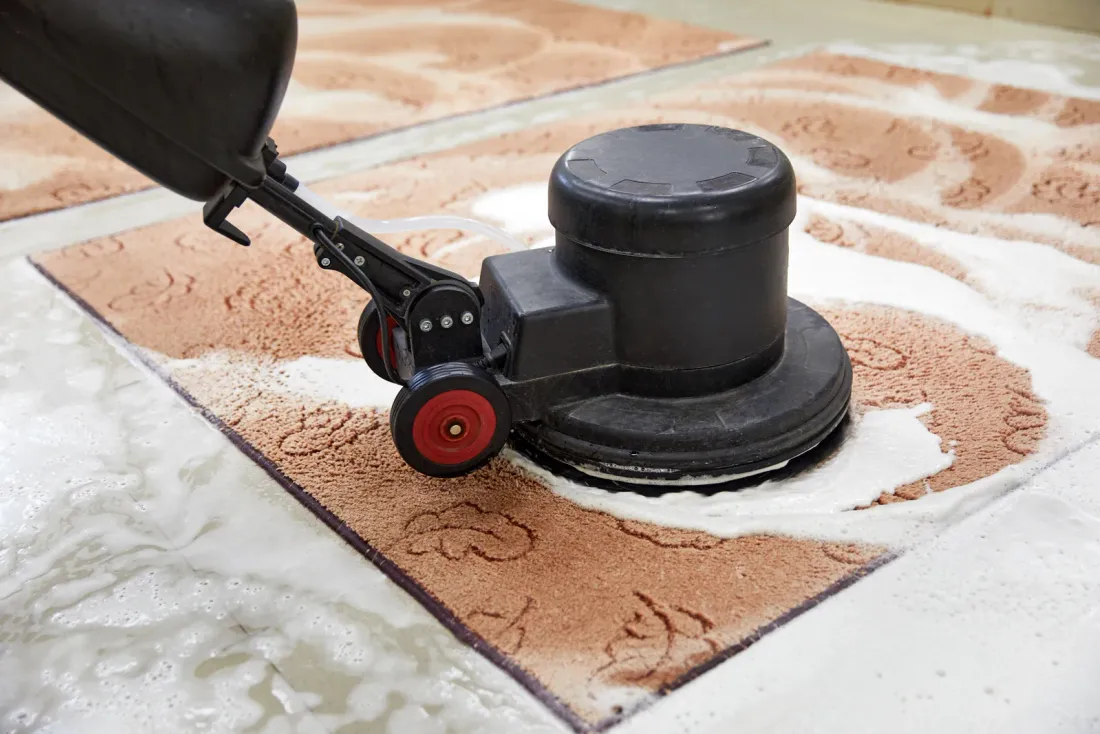
Many of those organizations still use a hybrid: in-house staff for daytime and sensitive work, and a contractor for nightly cleaning, floor projects, carpet extraction and window work that need equipment and specialized crews.
How to run the comparison yourself
Treat the comparison as two bids for the same written scope. Work through the steps below before deciding.
- Measure cleanable square footage and list every task with its frequency
- Estimate annual labor hours from realistic production rates, not from today's staffing
- Load in-house wages with payroll taxes, workers' compensation, benefits and paid leave
- Add supervision, recruiting, training, equipment depreciation, repairs, chemicals and tools
- Add the cost of covering absences at overtime rates
- Get contractor proposals priced on the same scope and frequencies
- Compare total annual cost, then weigh control, flexibility and risk
Factors that do not show up on the spreadsheet
Control and flexibility pull in opposite directions. In-house staff are yours to direct minute by minute; a contractor can add crews for a move, a flood or a reopening and remove them afterward without layoffs. Contractors also take on the employment risk for their own staff, including wage-and-hour compliance and workers' compensation claims, which some organizations value as much as the savings.
Consistency depends on management on either side. An in-house team without supervision drifts, and so does a contract crew without inspections. Ask either option how quality is measured and how problems get fixed.
What outsourcing to EBS covers
With 100+ employees and more than 25 years in commercial cleaning, EBS Maintenance carries the labor, supervision and coverage lines in the table above. Backup staffing covers absences, field supervisors and eHub inspections track quality and corrective actions, and crews are licensed and insured, trained, vetted and background-checked.
EBS also has specialized capacity for floor care, carpet, glass and pressure washing, so periodic projects do not mean buying machines you will rarely use. A free walkthrough gives you a priced scope to put beside your in-house numbers.
Related questions
Still not sure? A supervisor can answer at the walkthrough.
Request a walkthroughAll questionsIs outsourcing janitorial cheaper for a small office?
Usually. A small office rarely needs a full-time custodian, and a part-time employee still brings payroll, supervision, supplies and coverage problems. A contractor can schedule exactly the hours the space needs and supply the equipment, which typically makes contract cleaning the lower total cost at that size.
Can we keep some in-house custodians and outsource the rest?
Yes, and many larger organizations do. A common split keeps in-house staff for daytime support and sensitive areas while a contractor handles nightly cleaning and periodic floor, carpet and window work. Write clear boundaries into both job descriptions and the contract so tasks are not duplicated or missed.
Who covers a contract cleaner who is injured on our site?
The cleaning contractor's workers' compensation insurance covers its own employees. Ask for a certificate of insurance showing workers' compensation, general liability and any other coverage your contract requires, and keep it current. Your own safety duties for the site's hazards still apply.
Does an outsourced cleaning company supply products and equipment?
Usually it supplies cleaning chemicals, tools and machines, and states that in the proposal. Restroom paper, soap and trash liners vary: some buildings buy their own consumables and some have the contractor supply and invoice them. Settle the split in the scope so both bids are compared on the same basis.
Keep reading
Free site walkthrough
Talk to EBS about your facility
A few details and a supervisor calls you back the same business day.
- Call(949) 375-3305
- Emailinfo@ebsmaintenance.com
- HoursDaytime, evening, overnight and weekend schedules