
Multi-tenant buildings
What Is Base Building Cleaning vs. Tenant Cleaning?
In a multi-tenant building, the landlord and the tenants each own part of the cleaning. The lease and the cleaning specifications draw the line.
The short answer
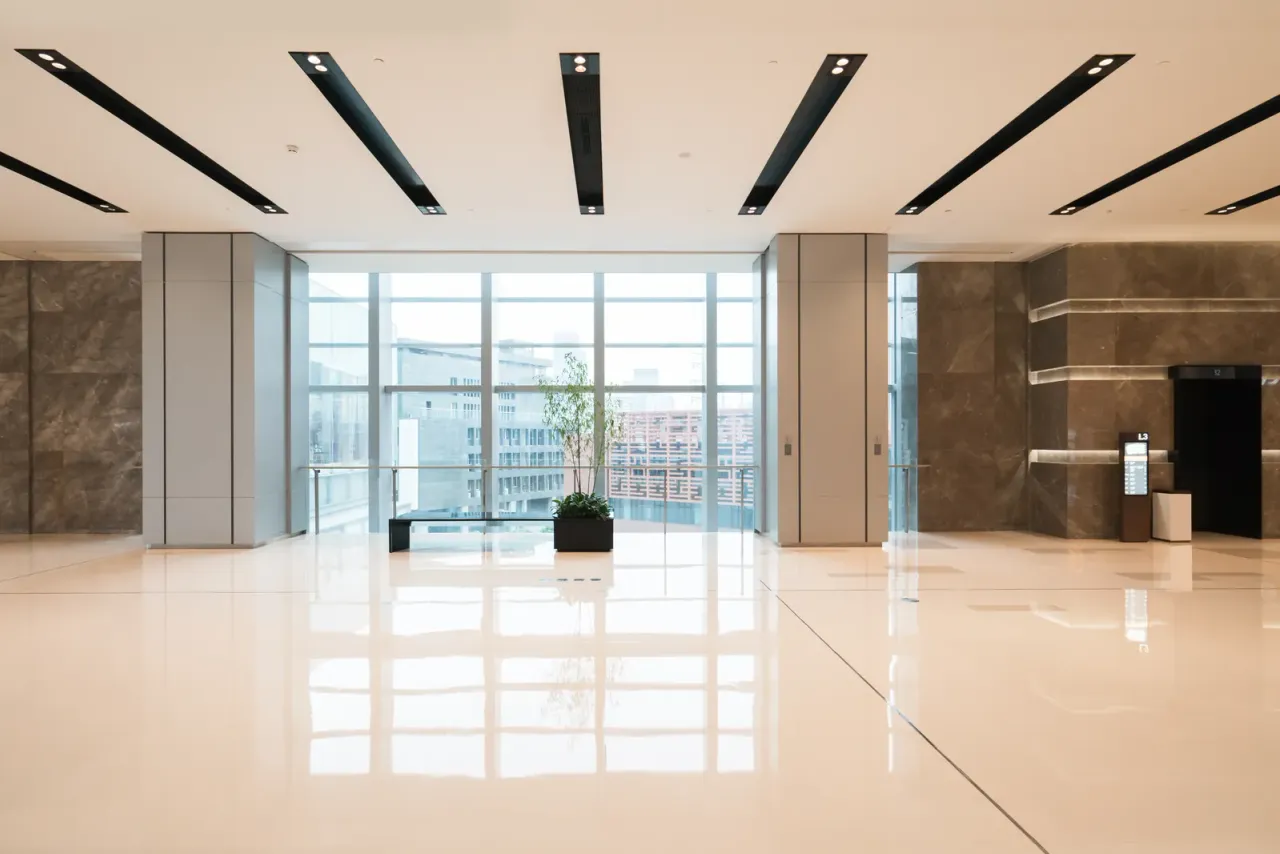
Base building cleaning is the janitorial work a landlord provides for the shared parts of a multi-tenant building: lobbies, corridors, elevators, common restrooms, stairwells, loading docks, parking areas and exterior entries. Tenant cleaning is the work inside each leased suite (offices, open work areas, private kitchens and in-suite restrooms). Depending on the lease, tenant cleaning is either supplied by the landlord to a written specification or contracted by the tenant directly.
What base building cleaning covers
This shared-area work keeps the parts of the property every tenant and visitor shares in a consistent condition. It is usually performed by the landlord's janitorial contractor and paid for through building operating expenses.
- Main lobby, entry vestibules, building directory and security desk area
- Elevator cabs, door tracks and call buttons
- Multi-tenant corridors, elevator lobbies and common restrooms
- Stairwells, landings and handrails
- Shared conference centers, fitness rooms and tenant lounges
- Loading dock, freight elevator, mail room and trash enclosure
- Parking structure lobbies, exterior walkways and entry glass
What tenant cleaning specifications usually include
Office leases for full-service buildings often attach a cleaning specification as an exhibit. It lists what the landlord's contractor does inside each suite and how often, typically nightly trash and recycling removal, vacuuming of open carpet, dusting of cleared surfaces, spot-cleaning of glass and the cleaning of in-suite restrooms and kitchenettes. Periodic items such as carpet extraction or window washing appear with their own frequencies.
Anything outside that list is above-standard work. Daily dishwashing, catering cleanup after events, a day porter dedicated to one tenant, or cleaning of a server room or lab are common examples, and they are usually billed to the tenant through the property manager.
Common area cleaning vs tenant space: who usually owns what
The split below reflects common practice in Southern California office buildings, but the lease always governs. Single-tenant floors and industrial buildings shift the line considerably.
| Space | Usually cleaned as | Notes |
|---|---|---|
| Lobby, elevators, stairwells | Base building | Highest visibility; often a daytime porter as well as nightly cleaning |
| Core restrooms on a multi-tenant floor | Base building | Shared by several tenants and their visitors |
| Core restrooms on a full-floor tenant's floor | Varies | Many full-service leases keep them in the base building scope |
| Private restrooms inside a suite | Tenant | Covered by the cleaning specification or the tenant's own vendor |
| Suite kitchens and break rooms | Tenant | Dishwashing and refrigerator clean-outs are often above-standard |
| Server rooms, labs, secure rooms | Tenant | Often excluded or restricted; cleaned by escort or special arrangement |
| Parking structure, exterior hardscape | Base building | May be a separate porter or pressure-washing contract |
How the lease type moves the line
In a full-service gross lease, the landlord typically supplies tenant cleaning to the specification and recovers the cost through rent and operating expenses. Under a triple-net lease, common in industrial and some retail property, the tenant usually hires and manages its own cleaning inside the premises while the landlord handles any shared areas. Modified gross leases fall in between and need a careful read.
How those costs are passed through to tenants, and whether they appear in common area maintenance charges, is a separate question worth checking with your lease administrator.
Writing landlord janitorial responsibility into the scope
Disputes usually start where the paperwork is vague. Before the building goes out to bid, or when a new tenant signs, settle these points in writing.
- A space list naming every area as base building or tenant, floor by floor
- Tasks and frequencies for each space type, matching the lease exhibit
- Who supplies paper, soap and liners in shared versus in-suite restrooms
- How tenants request above-standard work and how it is approved and billed
- After-hours access and key or badge rules for each suite
- Rooms that are excluded or require an escort
How EBS works in multi-tenant buildings
EBS Maintenance can carry the base building scope and individual tenant scopes as separate lines under one program, so each suite's work is inspected and billed on its own terms. Property managers get a single point of contact for both, and tenant requests come through that contact rather than directly to the crew.
Crews are trained, uniformed and background-checked, and they follow each suite's key, badge and restricted-room rules. Supervisors log inspections across common areas and suites alike.
Related questions
Still not sure? A supervisor can answer at the walkthrough.
Request a walkthroughAll questionsCan a tenant hire its own cleaning company in a full-service building?
Sometimes, but only with the landlord's approval. Many full-service leases already include tenant cleaning, and landlords often require any outside vendor to carry specific insurance, follow building access rules and coordinate with the base building contractor. Check the lease and the building rules before signing a separate contract.
Who cleans restrooms on a floor leased to one tenant?
It depends on the lease. Core restrooms are often kept in the base building scope even on a full floor, because they are part of the building's plumbing core. Private restrooms built inside a suite are usually tenant cleaning. The lease exhibit or the building's cleaning specification should say which applies.
Who pays for cleaning after a tenant's event or move-in?
The tenant, in most cases. Event cleanup, move-in debris and extra trash removal are above-standard services billed to the tenant that generated them, while any common area affected, such as a freight elevator or lobby, is restored by the base building contractor and recharged if the lease allows.
Is the parking garage the landlord's cleaning responsibility?
Usually yes. Garage lobbies, elevators, stairwells and pedestrian paths sit in the landlord's common area scope, while sweeping and pressure washing of the parking decks themselves are often handled under a separate porter or exterior maintenance contract.
Keep reading
Free site walkthrough
Talk to EBS about your facility
A few details and a supervisor calls you back the same business day.
- Call(949) 375-3305
- Emailinfo@ebsmaintenance.com
- HoursDaytime, evening, overnight and weekend schedules