
Biosafety labs
How Should Janitorial Staff Clean a BSL-2 Lab?
A biosafety level 2 lab still needs its floors mopped and trash emptied. The skill is knowing exactly where the janitor's job ends and the lab's begins.
The short answer
BSL-2 lab cleaning by janitorial staff covers the room, not the research: floors, sinks, regular trash, soap and towel supplies, and any surfaces the lab has cleared, done after scientists finish and decontaminate their benches. Custodians should not touch biosafety cabinets, open biohazard bags or sharps containers, move samples or equipment, or clean up spills of infectious material. Those limits come from the lab's biosafety program, which follows the CDC and NIH manual Biosafety in Microbiological and Biomedical Laboratories, known as the BMBL.
What the BMBL says about BSL-2 spaces
The BMBL, now in its sixth edition (2020), is guidance that institutions adopt through their biosafety officers and committees. BSL-2 applies to work with agents of moderate hazard. Its standard practices make the laboratory supervisor responsible for controlling access, call for a biohazard sign at the entrance when infectious materials are present (showing the biosafety level, a contact person and entry and exit requirements), and require lab personnel to decontaminate work surfaces after work and after any spill or splash.
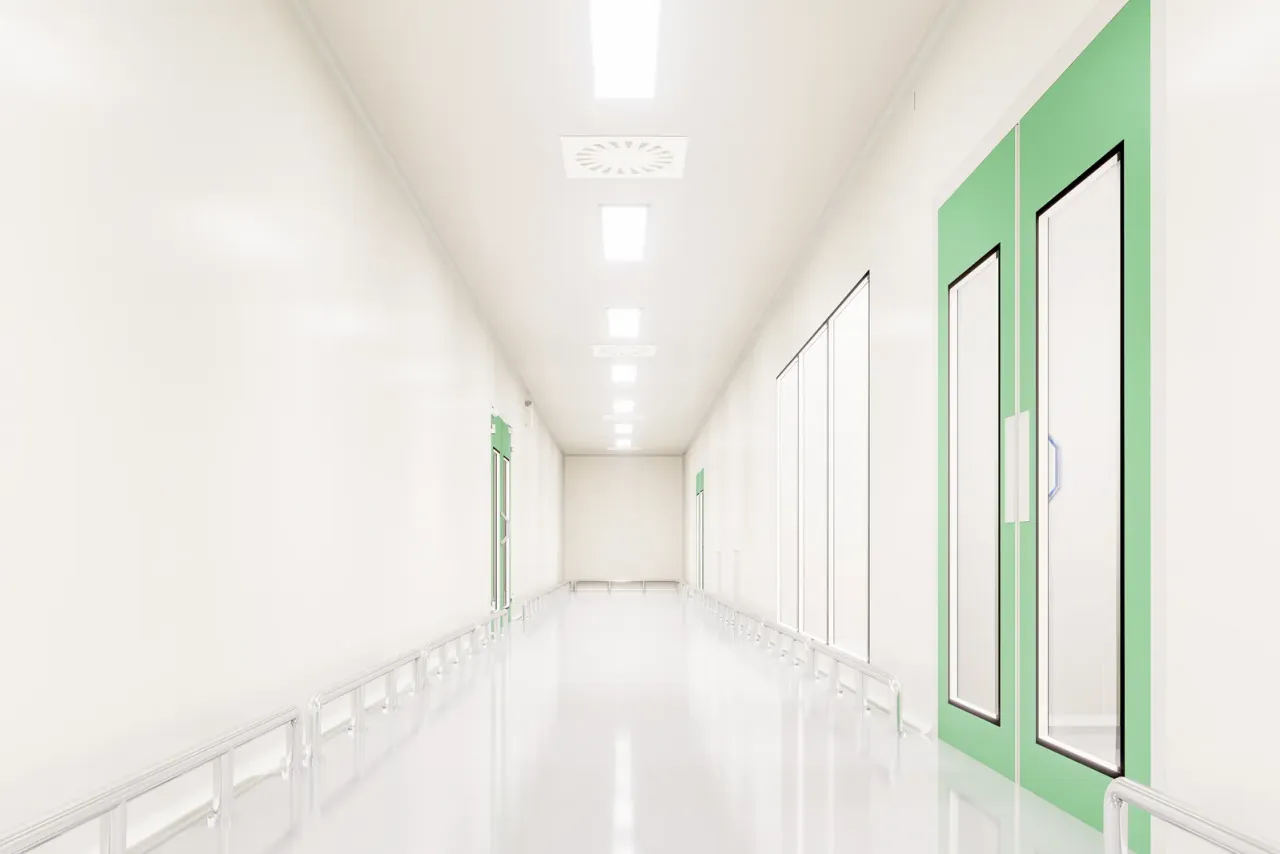
The facility rules matter to custodians as well. BSL-2 labs should have self-closing, lockable doors and must be designed to be easily cleaned and decontaminated; carpets and rugs are not permitted. Everyone who enters, including support staff, is to be told of the potential hazards and must meet the posted entry and exit requirements.
BSL-2 lab cleaning: who does what
The cleanest way to avoid exposure is to keep custodial duties away from anything that may hold infectious material. A written split, agreed with the biosafety officer and posted for both teams, prevents the gray areas that cause incidents.
| Task | Janitorial staff | Lab staff |
|---|---|---|
| Floors | Damp mop with the approved agent | Clear floor of boxes and equipment cords |
| Bench tops | Only if cleared and released by the lab | Decontaminate after work and after spills |
| Biosafety cabinets | Never | Decontaminate inside and out per protocol |
| Sinks and handwash stations | Clean basin and fixtures, restock soap and towels | Keep sinks free of lab materials |
| Regular trash | Empty and replace liners | Keep lab waste out of regular bins |
| Biohazard bags and sharps | Never open or move unless trained and assigned | Package, treat or hand off to the waste vendor |
| Spills of biological material | Leave, secure the door, notify the lab | Respond under the lab's spill procedure |
| Equipment such as incubators and centrifuges | Do not touch | Clean and decontaminate |
Entry rules for custodians
Most problems are avoided by timing and discipline. Cleaning is scheduled after the lab has finished for the day, or at times the lab has agreed, and the custodian reads the door sign every visit rather than assuming nothing has changed.
- Enter only when the lab has released the room or a contact has confirmed it is safe
- Wear the PPE posted at the door, typically a lab coat, gloves and eye protection
- Bring no food, drink or personal items into the lab
- Do not touch anything labeled with the biohazard symbol
- Use mops, buckets and cloths dedicated to lab areas
- Damp mop rather than dry sweep, to avoid raising dust and aerosols
- Wash hands before leaving, and never prop the lab door open
Training, exposure and California rules
Whether a custodian falls under Cal/OSHA's bloodborne pathogens standard, Title 8 section 5193, depends on whether contact with blood or other potentially infectious materials is reasonably anticipated in the job. Labs that work with human blood, tissues or cell lines often meet that test, and section 5193 then requires an exposure control plan, training and an offer of hepatitis B vaccination to exposed workers. Many institutions design custodial duties to avoid that exposure entirely, which is the safer route.
Labs also use hazardous chemicals, so the contractor's crew needs hazard communication training under Title 8 section 5194, and the lab should brief them on its own chemicals. Every incident, even a suspected splash, should be reported and evaluated the same day.
Where waste handling stops
In California, biohazardous waste is regulated under the Medical Waste Management Act in the Health and Safety Code, overseen by the California Department of Public Health. The lab that generates the waste packages, labels and treats it or hands it to a registered hauler. Custodians remove only waste the lab has designated as ordinary trash, and if the institution allows treated waste to go out with regular refuse, the lab marks it clearly before anyone else handles it.
How EBS approaches lab cleaning
EBS provides cleaning for labs and research facilities as part of its life sciences work, covering lab surfaces, support areas, restrooms and floors with documentation on every visit. Team members are trained and background-checked. At the walkthrough, a supervisor and your biosafety contact agree on the task split, entry times and restricted rooms, so the crew's checklist reflects your biosafety rules.
Related questions
Still not sure? A supervisor can answer at the walkthrough.
Request a walkthroughAll questionsCan janitors clean a BSL-2 lab while experiments are underway?
It is better not to. Cleaning is usually scheduled after the lab has finished and decontaminated its work surfaces, or at times the lab confirms are safe. Working around active experiments raises the chance of disturbing materials and puts custodians near hazards they are not trained to handle.
Should custodians mop under biosafety cabinets?
Only the floor that can be reached without moving the cabinet or touching it. Cabinets are certified in place, and moving one can require recertification. The cabinet itself, including its sash, work surface and exterior, is cleaned by lab staff under their own protocol.
What disinfectant should janitorial staff use in a BSL-2 lab?
Whatever the biosafety officer approves for that lab. Floors and sinks often get an EPA-registered disinfectant suited to the agents in use. Custodians should never bring in their own products or mix them with lab chemicals, especially bleach, which reacts with acids and ammonia.
What should a custodian do if they find a spill in a lab?
Stop, step back and do not try to clean it. Leave the room, keep others out, and notify the lab contact or biosafety officer right away so trained lab staff can respond under the spill procedure. If there was any contact with the spill, report it as a possible exposure.
Keep reading
Free site walkthrough
Talk to EBS about your facility
A few details and a supervisor calls you back the same business day.
- Call(949) 375-3305
- Emailinfo@ebsmaintenance.com
- HoursDaytime, evening, overnight and weekend schedules