
Retail
How Retail Store Cleaning Increases Sales
Shoppers rarely praise a clean store, but they notice a dirty one and leave sooner. Here is where cleanliness shapes buying decisions and how to schedule for it.

The short answer
Retail store cleaning increases sales indirectly, by removing the small reasons shoppers have to leave early, skip the fitting room or pick another store next time. Customers judge cleanliness within a few steps of the door, read dust and clutter as signs of old stock or poor care, and mention dirty restrooms and fitting rooms in the reviews other shoppers read. The gain comes from consistency at the points customers see and touch, kept up during trading hours as well as overnight.
Why retail store cleaning increases sales from the front door
The decision to browse or leave starts outside. Litter in the parking area, a sticky cart corral, smeared entry glass and a soaked mat on a rainy day all tell a shopper something before they see a single product. Inside the door, the floor is the largest surface in view, and a dull, scuffed or gritty floor colors the impression of everything on the shelves.
Smell is part of it too. Trash that was not emptied overnight or a restroom odor drifting onto the sales floor makes people shorten their visit, and shorter visits mean fewer items in the basket.
How cleanliness changes the way products look
Shoppers use the condition of the store as a shortcut for the condition of the merchandise. Dust on a shelf edge suggests the product behind it has been sitting there a while. Fingerprints on a jewelry or electronics case make the items inside look handled. Pins, tags and hangers left on a fitting room floor make the next customer less willing to try anything on, and a fitting room is often where the purchase decision is made.
The reverse is also true. Clean glass, dusted fixtures and clear aisles let lighting and displays do the work the store paid for, and they make it easier for staff to keep merchandise faced and in place.
The clean store customer experience, touchpoint by touchpoint
Set a standard for each point a customer passes. Written as a short list, it becomes the scope your cleaning team works to and the checklist your store manager walks before opening.
| Touchpoint | What shoppers notice | Standard to set |
|---|---|---|
| Parking area and entrance | Litter, gum, stained concrete | Daily litter pick; periodic pressure washing |
| Doors and storefront glass | Handprints and streaks | Cleaned before opening; spot-cleaned at peak times |
| Floors and aisles | Grit, scuffs, dull finish, spills | Nightly cleaning, regular burnishing, spills cleaned up as soon as they are seen |
| Shelves, fixtures and displays | Dust and sticky residue | Dusted on a rotating schedule, display glass cleaned daily |
| Fitting rooms | Pins, tags, hangers, mirror smudges | Cleared and mirrors cleaned several times a day |
| Restrooms | Odor, empty dispensers, wet floors | Checked and restocked through the day; full clean nightly |
| Checkout and card terminals | Fingerprints and clutter | Wiped and disinfected with EPA-registered products |
Restrooms, reviews and repeat visits
Customer restrooms carry more weight than their size suggests. A shopper who finds one dirty or out of supplies often assumes the same standard applies to the stockroom, and families with young children may decide not to come back at all. Restroom and fitting room complaints also show up in online reviews attached to your map listing, where future customers read them before they ever visit.
Reviews are a practical measure for any store. Track how often cleanliness comes up, good or bad, before and after a change in your cleaning program; it is a more honest signal than any general claim about cleanliness and sales.
Retail cleanliness and sales depend on timing
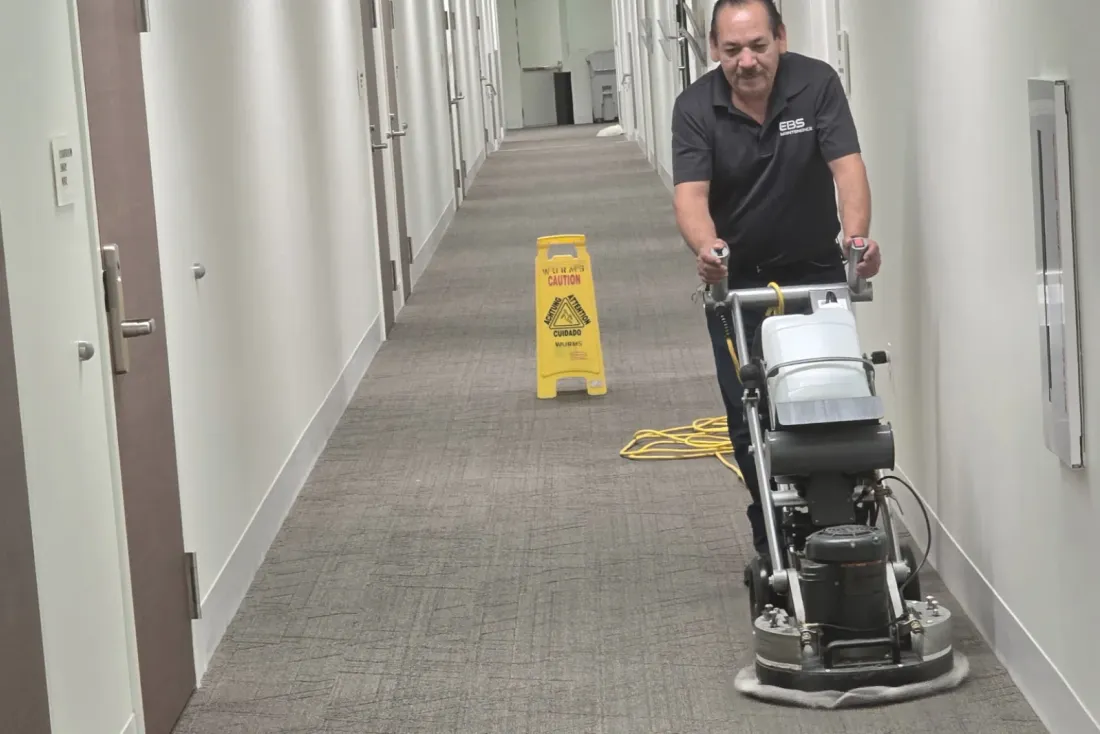
A store cleaned perfectly at 6 a.m. can look neglected by 3 p.m. on a busy Saturday. Heavy work such as floor scrubbing, burnishing and deep restroom cleaning belongs before opening or after close, while a day porter during peak hours handles spills, restroom checks, fitting room resets and the entrance.
Plan for the busy periods. Holiday trading, back-to-school weeks and sales events need extra porter hours booked in advance. In Southern California, rainy days call for extra entrance matting and floor attention, and stores in open-air shopping centers deal with dust and leaves blown in through constantly opening doors. Chains with several stores benefit from one written standard applied the same way everywhere.
How EBS supports retail stores
EBS Maintenance cleans retail stores, shopping centers and showrooms before opening, after close or overnight, with day porter coverage for peak hours. Programs cover sales floors, fitting rooms, restrooms, checkouts and entrance glass, with floor care and pressure washing scheduled as periodic work and supervisors checking results through eHub inspections. Stores across the service area are covered from the Corona office; call (949) 375-3305 to set up a walkthrough.
Related questions
Still not sure? A supervisor can answer at the walkthrough.
Request a walkthroughAll questionsIs there research linking store cleanliness to sales?
Consumer surveys regularly list cleanliness among the factors shoppers weigh when choosing where to shop, but the figures vary by study, sector and method, so treat any single number with caution. The most reliable evidence is your own: complaints, review mentions and conversion before and after a change in cleaning standards.
How often should a retail store be cleaned?
Every trading day, with a full clean before opening or after close and lighter attention during business hours. Floors need regular burnishing or scrubbing by traffic level, and fitting rooms and restrooms need checks several times a day in a busy store.
Does a retail store need a day porter?
Busy stores usually benefit from one at peak times. A porter keeps restrooms, fitting rooms, entrances and spills under control while staff focus on customers. Smaller stores with light traffic can often manage with a thorough nightly clean and staff spot-checks.
Keep reading
Free site walkthrough
Talk to EBS about your facility
A few details and a supervisor calls you back the same business day.
- Call(949) 375-3305
- Emailinfo@ebsmaintenance.com
- HoursDaytime, evening, overnight and weekend schedules