
Consumables and billing
Should a Janitorial Contract Include Restroom Supplies?
Paper towels, soap and trash liners look like small line items until a restroom runs dry or an invoice doubles. Decide who buys them before you sign.

The short answer
Whether to have janitorial supplies included in contract pricing depends on how much control you want over brands, cost and inventory. Vendor-supplied consumables such as toilet tissue, towels, hand soap, seat covers and trash liners simplify purchasing and put stockouts on the vendor, but they need a clear billing method and usage reports. Owner-supplied consumables give direct cost control and consistent products across a portfolio, but your staff must order, receive and store them. Either way, list every item with who buys it, who stocks it and how it is billed.
Define what "supplies" means before pricing it
Most supply disputes start with one undefined word. Split supplies into three groups in the contract. Cleaning chemicals, tools and equipment, from microfiber and mops to vacuums and auto-scrubbers, are normally the vendor's, along with the safety data sheets for its products. Occupant consumables are the items people use up: toilet tissue, towels, seat covers, hand soap, sanitizer refills, trash and recycling liners, sanitary receptacle liners and urinal screens.
Dispensers are the third group, and ownership matters there more than anywhere else. Name each group, then assign it.
Owner-supplied or vendor-supplied consumables
Neither model is right for every building. The comparison below shows where each one tends to work.
| Factor | Vendor supplies | Owner supplies |
|---|---|---|
| Purchasing workload | Vendor orders, receives and stocks | Your staff order and receive |
| Product choice | Vendor's lines unless the contract specifies brands | Your choice, standard across sites |
| Cost visibility | Depends on the billing method | Direct, at your negotiated prices |
| Stockouts | Clearly the vendor's problem | Shared: you buy, the crew restocks |
| Storage | Vendor stock in your closets | Your stock, often your storage room |
| Best fit | Single buildings, lean facility teams | Portfolios with purchasing contracts |
Three ways to bill janitorial supplies included in contract scope
If the vendor supplies consumables, choose a billing method on purpose rather than accepting whatever appears on the first invoice.
- Bundled into the fixed monthly price: simple to budget, but usage swings land on the vendor, which can push it toward cheaper products or thin stocking
- Pass-through at cost plus a stated markup: transparent if receipts are provided, though it takes more review each month
- Unit price list: a fixed price per case for each item, billed by actual use and reported monthly, often the cleanest balance of control and simplicity
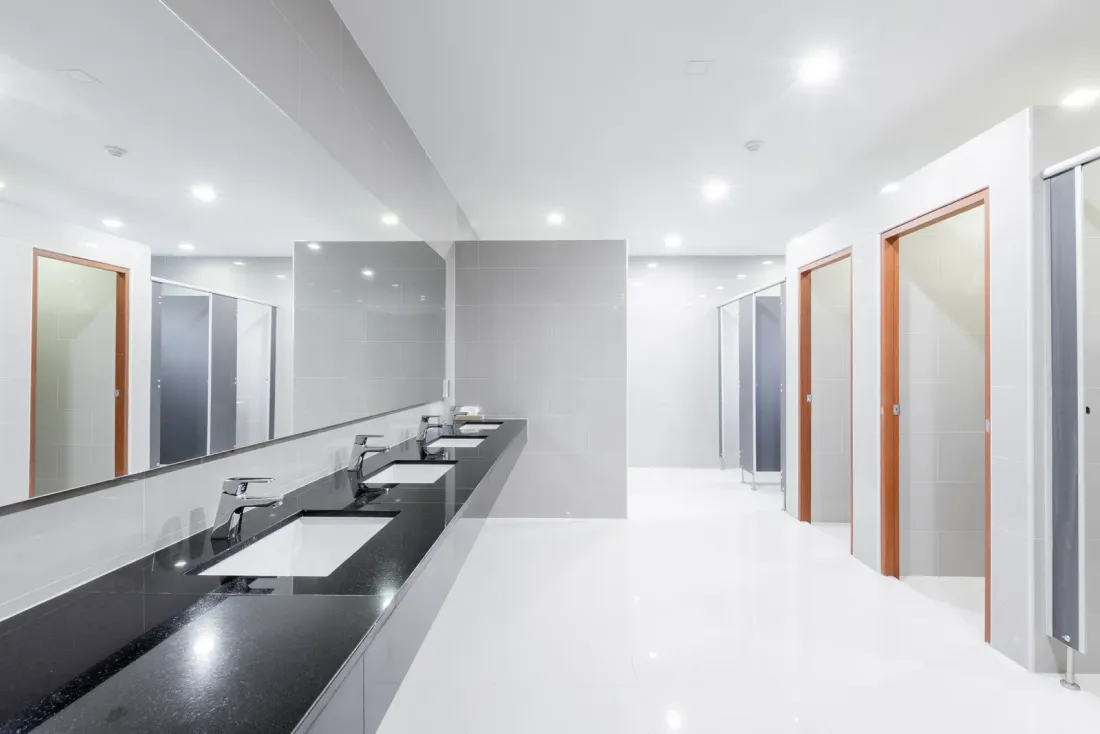
Dispensers decide more than you think
Many towel, tissue and soap dispensers are closed systems that accept only one manufacturer's refills. Distributors often install them at no charge in exchange for the refill business. That can control portions and cut waste, but it also ties the building to a product line, and to whoever owns the hardware.
Write dispenser ownership into the contract. If a vendor's dispensers leave when the vendor does, restrooms can be stripped bare on a changeover night. Portfolios gain the most from standardizing: one dispenser family across buildings means one refill list, simpler training and better purchasing leverage.
Who supplies trash liners, and which ones
Liners cause more invoice arguments than paper does, because sizes and grades multiply. Specify a liner size for each container type and a heavier grade for breakrooms, kitchens and anywhere wet or sharp waste ends up. If your building separates recycling and organics under California SB 1383, match liners to the bin labeling; clear liners in recycling bins let staff see contamination before it reaches the hauler.
Decide too whether liners are changed every service or only when soiled. Changing every liner nightly is simple to audit but uses far more plastic, and many buildings now change only dirty or full liners in low-use offices.
Par levels, storage and usage reports
Whichever model you choose, three controls keep supply costs honest: a par level for each closet, a reorder point, and a monthly usage report by building or floor. Usage tracked against occupancy shows waste, leaks and theft quickly. A jump in towel use often means a broken dispenser or a missing hand dryer, not more hand-washing.
Supplies in an EBS cleaning program
Restocking is built into EBS service, and day porters refill paper and hygiene products before they run out during business hours. For buildings that want lower-impact products, the EBS green cleaning option can include recycled paper products, refillable soap dispensers and sustainable liners on request. Who purchases each item is settled at the walkthrough and written into the scope.
Related questions
Still not sure? A supervisor can answer at the walkthrough.
Request a walkthroughAll questionsAre cleaning chemicals normally included in a janitorial contract?
Yes, in most commercial agreements the vendor provides its own chemicals, tools and equipment, along with safety data sheets for each product it brings on site. If you require specific products, such as third-party-certified green cleaners, name them in the scope so every bidder prices the same thing.
Is it cheaper for the owner to buy restroom consumables?
Sometimes, especially for portfolios with negotiated purchasing contracts. Count the hidden costs before deciding, though: staff time to order and receive, storage space, and the tenant complaints that follow a stockout when the crew has nothing to restock.
How do we keep consumable costs from creeping up?
Use controlled-portion dispensers, set par levels by closet and ask for monthly usage reports. Compare usage with occupancy each quarter. Most unexplained increases come from broken dispensers, leaks, theft or occupancy changes nobody reported.
What happens to our supplies when we change cleaning vendors?
Owner-purchased stock should stay, and vendor stock may leave or be bought out at a price set in the contract. Count the closets together before the last night and settle dispenser ownership early, so restrooms are stocked when the new crew arrives.
Keep reading
Free site walkthrough
Talk to EBS about your facility
A few details and a supervisor calls you back the same business day.
- Call(949) 375-3305
- Emailinfo@ebsmaintenance.com
- HoursDaytime, evening, overnight and weekend schedules