
For property managers
Commercial Property Maintenance: Where Cleaning Fits
Cleaning is the most frequent line in a property's operating plan and the one tenants see every day. Managed well, it also protects expensive finishes and brings problems to light early.

The short answer
In commercial property maintenance, cleaning is the line that runs most often and touches the most surfaces. Janitorial service, floor and carpet care, glass and pressure washing sit alongside preventive maintenance, repairs, life safety and grounds work. Cleaning keeps the property presentable for tenants, slows the wear on costly finishes and brings problems to light early, while engineers and licensed trades handle building systems and repairs.
The parts of commercial property maintenance
A property's operating plan usually breaks into a handful of streams: preventive maintenance of mechanical, electrical and plumbing systems; reactive repairs; life-safety inspections and testing; roofing, paving and exterior upkeep; landscaping; security; waste and recycling; and cleaning in all its forms. Capital planning sits above them, deciding when worn assets are replaced rather than maintained.
Cleaning is unusual among these streams because it happens every day, in every common area, and tenants judge the property by it. That frequency is also its hidden value: no other vendor spends as many hours inside the building or sees as much of it.
Cleaning as asset protection
Many finishes in a commercial property wear out faster from dirt than from age. Grit acts like sandpaper on floor finish and carpet fiber, mineral scale corrodes fixtures, and residue left on stone etches it. Routine and periodic cleaning is therefore part of protecting the asset, not just presenting it. The table connects common finishes to what damages them and the cleaning work that slows the damage.
| Asset | What wears it out | Cleaning that slows it |
|---|---|---|
| Carpet | Embedded grit cutting the fibers | Frequent vacuuming, interim cleaning, scheduled extraction |
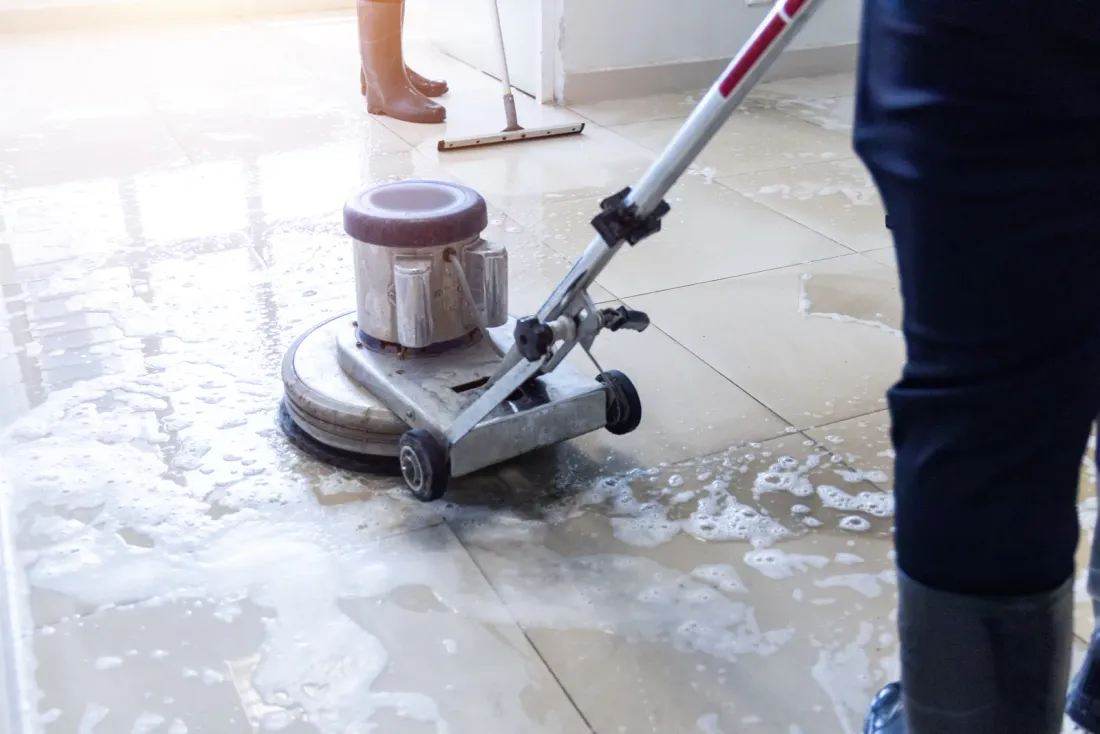
| Resilient floors | Abrasion through the finish to the tile | Matting, dust mopping, burnishing, recoating |
| Stone lobbies | Acid etching and scratching | pH-neutral cleaners and daily dust mopping |
| Restroom fixtures and partitions | Mineral scale and corrosion | Daily cleaning with suitable products, periodic descaling |
| Glass and storefront frames | Hard-water spotting and coastal salt film | Scheduled interior and exterior glass cleaning |
| Entries and walkways | Gum, oil and ground-in grime | Pressure washing with runoff captured |
An extra set of eyes on the property
Night crews pass every restroom, corridor and stairwell on their route, which makes them a useful source of early warnings. A slow drip under a sink, a ceiling stain spreading from a roof leak, a failed exit sign or evidence of pests is far cheaper to fix the week it appears than the month a tenant reports it. Give the cleaning supervisor a simple reporting route into your work-order system and ask for those notes as a standing part of the service.
Budgets, recoveries and who pays
Under many commercial leases, common-area cleaning is an operating expense recovered from tenants, while cleaning inside each suite is either part of a full-service lease or the tenant's own responsibility. The lease decides, so read it before setting the scope, and keep base building and suite cleaning on separate lines so recoveries are easy to support.
Budget cleaning in three parts: the recurring monthly scope, periodic projects such as floor refinishing, carpet extraction and exterior glass, and a reserve for the unplanned, such as a burst pipe, a smoke event or a tenant move-out that comes earlier than expected.
Coordinating cleaning with maintenance vendors
Most clashes between cleaning and maintenance are timing problems. Painting, ceiling work and repairs should finish before floors are refinished, not after. Pressure washing belongs before paving is sealed or restriped. After any repair or tenant improvement, someone has to remove the dust and debris, so the contract should say whether that is the contractor or the cleaning vendor. A shared calendar visible to the engineer, the cleaning supervisor and the property manager prevents most of these collisions.
Where EBS fits in a property's maintenance plan
EBS Maintenance is a cleaning and facility services company, not a repair contractor. On a commercial property it can cover the recurring janitorial scope, day porters, floor and carpet care, glass, pressure washing, disinfection and one-time project work such as turnover cleans. Supervisors stay in contact with the property manager, and inspections and completed work are documented in eHub, which supports both tenant questions and expense recoveries.
Related questions
Still not sure? A supervisor can answer at the walkthrough.
Request a walkthroughAll questionsShould the property manager or each tenant hire the cleaning company?
It depends on the lease. In full-service office leases the landlord usually hires one vendor for common areas and suites. In leases where tenants pay their own operating costs, the landlord often cleans shared areas and tenants contract for their own space. Using one vendor for both, where the lease allows, keeps standards consistent.
What cleaning is needed between tenants?
A turnover clean after repairs and painting are finished: carpet extraction or replacement prep, hard-floor scrubbing or refinishing, restroom and kitchen deep cleaning, interior glass, and dust removal from vents, ledges and fixtures. The goal is a suite ready to show and ready for the next tenant's build-out.
How much of the operating budget should go to periodic cleaning projects?
There is no fixed share; it depends on finishes and traffic. Estimate it from the floor, carpet and glass cycles your vendor recommends after a walkthrough, price each project, and spread them across the year. Properties that skip periodic work usually pay more later in early carpet and floor replacement.
Keep reading
Free site walkthrough
Talk to EBS about your facility
A few details and a supervisor calls you back the same business day.
- Call(949) 375-3305
- Emailinfo@ebsmaintenance.com
- HoursDaytime, evening, overnight and weekend schedules