
Property checklist
Building Maintenance Checklist for Commercial Properties
A whole-building list for property and facility managers. Cleaning is one part of it; systems, life-safety and exterior items belong to engineers, licensed trades and inspectors.

The short answer
A building maintenance checklist for a commercial property sorts recurring work by frequency and by owner: daily cleaning and walk-throughs, weekly and monthly system checks, quarterly and seasonal projects, and annual inspections required by code or by the equipment maker. Cleaning crews handle the interior surfaces and finishes; engineers, licensed contractors and inspectors handle mechanical, electrical, plumbing and life-safety items. Putting both on one calendar is what keeps tasks from falling through.
The building maintenance checklist at a glance
Use the table as a starting frame and adjust it to your equipment manuals, your lease obligations and your local fire authority. Each row should end up with a named owner and a place where completion is recorded, whether that is a work-order system, a vendor report or a binder at the engineering office.
| Frequency | Interior and cleaning | Systems and life safety | Exterior and grounds |
|---|---|---|---|
| Daily | Restrooms, trash, entries, break rooms, spill checks | Walk-through for leaks, outages and alarms | Litter at entries; doors close and lock |
| Weekly | Detail dusting, carpet spotting, hard-floor burnishing in busy areas | Review open work orders and fixture repairs | Sweep walks and parking; empty exterior bins |
| Monthly | High dusting, vent grilles, interior glass, appliance cleaning | Extinguisher visual checks; emergency light function test | Check exterior lighting and signage |
| Quarterly | Interim carpet cleaning, floor scrub and recoat | HVAC preventive maintenance by the mechanical contractor | Pressure wash entries and walkways |
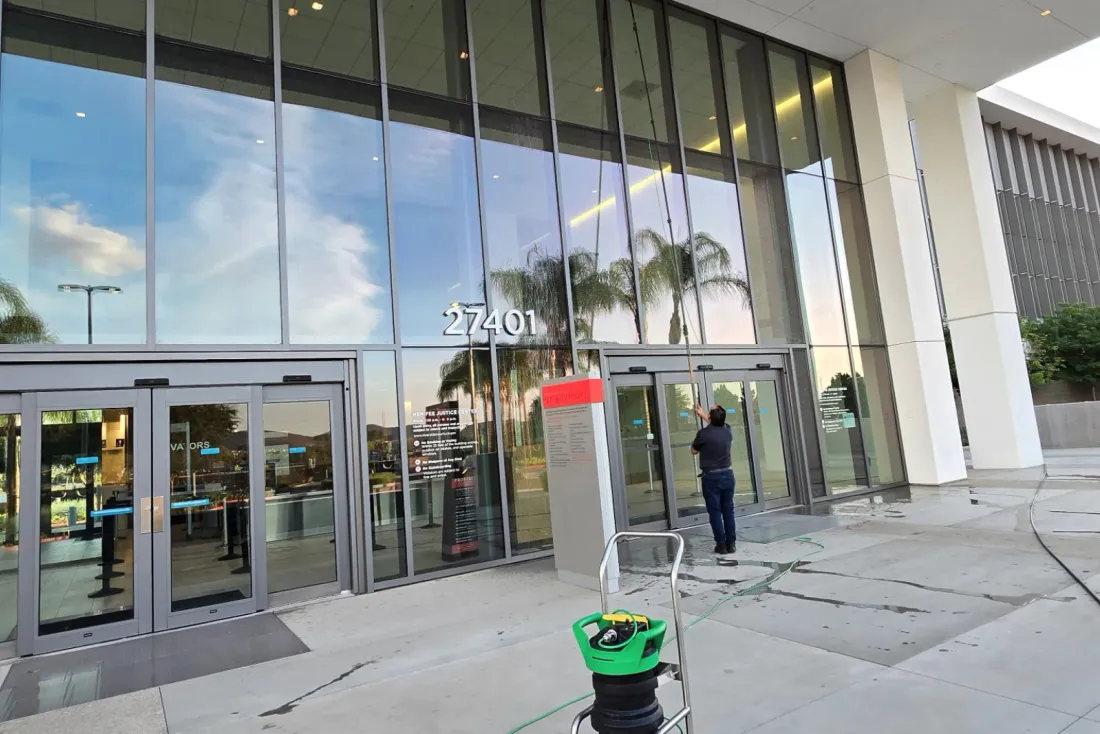
| Twice a year | Restorative floor work in heavy-traffic areas | Roof inspection before and after the rainy season | Clear roof drains and gutters; clean exterior glass |
| Annually | Full carpet extraction, light fixtures, restroom grout | Fire protection, backflow and elevator inspections | Paving, striping and tree work assessments |
Interior and cleaning items
The cleaning lines are the ones tenants notice first, and they also protect the finishes that cost the most to replace. Grit tracked across a lobby wears floor finish and carpet fibers, soap scum etches restroom fixtures, and dust settling on vents and light lenses ends up back in the air. A recurring janitorial scope covers the daily and weekly work; floor, carpet and glass projects need their own dates on the calendar so they are not squeezed out.
Cleaning crews are also the people walking every room at night. Give them a simple way to report a dripping valve, a dead light or a damaged ceiling tile, and those reports become early work orders for your engineer, often before a tenant ever notices the problem.
- Restrooms cleaned, disinfected and restocked; fixtures checked for leaks
- Entry mats vacuumed and cleaned underneath on a set schedule
- Exit corridors and stairwells kept free of carts and stored supplies
- Janitor closets kept orderly, with safety data sheets available
Building systems: HVAC, plumbing, electrical and elevators
Mechanical, electrical, plumbing and vertical transport work belongs to qualified engineers and licensed contractors. The checklist's job is to make sure their visits happen on schedule and leave a record. Typical lines include HVAC filter changes on the manufacturer's interval, belt and coil service, water heater and pump checks, lighting controls, and the elevator contractor's maintenance visits with the state operating permit posted and current.
Ask each contractor for a service report after every visit and file it against the checklist line. When something fails between visits, that history tells you whether the interval was right, whether the same component keeps failing, and whether a capital replacement belongs in next year's budget.
Life safety inspections
Life-safety items carry code schedules rather than preferences. NFPA 10 calls for monthly visual inspections of portable fire extinguishers and annual maintenance by a qualified service company. NFPA 101 calls for a monthly functional test of emergency lighting of at least 30 seconds and an annual test of 90 minutes. Sprinkler systems are inspected and tested under NFPA 25 and fire alarm systems under NFPA 72, both by licensed contractors.
Your local fire authority may add its own requirements, so confirm the list with the fire marshal's office and keep the tags and reports where an inspector can see them. Cleaning crews support this work by never blocking extinguishers, pull stations, exit doors or sprinkler heads with stored items.
Exterior, grounds and the Southern California calendar
Southern California's seasons shape the exterior list. Clear roof drains, gutters and area drains in the fall, before winter rains arrive. Expect extra entry and glass cleaning, and possibly earlier filter changes, after Santa Ana wind events carry dust, leaves and sometimes wildfire smoke. Check cooling equipment before summer heat, especially for inland and desert properties.
Pressure washing of walkways, entries and trash enclosures keeps the approach to the building presentable, but wash water cannot simply be sent down a storm drain. Plan collection or diversion of runoff with your vendor, and confirm what your city's stormwater rules allow before the work is scheduled.
Where EBS fits on the checklist
EBS Maintenance covers the cleaning lines: recurring janitorial service, floor care, carpet, glass, pressure washing, disinfection and one-time project cleaning, scheduled during the day, in the evening, overnight or on weekends. It does not perform repairs or engineering work, which stay with your maintenance staff and licensed trades. Supervisors keep in touch with your property contact, and inspections and completed work are documented so the cleaning rows on your checklist have a record behind them.
Related questions
Still not sure? A supervisor can answer at the walkthrough.
Request a walkthroughAll questionsWho should own the maintenance calendar for a commercial building?
The property or facility manager should own it, even when most lines are performed by vendors. Each task gets a named owner, a frequency and a place to record completion. Vendors keep their own schedules, but only the manager sees every line together and can spot a gap between two contracts.
How often should commercial HVAC filters be changed?
Follow the equipment manufacturer's interval and your mechanical contractor's advice for the filter type you use. Change them sooner after heavy dust, nearby construction or wildfire smoke, all of which load filters faster than normal operation. Recording each change against the checklist shows whether the interval suits your building.
Does a cleaning contractor do any building maintenance?
Not repairs or system work, but cleaning is maintenance for surfaces. Scheduled floor refinishing, carpet extraction, glass cleaning and pressure washing extend the life of finishes, and crews who walk the building nightly are well placed to report leaks, outages and damage to whoever handles repairs.
Keep reading
Free site walkthrough
Talk to EBS about your facility
A few details and a supervisor calls you back the same business day.
- Call(949) 375-3305
- Emailinfo@ebsmaintenance.com
- HoursDaytime, evening, overnight and weekend schedules