
Title 8 housekeeping
What Does Cal/OSHA Require for Warehouse Housekeeping?
Cal/OSHA does not hand warehouses a cleaning schedule. It sets conditions that have to hold all shift long, which is a different and harder target.
The short answer
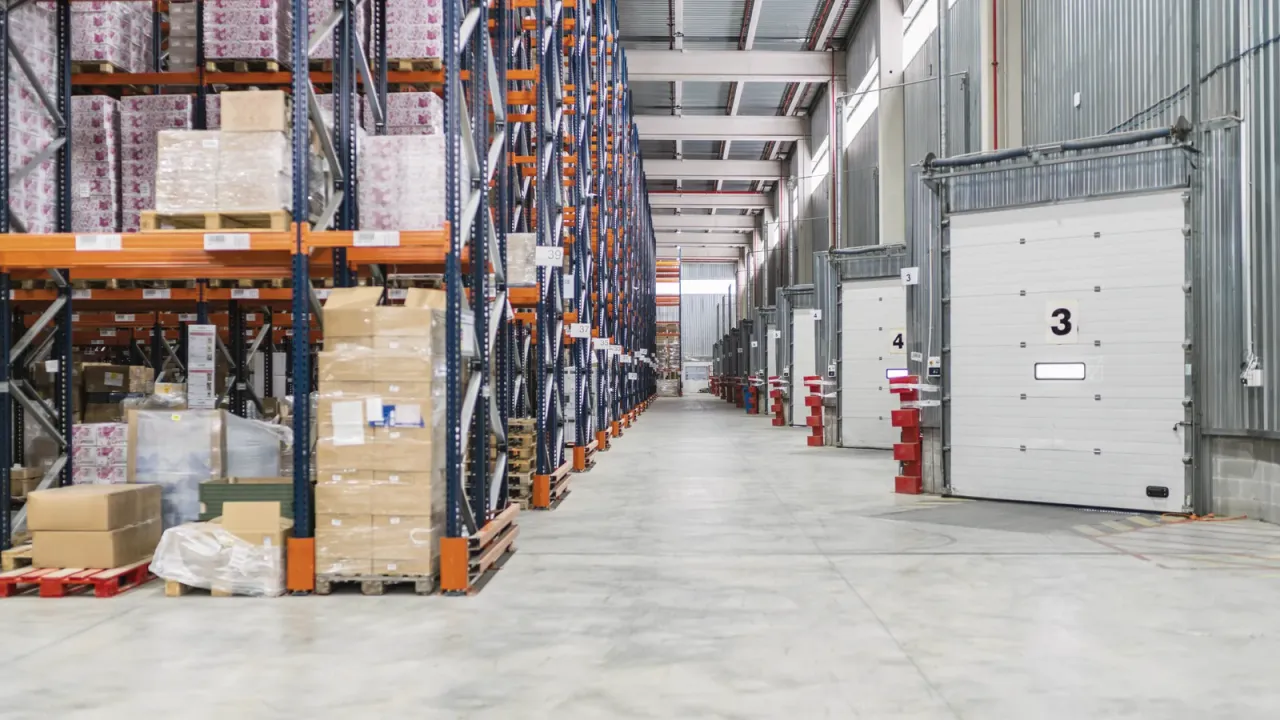
Cal/OSHA's warehouse housekeeping requirements come mainly from three General Industry Safety Orders. Title 8 section 3362 requires workplaces, storerooms and passageways to be kept clean, orderly and sanitary, with sweeping done in ways that minimize airborne dust; section 3273 requires floors to be free of dangerous projections and reasonably free of oil, grease and water; and section 3272 keeps aisles and walkways clear, in good repair and marked where needed. None of them sets a cleaning frequency, so housekeeping becomes a condition to maintain on every shift.
Which Title 8 sections set warehouse housekeeping rules?
The rules are spread across the sanitation and work-area orders rather than gathered in one place. These are the provisions a warehouse cleaning program has to serve.
| Section | Requirement | Cleaning crew task |
|---|---|---|
| 3362(a) | Workplaces, storerooms and passageways kept clean, orderly and sanitary | Routine trash, floor, restroom and break area cleaning |
| 3362(b) | Cleaning and sweeping done so as to minimize air contamination | Scrubbers, vacuums or dust control instead of dry sweeping fine dust |
| 3362(d) and (e) | Putrescible waste in leak-proof receptacles, removed often enough to avoid a nuisance | Liner, can washing and dumpster schedules |
| 3362(g) | Moisture from leaks or water intrusion corrected because of mold potential | Report roof leaks and wet areas promptly |
| 3273(a) | Floors free of dangerous projections, reasonably free of oil, grease and water; slippery floors protected | Spill response, scrubbing, mats and signage |
| 3273(b) | Yard roadways, walkways and storage areas free of dangerous depressions, obstructions and debris | Yard sweeping and litter pickup |
| 3272 | Aisles and walkways kept reasonably clear, in good repair and marked where needed | Equipment kept out of aisles; floor markings kept visible |
Keeping warehouse floors reasonably free of oil, grease and water
On a concrete warehouse floor, the usual culprits are forklift and truck leaks, condensation and rain at dock doors, spilled product and drinks carried through the building. A wet or oily floor under forklift traffic is a skid hazard as well as a slip hazard, so section 3273(a) is really about not letting liquids stay on the floor.
In practice that takes three layers. Operations staff handle spills as they happen, using spill kits placed near docks, charging areas and production lines. The cleaning crew scrubs travel lanes on a schedule that keeps residue from building up, and leaves floors dry before traffic returns. And anyone who sees a leak, from a forklift or a roof, reports it so the source gets fixed instead of cleaned up every night.
Keeping aisles and walkways clear
Section 3272 requires clear walkways or aisles at least 24 inches wide with 6 feet 8 inches of headroom where they are required, kept reasonably clear and in good repair, and marked with paint lines, curbing or similar methods where an unclear layout would make them hazardous. Aisles used by industrial trucks must be at least 2 feet wider than the widest vehicle for one-way traffic and at least 3 feet wider than twice the widest vehicle for two-way traffic, with storage access aisles excepted.
Cleaning crews can quietly break these rules themselves. A scrubber parked in a pedestrian lane, trash carts staged in a forklift aisle or shrink wrap drifting across a walkway all count. The crew's own habits belong in the program: equipment parked in designated spots, carts never left in travel lanes, and worn markings reported to the operator.
Dust, sweeping methods and high surfaces
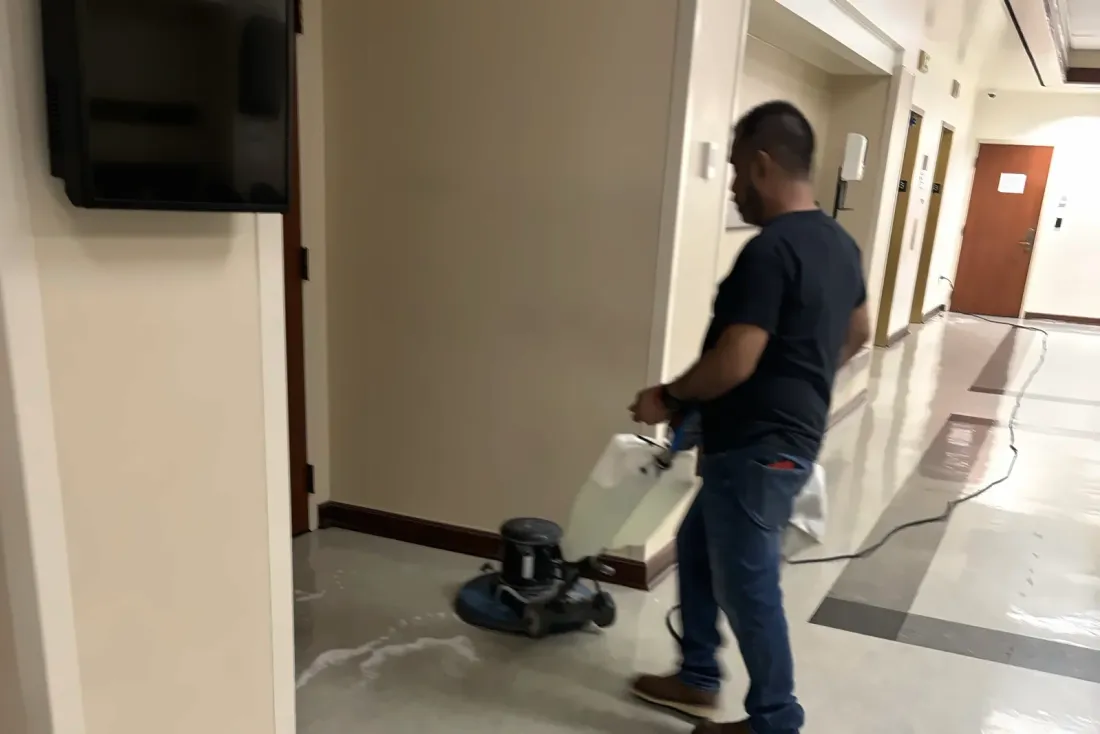
Section 3362(b) is the rule well-meaning crews break most often. Dry sweeping fine dust with a push broom lifts it into the air, where workers breathe it and it settles back on racking and product. Ride-on scrubbers with vacuum recovery, sweepers with dust control and HEPA-filtered vacuums do the job without breaking the rule.
Dust that settles up high comes back down eventually, onto product, people and freshly cleaned floors. High dusting of racking, beams and ledges on a periodic schedule keeps that cycle short. Plants handling combustible dust have obligations that go beyond housekeeping, and those programs need their own assessment.
A typical warehouse housekeeping frequency matrix
Who does what, and how often, should be written down. Operators usually own spill response during the shift, and the cleaning contractor owns scheduled work. This matrix is a starting point to adjust at the walkthrough.
| Area | Every shift or daily | Weekly | Periodic |
|---|---|---|---|
| Main aisles and travel lanes | Litter, shrink wrap and spill pickup | Machine scrubbing | Floor markings restored as they wear |
| Docks and bays | Debris swept, leaks reported | Dock aprons scrubbed | Truck courts pressure washed |
| Racking and high areas | Not usually | Lower levels spot dusted | High dusting of racking, beams and ledges |
| Charging and forklift parking | Leaks reported to the operator | Surrounding floor cleaned as permitted | Deep clean during planned downtime |
| Restrooms and break rooms | Cleaned and restocked | Detail cleaning | Floor scrubbing and grout care |
| Yards and walkways | Litter pickup | Sweeping | Pressure washing |
How EBS supports warehouse housekeeping
EBS's warehouse program covers machine scrubbing of concrete and sealed floors, dock and bay cleaning, high dusting of racking and ledges, and restrooms and break areas, scheduled overnight or on weekends so it stays out of the way of production. Its large-facility experience includes more than 10 million square feet serviced and one contract covering over 1 million square feet. Service logs and supervisor inspections give a safety lead documented completion to show during audits.
Related questions
Still not sure? A supervisor can answer at the walkthrough.
Request a walkthroughAll questionsDoes Cal/OSHA say how often a warehouse must be cleaned?
No. The housekeeping orders describe conditions to maintain, such as clean, orderly passageways and floors reasonably free of oil, grease and water, rather than a frequency. The right schedule is whatever keeps those conditions true through every shift, which is why traffic, product and season all change it.
Are floor markings required in every warehouse?
Not in every case. Section 3272 requires marking with paint lines, curbing or similar methods where an unclear layout would make aisles and walkways hazardous. Most busy distribution centers mark them anyway, and cleaning programs should protect the markings rather than wear them away with harsh chemicals.
Is dry sweeping allowed?
Sweeping is allowed, but section 3362(b) requires it to be done in a way that minimizes air contamination. For fine dust, that usually means scrubbers with recovery, dust-control sweepers or HEPA vacuums instead of a dry push broom.
Who gets cited for a blocked aisle, the warehouse or the cleaning contractor?
Possibly both. Under Cal/OSHA's multi-employer worksite rule, Title 8 section 336.10, an employer that created the hazard, exposed workers to it, was responsible for correcting it or controls the site can be cited. Written responsibilities help each side know what it owns.
Should forklift aisles be cleaned during operations?
Only with controls in place: coordination with the shift lead, high-visibility clothing, barriers or signs and agreed travel paths. Most heavy cleaning moves to off-shift hours, with daytime work limited to spill response and litter pickup.
Keep reading
Free site walkthrough
Talk to EBS about your facility
A few details and a supervisor calls you back the same business day.
- Call(949) 375-3305
- Emailinfo@ebsmaintenance.com
- HoursDaytime, evening, overnight and weekend schedules