
Clinic cleaning checklist
What Belongs on a Medical Office Cleaning Checklist?
A clinic checklist has to answer questions an office list never asks: who wipes the exam table, who touches the sharps container, and how long the disinfectant stays wet.
The short answer
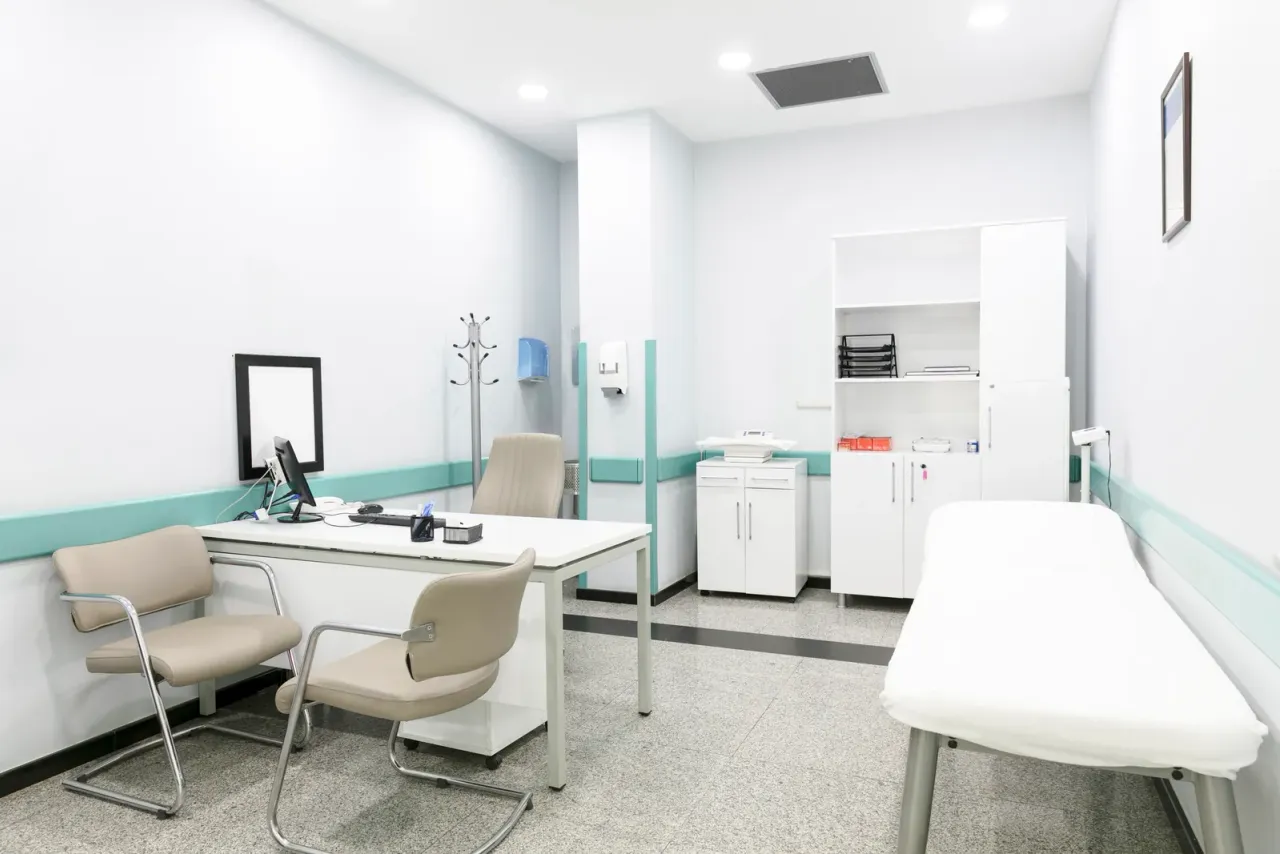
A medical office cleaning checklist should run room by room, covering reception and waiting areas, exam and procedure rooms, restrooms, labs and specimen areas, nurse stations, staff areas and offices. For each room it should state which surfaces are cleaned, which are disinfected with an EPA-registered product left wet for its label contact time, and which belong to clinical staff rather than the cleaning crew. It should also set the order of work, the color-coded tools for each area and the waste and privacy rules the crew follows.
Who cleans what: clinical staff or the cleaning crew
The most important lines on a clinic checklist are the ones that say who is responsible. Gaps appear where each side assumes the other has it covered. The split below is common, but confirm every line in your own scope.
| Item | Clinical staff | Cleaning crew |
|---|---|---|
| Exam table between patients | Change paper, wipe the surface | End-of-day disinfection if the clinic assigns it |
| Medical devices: cuffs, scopes, monitors | Clean per the device maker | Not touched unless written into the scope |
| Sharps containers | Close, seal and replace | Never opened; full containers reported |
| Regulated medical waste (red bags) | Packaged for the licensed hauler | Not handled; general trash only |
| Blood or body fluid spills | Initial response under the exposure control plan | Cleaned only by staff trained under Title 8 section 5193 and assigned to it |
| Floors, counters, sinks, handles, chairs | Spot attention during clinic hours | Full cleaning and disinfection each service |
Reception and waiting room
The waiting room is the clinic's most shared space and the first thing patients judge. Most items are touched by dozens of people a day.
- Disinfect the check-in counter, card readers, pens and clipboards left out for patients
- Disinfect chair arms, door handles, push plates, light switches and elevator buttons
- Clean and refill hand sanitizer stations
- Disinfect hard toys in children's areas, or remove toys that cannot be disinfected
- Clean entry glass, vacuum or damp-mop floors, empty and reline trash
Exam and procedure rooms
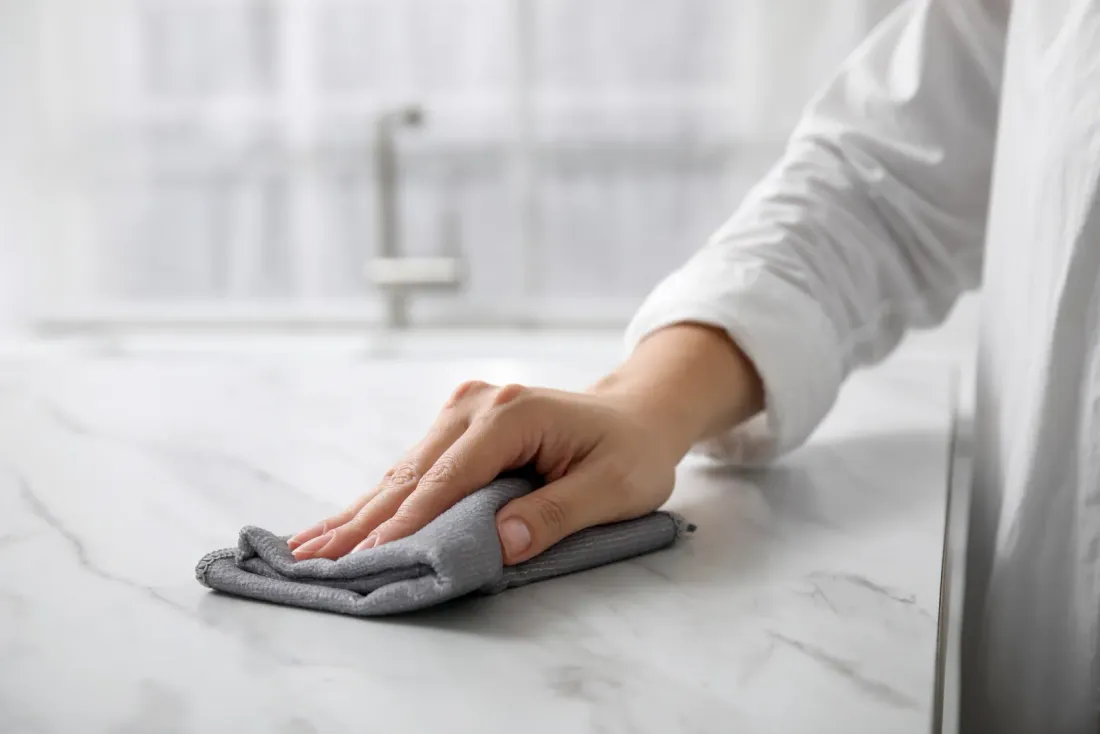
Exam rooms are cleaned clean-to-dirty: counters and cabinet fronts first, then chairs and the exam table base, then the sink, then the floor. Procedure rooms follow the same order with stricter attention to every horizontal surface, and some need a fuller terminal clean on a set schedule.
- Disinfect door handles, light switches, cabinet pulls and drawer fronts
- Disinfect countertops, chairs, stools and the exam table base and step
- Clean sinks, faucets and soap and towel dispensers; restock
- Check sharps container fill lines and report full ones without handling them
- Remove general trash only and reline the containers
- Damp-mop floors with a disinfectant cleaner and a fresh mop head for each room or group of rooms
Restrooms, labs and specimen areas
Patient restrooms often include specimen pass-through doors, grab bars and baby changing stations, each of which belongs on the list. Clean the restroom side of a specimen pass-through and leave the lab side to lab staff unless the scope says otherwise.
In draw stations and labs, the crew cleans floors, sinks and cleared counters. Analyzers, centrifuges, specimen refrigerators and anything holding samples stay with lab staff.
- Disinfect toilets, urinals, sinks, grab bars, rails and changing tables
- Restock paper, soap and seat covers; check feminine hygiene receptacles
- Wipe phlebotomy chair arms where assigned, and mop draw station floors
Nurse stations, staff areas and offices
Back-of-house rooms carry the clinic's privacy risk. The crew wipes counters and phones where cleared, but does not move charts or papers, read screens, or empty shred consoles into general trash. Records rooms are entered only if the clinic authorizes it in writing.
Staff break rooms get the same care as any office kitchen: counters, sinks, appliance handles, tables and trash. Clean electronics only with products safe for them, or leave keyboards and touchscreens to staff.
Order, tools and products on a medical office cleaning checklist
The checklist should state the method as well as the tasks. Work top to bottom and clean to dirty, so soil is not carried onto surfaces already cleaned. Use color-coded microfiber, with a separate color for restrooms, so a cloth used on a toilet never reaches an exam counter. Change gloves and perform hand hygiene between rooms.
Disinfectants should be EPA-registered with label claims for the organisms the clinic is concerned about, and compatible with its surfaces. The contact time printed on the label is the time the surface must stay visibly wet; a quick spray and wipe usually falls short of it. HEPA-filtered vacuums keep fine dust from being blown back into the air.
Medical office cleaning with EBS
EBS cleaning plans for medical offices and clinics cover waiting rooms, offices, staff areas, restrooms, floors and high-touch surfaces, with EPA-approved disinfection products used on the surfaces patients and staff touch most. Restricted and higher-risk rooms are reviewed room by room at the walkthrough, team members are background-checked and trained, and supervisors confirm the work through routine inspections.
Related questions
Still not sure? A supervisor can answer at the walkthrough.
Request a walkthroughAll questionsShould the cleaning crew disinfect exam tables?
It depends on how the clinic divides the work, so decide it in writing. A common arrangement has clinical staff change paper and wipe the table between patients, while the cleaning crew disinfects the full table and base at the end of the day. Either way, the checklist should name one owner.
Can janitors empty sharps containers?
No. Sharps containers are regulated medical waste under California's Medical Waste Management Act and are closed, sealed and replaced by clinical staff, then removed by a licensed hauler. The cleaning crew should report full containers and never open, compress or reach into one.
How is a clinic checklist different from an office checklist?
It adds disinfection with label contact times, a written split between clinical and cleaning duties, waste and sharps rules, a clean-to-dirty order of work, color-coded tools and privacy rules for charts and screens. An ordinary office list covers none of these.
How often should a medical waiting room be disinfected?
At least at every cleaning service, usually nightly. Busy practices also have staff or a day porter disinfect counters, chair arms and door handles during clinic hours, especially during respiratory illness season. A simple log of those midday passes shows when the high-touch points were last treated.
Keep reading
Free site walkthrough
Talk to EBS about your facility
A few details and a supervisor calls you back the same business day.
- Call(949) 375-3305
- Emailinfo@ebsmaintenance.com
- HoursDaytime, evening, overnight and weekend schedules