
Smoke and ash cleanup
How Should Buildings Be Cleaned After Wildfire Smoke?
Wind-driven fires can drop smoke and ash on buildings far from any fire line. What crews do in the days after decides whether ash leaves the building or spreads through it.
The short answer
Building cleaning after wildfire smoke should work from the outside in with wet and HEPA methods: wait until ash stops falling, mist and gently remove ash from entries and hardscape without leaf blowers, keep runoff out of storm drains, then HEPA-vacuum and damp-wipe interior surfaces while the building engineer checks HVAC filters. Light ash and dust is janitorial work; heavy soot, lingering odor and debris from burned structures belong to restoration and hazardous-materials specialists. Crews working outdoors when the PM2.5 Air Quality Index is 151 or higher are covered by Cal/OSHA's wildfire smoke rule, Title 8 section 5141.1.
Is it janitorial cleanup or restoration?
The dividing line is depth and toxicity. Ash and dust sitting on surfaces is cleaning work; contamination soaked into materials, lodged in building systems or coming from burned structures is not.
| Condition | Who should handle it | Why |
|---|---|---|
| Light ash on sidewalks, patios and outdoor furniture | Janitorial or porter crew with protective equipment | Removable with wet and HEPA methods |
| Fine dust indoors on sills, desks and floors | Janitorial crew | HEPA vacuuming and damp wiping remove it |
| Smoke odor that lasts after cleaning | Restoration contractor | Odor sits in porous materials and air systems |
| Soot film or staining on walls and ceilings | Restoration contractor | Needs specialized cleaning and sometimes repainting |
| Ash and debris from burned structures nearby | Hazardous materials or debris specialist | CDPH warns it can contain metals, chemicals and asbestos |
| Ash in ductwork or air handlers | HVAC contractor | Requires system inspection, not surface cleaning |
Cleaning exterior ash without making it worse
Public health and air agencies give consistent advice. Wait until ash has stopped falling, since cleaning during an active event means doing it twice. Never use leaf blowers, which put the finest particles back into the air. Avoid dry sweeping: mist the ash lightly first, then sweep gently or use a HEPA-filtered vacuum, because ordinary shop vacuums pass fine particles straight through.
Wet ash can irritate or even burn skin, so crews need gloves, long sleeves and eye protection, and CDPH recommends a close-fitting N95 or P100 respirator for outdoor cleanup. Ash and debris should be double-bagged and sealed, with county rules checked for disposal. Use as little water as possible and keep runoff away from storm drains or recapture it, just as with pressure washing.
The interior cleanup sequence
Inside, work from top to bottom and from dry methods to wet, so nothing already cleaned gets dusted again.
- Replace or clean entry mats first so people stop tracking ash in
- HEPA-vacuum horizontal surfaces, upholstery and window tracks
- Damp-wipe hard surfaces with microfiber and a mild detergent, changing cloths often
- HEPA-vacuum carpets, then schedule extraction if soil remains
- Clean break room counters and high-touch surfaces before food service resumes
- Have the building engineer check and change HVAC filters, using the highest efficiency the system can handle; EPA suggests MERV 13 where compatible
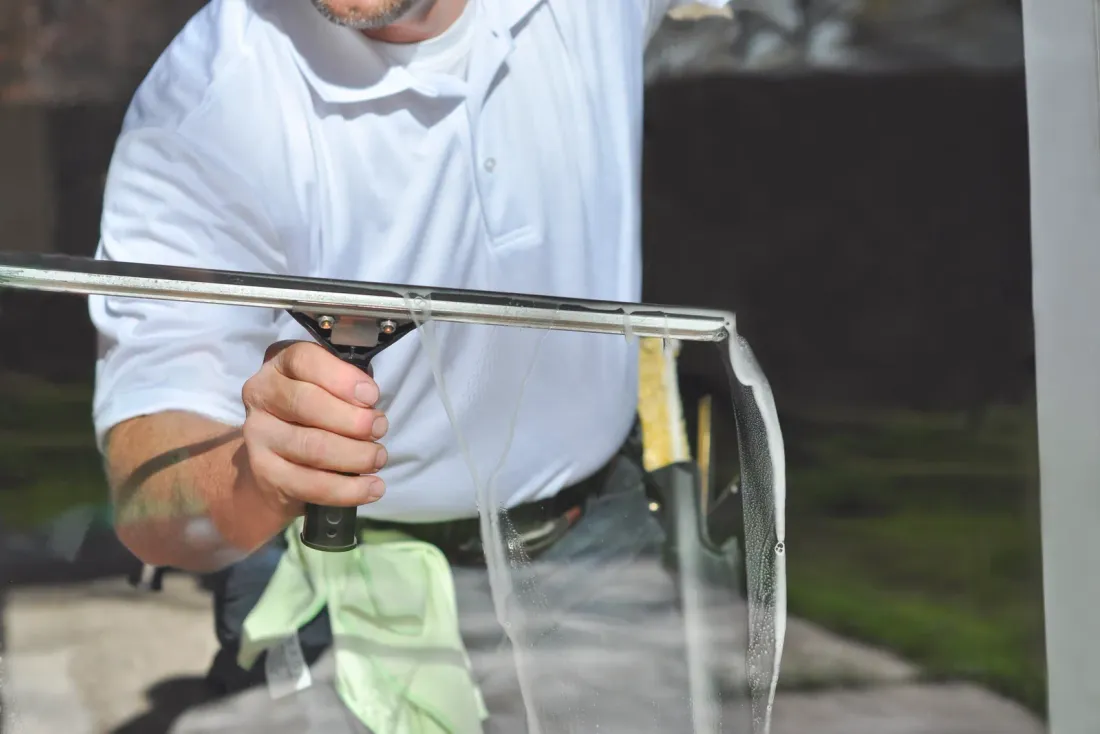
- Clean interior glass and sills last, once airborne dust has settled
Protecting crews under Title 8 section 5141.1
Cal/OSHA's wildfire smoke rule applies where the current AQI for PM2.5 is 151 or higher and employees may reasonably be expected to be exposed to wildfire smoke. Enclosed buildings with mechanical filtered ventilation, with windows and doors closed except for entry and exit, are excepted, as is exposure totaling one hour or less in a shift. That usually puts outdoor ash work, not indoor cleaning, under the rule.
Where it applies, the employer must monitor the AQI, train employees on the content in the rule's Appendix B and reduce exposure where feasible. Between AQI 151 and 500, it must provide NIOSH-approved respirators such as N95s for voluntary use and encourage employees to wear them; above 500, respirator use is required. Moving exterior ash work to hours with cleaner air is often the simplest control.
What to agree with your cleaning vendor before fire season
Several of Southern California's most destructive fires have come with Santa Ana winds in fall and winter, and their smoke and ash can reach buildings across the Inland Empire, Orange County and Los Angeles County far from the flames. A short smoke-event plan agreed in advance turns a scramble into a routine.
- An add-on scope for ash events: mats, entries, exterior hardscape and interior dusting
- HEPA vacuums and microfiber on hand, not ordered after the event starts
- AQI-based rules for outdoor work, and respirators available to crews
- Storm drain protection for any wash water
- Who calls restoration, HVAC and debris contractors, and at what point
- Photos and notes for insurance, before and after cleaning
How EBS helps after smoke events
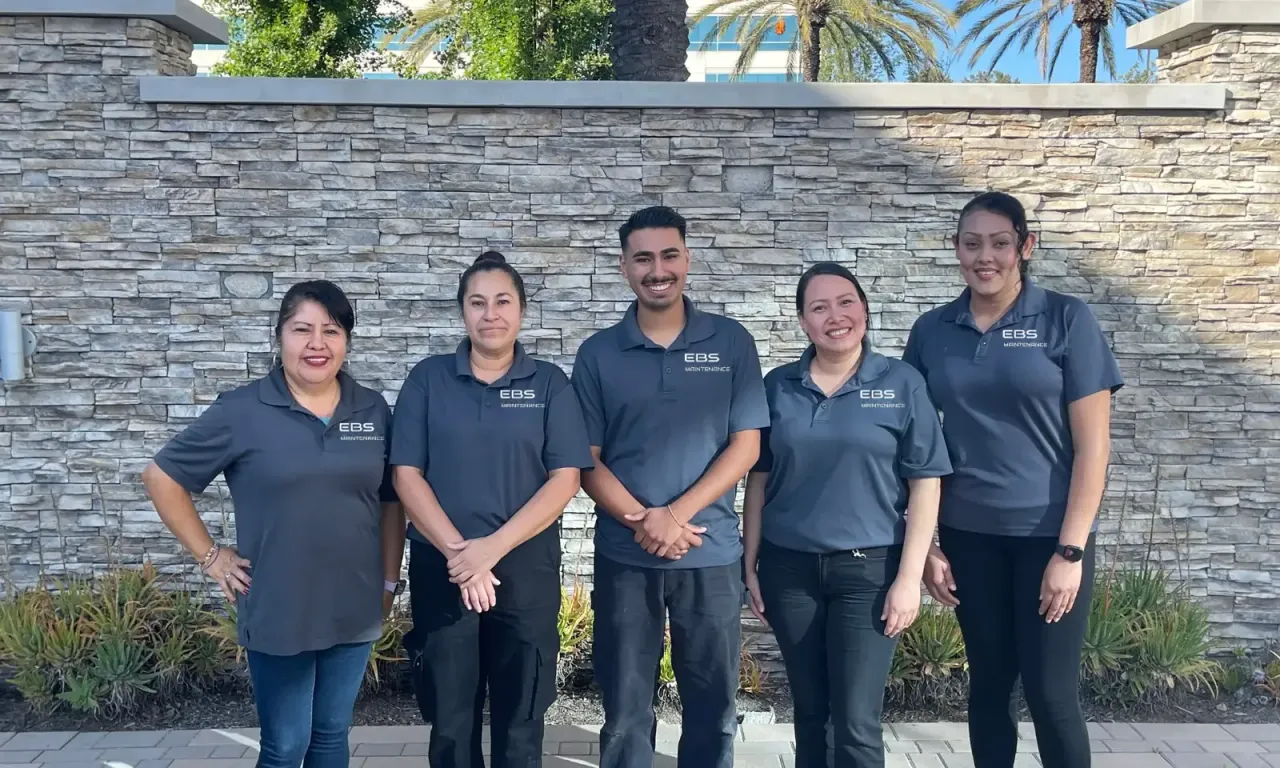
EBS crews work with HEPA vacuums, and its specialized capacity covers floor and carpet care, glass, pressure washing and project work, the tasks that follow ash removal. Day porters can add entry and lobby rounds while ash is still being tracked in, and evening, overnight and weekend schedules let deeper work happen without disrupting occupants. The 24/7 priority line and field supervisors handle requests during an event, and work that belongs to restoration or hazardous-materials specialists is flagged as such.
Related questions
Still not sure? A supervisor can answer at the walkthrough.
Request a walkthroughAll questionsShould we pressure wash ash off the building?
Only after dry removal, and only with the wash water captured. Ash in runoff carries metals and fine particles into storm drains, which California stormwater rules prohibit. Remove what you can with HEPA vacuums and damp methods first, then wash with drain protection and recovery in place.
Can regular vacuums be used on ash?
No. CDPH advises against shop vacuums and ordinary household vacuums because they do not trap fine particles and blow them back into the air. Use vacuums with HEPA filtration.
Does the wildfire smoke rule apply to indoor cleaning crews?
Usually not, if the building has filtered mechanical ventilation and doors and windows stay closed except for entry and exit. Crews working outside, or in buildings without filtered ventilation, can be covered once the PM2.5 AQI reaches 151.
When should carpets be cleaned after a smoke event?
After the ash has stopped falling and the entries are under control, so the carpet is not resoiled immediately. HEPA-vacuum first, schedule hot water extraction if soil remains, and call a restoration firm if odor persists after that.
How do we know whether the HVAC system needs cleaning?
Have the building engineer or an HVAC contractor inspect filters, coils and intakes after the event. Heavily loaded filters are a sign to replace them sooner and to check whether ash reached the ductwork.
Keep reading
Free site walkthrough
Talk to EBS about your facility
A few details and a supervisor calls you back the same business day.
- Call(949) 375-3305
- Emailinfo@ebsmaintenance.com
- HoursDaytime, evening, overnight and weekend schedules