
Raised floor maintenance
How Often Should a Data Center Subfloor Be Cleaned?
Under a raised floor, the plenum is the air supply for every server in the room. Whatever settles there eventually gets blown into the equipment.
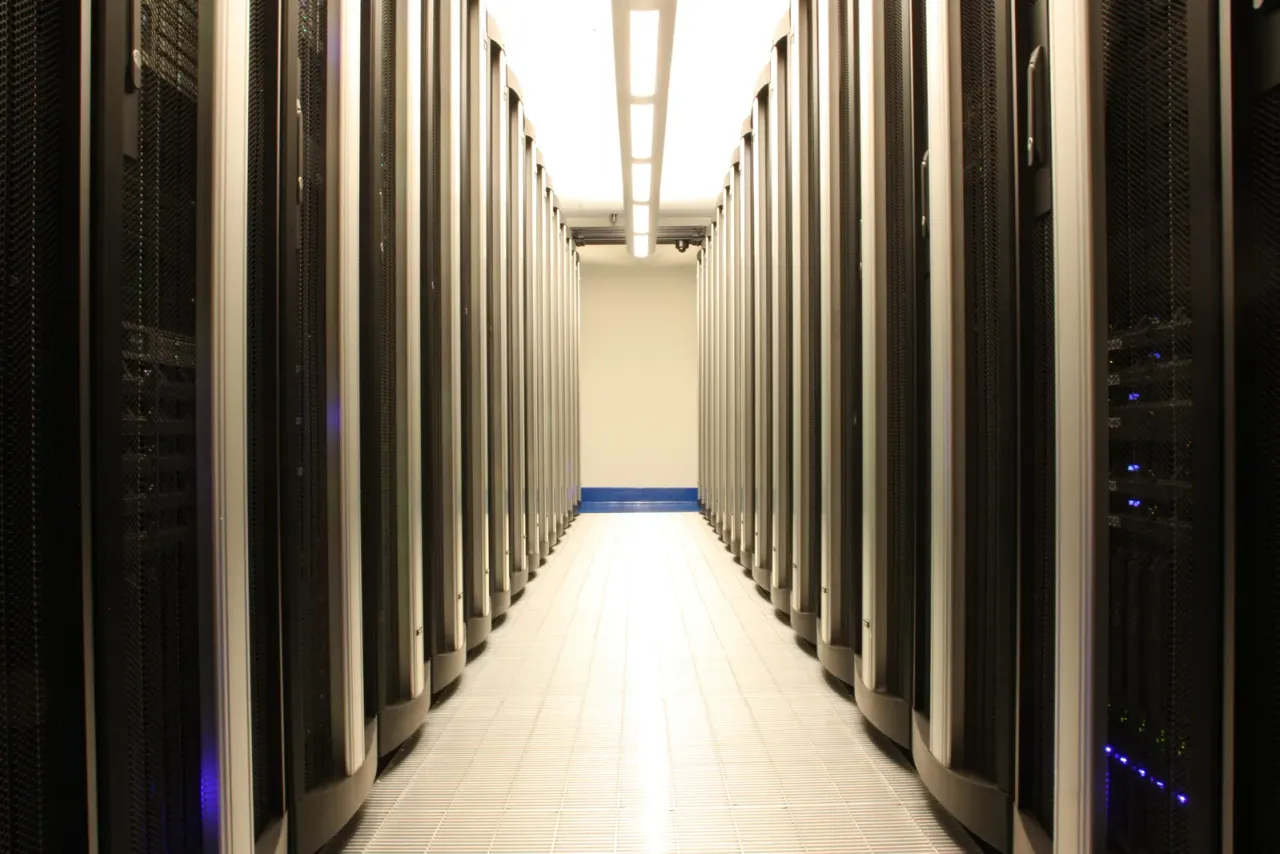
The short answer
Data center subfloor cleaning is usually scheduled once a year as a baseline, with a second cleaning in rooms that see frequent cable changes, tile lifts, construction or outside-air economizer use. Above the raised floor, tile surfaces need HEPA vacuuming or damp mopping weekly to monthly, and cabinet exteriors roughly quarterly. Most operators aim to keep the white space at ISO 14644-1 Class 8, the cleanliness level ASHRAE TC 9.9 guidance recommends for data centers, and particle counts before and after cleaning show whether the schedule is working.
A frequency matrix for raised floor cleaning
No standard sets a single interval, so frequency should follow how fast dust actually accumulates in your room. These are common starting points that operators adjust after the first inspection.
| Area | Common starting interval | Clean more often when |
|---|---|---|
| Subfloor plenum: slab, pedestals, stringers, cable | Annually | Cable adds are frequent, the slab is unsealed, or construction is nearby |
| Raised floor tile surfaces | Weekly to monthly | Foot traffic and deliveries are heavy |
| Cabinet and rack exteriors, tops | Quarterly | Dust is visible on intake perforations |
| Overhead cable tray and ceiling plenum | Annually or at major changes | Ceiling tiles are disturbed or new tray is installed |
| Cooling unit exteriors and return grilles | Quarterly | Filters load quickly between changes |
| Entry vestibule, sticky mats, adjacent corridors | Daily to weekly | Loading dock or construction is close by |
| Whole room after construction or a refresh | Once, before equipment is energized or returned to service | Always |
Why dust under the floor matters
In a raised-floor room with underfloor supply air, cooling units push conditioned air into the plenum and up through perforated tiles to the server intakes. Debris on the slab or cable bundles rides that airflow straight into the equipment. Dust on heat sinks and fans reduces cooling, conductive particles can cause intermittent faults, and some dusts absorb moisture and become corrosive at normal room humidity.
The usual sources are predictable: dust from an unsealed concrete slab, cardboard and packaging fiber from unboxing inside the white space, cable jacket shavings and cut ties left after installs, construction debris, and grit carried in on shoes and cart wheels. Rooms with outside-air economizers also bring in more fine particulate.
Check for zinc whiskers before anyone cleans
Older raised floor tiles, pedestals and stringers with electroplated zinc finishes can grow microscopic metal filaments known as zinc whiskers. They are conductive, and the act of lifting tiles or wiping surfaces can break them loose into the airflow, where they cause shorts in power supplies and boards.
Inspection is simple: lift a tile and shine a flashlight at a low angle across its underside and along nearby pedestals. Whiskers glint like fine hair. If you find them, stop routine subfloor cleaning and bring in a remediation specialist, because a normal vacuum-and-wipe job can spread the problem across the room.
How data center subfloor cleaning is done safely
The work happens in a live room, so the method is built around protecting airflow and equipment rather than speed. Each step should be written into a method of procedure approved by the facility's change management process.
- Open only a few tiles at a time; too many open tiles drop underfloor pressure and starve server inlets of cold air
- Use HEPA-filtered vacuums with antistatic hoses and nonmetallic wands
- Never use compressed air, blowers or brooms that lift dust into the room
- Damp-wipe the slab and pedestals with lint-free cloths and a residue-free, facility-approved solution
- Pick up screws, ties and cable scraps by hand; never move, pull or re-route cabling
- Return every tile to its original position, especially perforated tiles placed for airflow
- Take particle counts before and after so the result is measured, not assumed
Above-floor habits that keep the plenum cleaner
The cheapest subfloor cleaning is the dust that never gets there. Unbox equipment outside the white space, keep sticky mats at every entrance, and seal a dusting concrete slab as a facilities project. Raised floor tiles with static-dissipative surfaces must not be waxed or coated with ordinary floor finish, because the finish insulates the tile and defeats its electrical design. Use only the cleaning solutions the tile manufacturer approves, and keep food, drink and cardboard out of the room.
How EBS approaches data center cleaning
EBS Maintenance cleans data centers, server rooms and technology offices using HEPA-filter vacuuming in dust-sensitive zones, cable tray and subfloor cleaning, and anti-static wipe-downs of floors and surfaces. Work is scheduled after hours or in your change windows, and crews follow your secure room access protocols, escort rules and sign-in procedures. That approach draws on EBS's experience in high-security and access-controlled facilities, where confidentiality and accountability are part of every shift.
Related questions
Still not sure? A supervisor can answer at the walkthrough.
Request a walkthroughAll questionsCan a data center subfloor be cleaned while servers are running?
Yes, and it almost always is. The crew limits how many tiles are open at once, vacuums rather than blows, and works in a planned sequence so cooling is never compromised in any one row. The operations team should approve the method and know exactly where the crew is working.
How long does subfloor cleaning take?
It depends on the room's area, the plenum depth, how dense the cabling is and how many tiles the operations team allows open at once. Large rooms are usually done in sections over several nights or change windows rather than in one push.
Who cleans the filters in the cooling units?
Filter changes and the inside of cooling units belong to the facility's mechanical team or HVAC contractor. A cleaning crew wipes exterior panels and return grilles and reports anything unusual, such as heavy dust on a grille between filter changes.
Does a slab-floor data center need subfloor cleaning?
No, because there is no underfloor plenum. Attention shifts to overhead cable trays, containment panels, the tops of cabinets and the slab itself, which should be sealed and scrubbed with a HEPA-equipped machine or damp-mopped on a regular schedule.
What does ISO 14644-1 Class 8 mean for a data center?
It is an airborne particle limit defined by the cleanroom standard ISO 14644-1, and ASHRAE TC 9.9 guidance uses it as the target for data centers. A particle counter measures it. Cleaning, filtration and entry controls together keep the room within it.
Keep reading
Free site walkthrough
Talk to EBS about your facility
A few details and a supervisor calls you back the same business day.
- Call(949) 375-3305
- Emailinfo@ebsmaintenance.com
- HoursDaytime, evening, overnight and weekend schedules