
VCT maintenance schedule
How Often Should You Strip and Wax VCT Floors?
Vinyl composition tile is only as good as the finish on top of it. The right schedule balances three different jobs instead of stripping by habit.
The short answer
How often strip and wax VCT cycles are needed depends mostly on traffic and on the maintenance done in between. A well-kept office corridor may go 12 to 24 months between full strips, while entrances, cafeterias and retail aisles may need one every 6 to 12 months. Scrub-and-recoat, typically every one to six months depending on traffic, and regular burnishing in busy areas keep the finish intact, so full stripping is needed less often. Stripping more than necessary wastes labor and wears the tile itself.
Three cycles, three different jobs
A VCT program is not one task repeated. Burnishing polishes the top of the existing finish. Scrub-and-recoat removes the worn top layers and adds fresh coats without going down to bare tile. A full strip removes every layer of finish and rebuilds from the tile up. Each step down the list costs more labor and downtime, so the goal is to let the lighter cycles do most of the work.
| Cycle | What happens | When it is due |
|---|---|---|
| Burnishing | High-speed pad polishes the finish to restore gloss | Gloss has dulled but the finish is intact |
| Scrub and recoat | Top layers scrubbed off, two or more fresh coats applied | Traffic lanes are worn or scratched but not to bare tile |
| Full strip and refinish | All finish removed with stripper, floor rinsed, new coats built up | Buildup, yellowing, embedded soil or bare tile that recoating cannot fix |
How often strip and wax VCT work is needed, by traffic level
Use these ranges as starting points, then adjust after watching how the finish wears through a season. Traffic includes wheels as well as feet: carts, pallet jacks and wheelchairs wear finish faster than footsteps.
| Traffic level and typical areas | Burnish | Scrub and recoat | Full strip |
|---|---|---|---|
| Light: private offices, storage, low-use corridors | Monthly or as needed | Every 6 to 12 months | Every 18 to 24 months or longer |
| Moderate: office corridors, classrooms, clinic hallways | Weekly | Every 3 to 6 months | About every 12 to 18 months |
| Heavy: main entrances, lobbies, elevator landings, breakrooms | Several times a week to daily | Every 1 to 3 months | Every 6 to 12 months |
| Wheeled or food traffic: retail aisles, cafeterias, cart corridors | Daily | Monthly | Every 6 months or as condition requires |
What stretches the time between strips
Grit is the main enemy of floor finish, and most of it walks in from outside. Inland sites with dusty parking lots and landscaping see more of it than buildings with covered entries. Walk-off matting long enough to catch several steps, kept clean itself, protects every floor beyond it.
Daily care matters as much as the periodic cycles. Dust mopping removes the abrasive before it is ground in. A neutral-pH cleaner protects the finish, while high-pH or ammonia cleaners soften and dull it. Pads should match the finish and the machine speed, and felt glides on furniture prevent scratches. Recoating worn traffic lanes promptly keeps damage from reaching the tile.

Signs a floor needs a full strip, not another recoat
Recoating cannot go on indefinitely. Finish builds up along walls and under furniture, where traffic never wears it, and eventually the floor needs to be taken back to the tile. Look for these signs.
- Yellow or dark film along edges, corners and under desks
- Finish worn through to bare tile in the walking lanes
- Black marks or soil embedded in the finish that scrubbing will not lift
- Powdering, flaking or peeling finish
- Patchy gloss that burnishing no longer evens out
- Scrub-and-recoat that looks good for days rather than months
Scheduling a strip around the building
A full strip takes the area out of service while stripper dwells, the floor is rinsed and neutralized, and each coat of finish dries. Plan it for weekends, holidays or school breaks, move furniture in advance and close the area until the finish can take traffic. Most refinishing builds several coats, often four or more, with a sealer on porous or older tile where the manufacturer recommends one. Burnishing waits until the finish has cured according to its label.
Before stripping older 9-inch tile, find out whether it may contain asbestos. Aggressive stripping of asbestos-containing flooring is a regulated activity, and the question needs an answer before the machines arrive.
Floor care cycles in an EBS program
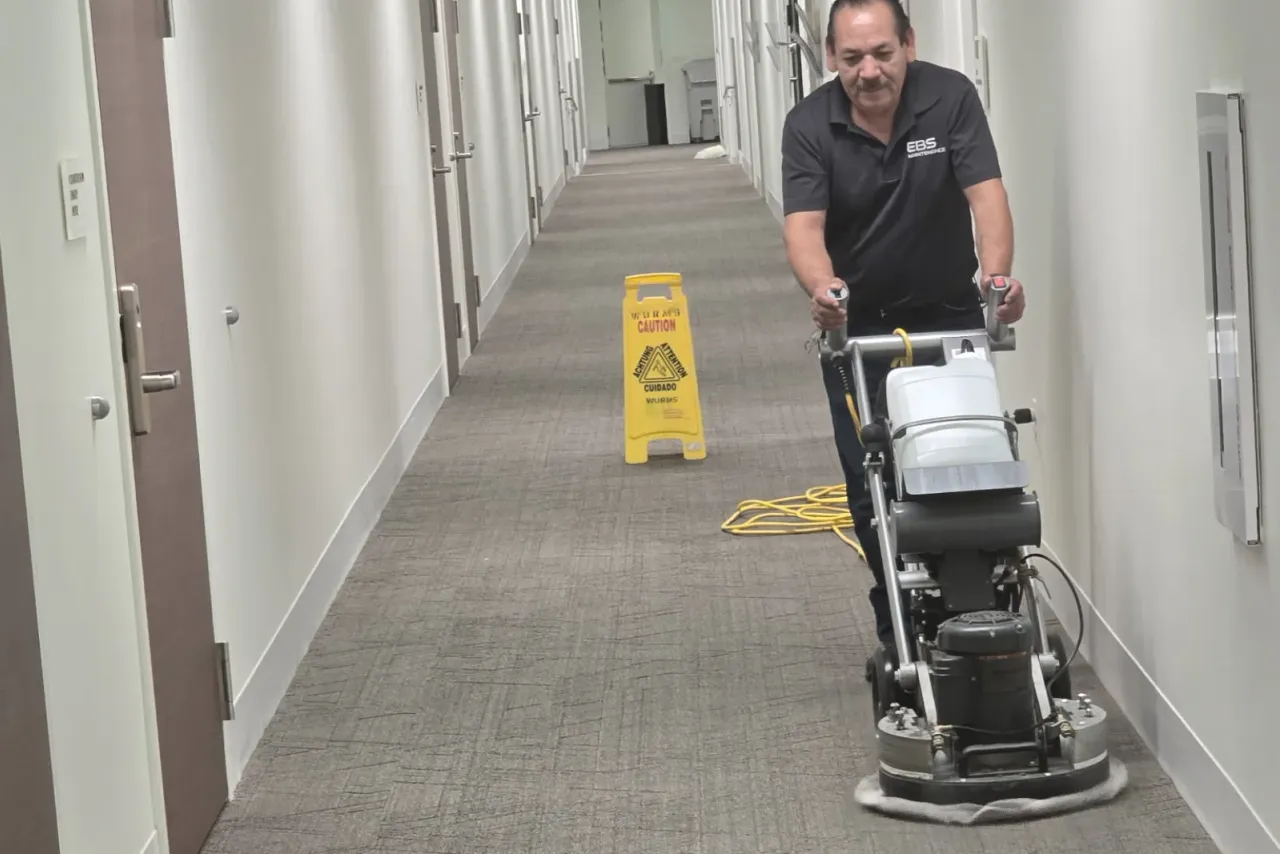
EBS schedules hard-floor work on its own calendar, quarterly, semi-annual or annual depending on traffic, so stripping and refinishing never crowd out the nightly clean. High-speed burnishing restores the shine between full refinishes, and evening, overnight and weekend schedules keep the work out of occupied hours. The cycle for each area is set at the walkthrough and adjusted as the finish shows how it wears.
Related questions
Still not sure? A supervisor can answer at the walkthrough.
Request a walkthroughAll questionsIs wax still used on VCT floors?
Rarely. Modern commercial floor finishes are polymer coatings, usually acrylic, that dry harder and clearer than traditional wax. People still say strip and wax out of habit, and the term covers the same work: removing old finish and applying new coats.
Can we keep recoating instead of stripping?
For a while. Scrub-and-recoat is the most efficient way to maintain traffic lanes, but finish keeps building where traffic does not reach it. That buildup yellows and traps soil, so every floor eventually needs a full strip. Edge-only stripping can extend the interval in some buildings.
How often should VCT be burnished?
As often as the finish dulls in use, which ranges from daily in a busy lobby to monthly in a quiet office. Match the burnishing speed to the finish: high-speed and ultra-high-speed machines need finishes formulated for them, or the gloss will not hold.
Does luxury vinyl tile need the same schedule?
Generally not. Most LVT carries a factory-applied wear layer, many manufacturers warn that VCT-style stripping can damage it, and some advise against applying finish at all. Follow the flooring manufacturer's maintenance guide before applying a VCT program to newer resilient floors.
Keep reading
Free site walkthrough
Talk to EBS about your facility
A few details and a supervisor calls you back the same business day.
- Call(949) 375-3305
- Emailinfo@ebsmaintenance.com
- HoursDaytime, evening, overnight and weekend schedules