
Resilient floor care
How Is LVT Maintained Differently From VCT?
Both are vinyl tile, but they are built differently, and a VCT maintenance routine applied to LVT can ruin it.
The short answer
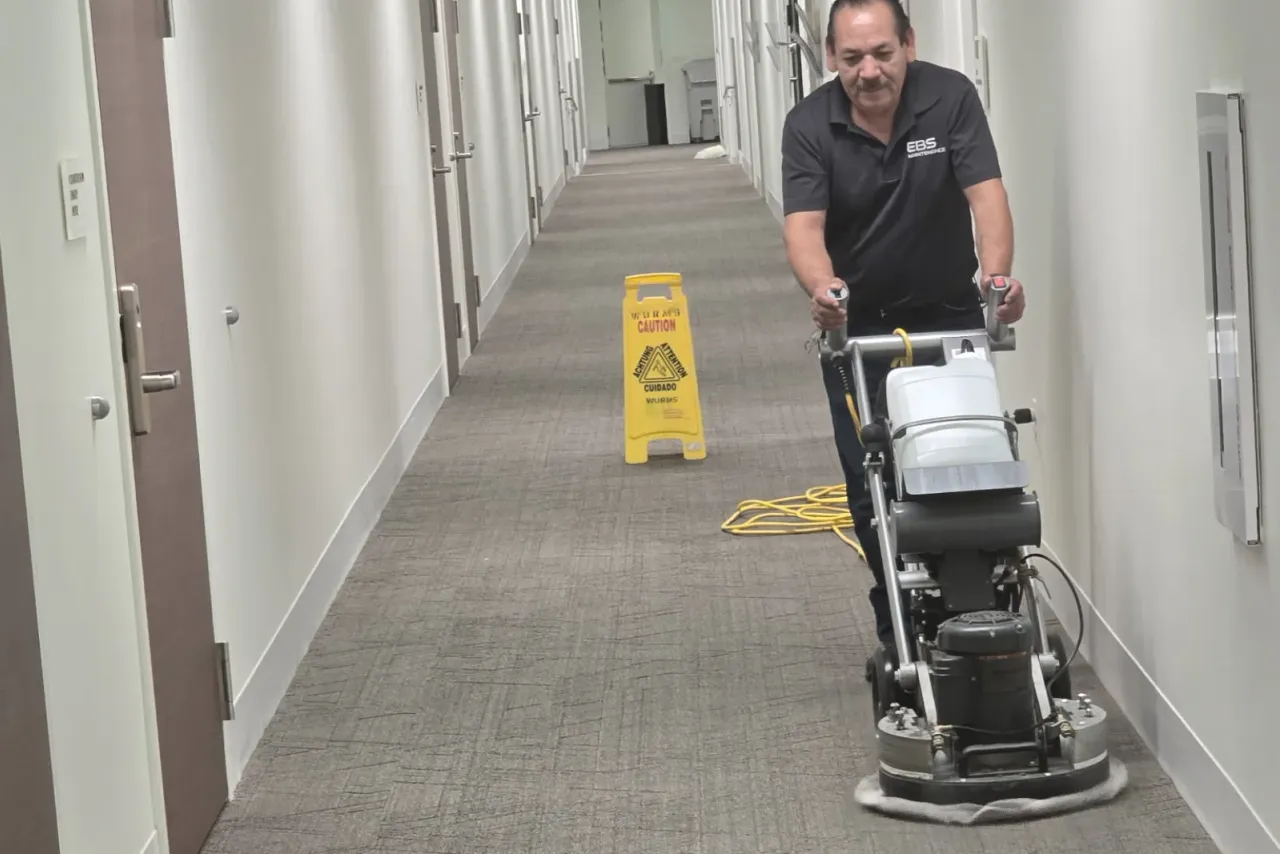
The core difference in LVT vs VCT maintenance is the protective layer. VCT (vinyl composition tile) is porous and relies on coats of floor finish that are burnished, scrubbed and recoated, then stripped and rebuilt on a cycle. LVT (luxury vinyl tile) has a factory wear layer, usually topped with a urethane coating, so most manufacturers call for neutral-pH cleaning and auto-scrubbing with soft pads, not routine stripping and waxing. Aggressive strippers or pads can damage that wear layer and void the floor's warranty.
LVT vs VCT maintenance at a glance
Facility teams often treat every resilient tile the same way. The table shows where the routines part company.
| Task | VCT | LVT |
|---|---|---|
| Protection | Sealer and multiple coats of floor finish applied on site | Factory wear layer with a urethane top coat |
| Daily care | Dust mop, damp mop or auto-scrub with neutral cleaner | Dust mop, damp mop or auto-scrub with neutral cleaner |
| Shine | Spray buffing or high-speed burnishing of the finish | Low-sheen by design; burnishing generally avoided unless a finish has been applied |
| Periodic deep work | Scrub and recoat | Deep scrub with manufacturer-approved pads or brushes |
| Restorative work | Strip to bare tile and rebuild finish | Rarely stripped; worn areas are often replaced plank by plank |
| Chemistry to avoid | Harsh solvents on finish | High-pH strippers, solvents, abrasive powders |
Why VCT floor care revolves around the finish
VCT is made of limestone filler bound with vinyl resin. It is durable but porous, so the tile itself is never the surface people walk on; the finish is. New VCT is prepared and then given several coats of finish, and every routine task after that protects, restores or replaces those coats.
Daily dust mopping and neutral cleaning keep grit from scratching the finish. Burnishing heats and polishes the top coat back to a gloss. When the finish wears or yellows, a scrub and recoat removes the top layers and adds fresh coats; when it is beyond that, the floor is stripped to bare tile and rebuilt. How often that cycle runs depends on traffic, and is a planning question of its own.
Why luxury vinyl tile maintenance usually skips strip and wax
LVT is a layered product: a backing, a printed design film and a clear wear layer, often with a factory-cured urethane coating. That coating already does the job finish does on VCT, which is why most LVT manufacturers recommend no floor finish at installation and a simple cleaning routine afterward.
Some manufacturers allow a compatible finish to be applied in heavy-traffic commercial spaces as a sacrificial layer. Once it is applied, it becomes a VCT-style maintenance program on that floor, with recoating and eventual stripping using only the products the LVT maker approves. Decide that deliberately rather than letting a crew add finish out of habit.
Pads, brushes and chemistry for each floor
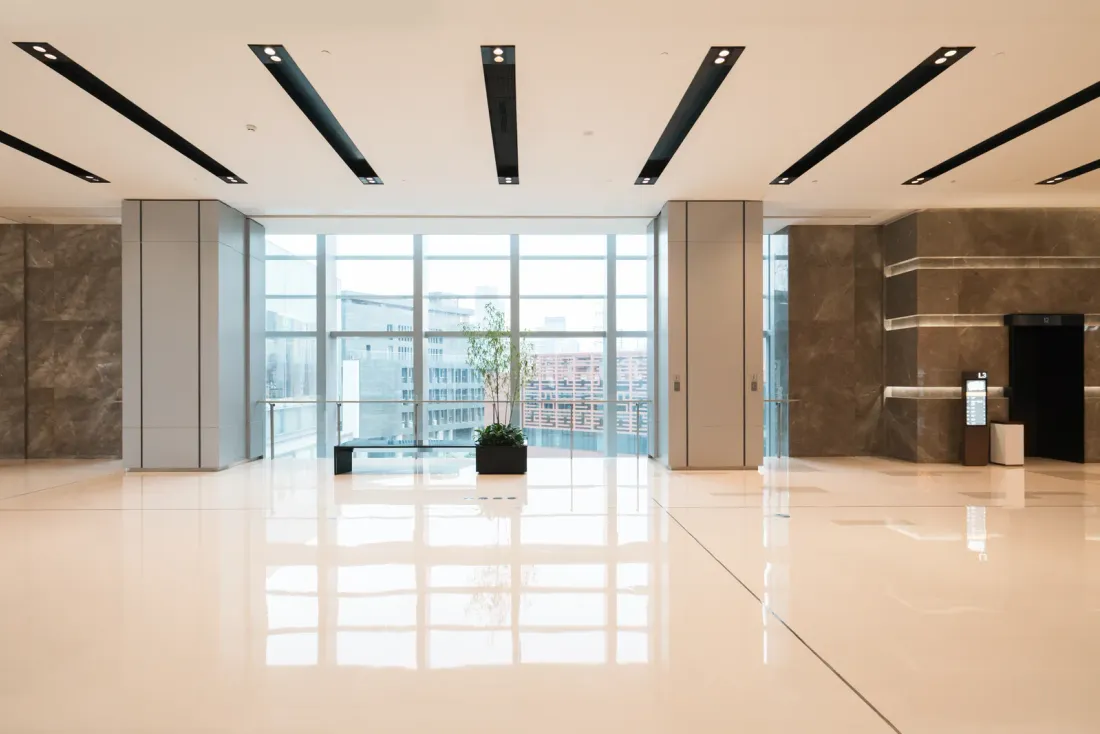
Pad color conventions vary by brand, so confirm with the pad maker's chart, but the principle holds: the more aggressive the pad, the more it removes.
- VCT daily scrubbing: neutral cleaner with a red or blue pad on the auto-scrubber
- VCT scrub and recoat: green or blue pad to abrade the top coats before new finish
- VCT stripping: stripper solution with black or brown pads
- VCT burnishing: white or high-speed polishing pads on a burnisher
- LVT daily and deep scrubbing: neutral or manufacturer-approved cleaner with a white or red pad, or a soft-bristle brush that reaches beveled edges
- LVT spills and scuffs: a damp microfiber cloth or mop; avoid solvent spotters unless the manufacturer lists them
Mistakes that damage LVT
Most LVT damage in commercial buildings comes from treating it like VCT. Mark LVT areas on the floor plan given to the crew, and keep stripping crews out of them.
- Running stripping chemicals or black pads over LVT during a building-wide VCT strip
- Flooding the floor, which pushes water into seams and under click-lock planks
- Using steam mops or very hot water, which can soften adhesives and wear layers
- Leaving rubber-backed mats on vinyl, which can stain it yellow
- Dragging furniture or rolling heavy loads without floor protectors
- High-speed burnishing on uncoated LVT, which can scuff or haze the wear layer
How EBS maintains mixed resilient floors
Many Southern California buildings have VCT in corridors and back-of-house rooms and LVT in lobbies, suites and break areas. EBS Maintenance's floor care crews handle stripping, refinishing and polishing for VCT and the scrubbing routine LVT needs, and the scope names which floor gets which treatment.
Periodic floor work is booked after hours or on weekends around your operation, and supervisors check floor condition during routine inspections so recoats and deep scrubs happen before wear shows.
Related questions
Still not sure? A supervisor can answer at the walkthrough.
Request a walkthroughAll questionsCan you wax LVT to make it shine?
Only if the LVT manufacturer allows a compatible floor finish, and only if you accept the ongoing maintenance that comes with it. Most LVT is designed to have a low sheen and does not need finish. Adding it means periodic recoating and eventual stripping with products the manufacturer approves.
How can you tell whether a floor is LVT or VCT?
VCT is usually a 12-inch square tile with a uniform, speckled pattern that runs through the tile's full thickness. LVT is often a plank or large tile with a printed wood or stone look and may have beveled edges. Building records or a flooring contractor can confirm the product.
Does LVT cost less to maintain than VCT?
Routine labor is usually lower because LVT skips the burnish, recoat and strip cycle. The trade-off is that a worn wear layer cannot be rebuilt on site the way VCT finish can, so damaged LVT is repaired by replacing planks or tiles. Proper matting and gentle cleaning protect that investment.
Can scratches in LVT be buffed out?
Light scuffs on the surface can often be removed with a soft pad and the manufacturer's cleaner. Scratches that cut into the wear layer cannot be buffed out, and aggressive buffing usually makes the area dull. Deep scratches are fixed by replacing the affected plank or tile.
Keep reading
Free site walkthrough
Talk to EBS about your facility
A few details and a supervisor calls you back the same business day.
- Call(949) 375-3305
- Emailinfo@ebsmaintenance.com
- HoursDaytime, evening, overnight and weekend schedules