
Phased floor refinishing
Can You Strip and Wax Floors Without Closing the Building?
Hard floors still need a full strip and refinish now and then, even in buildings that never fully close. The trick is to take the floor out of service one piece at a time.
The short answer
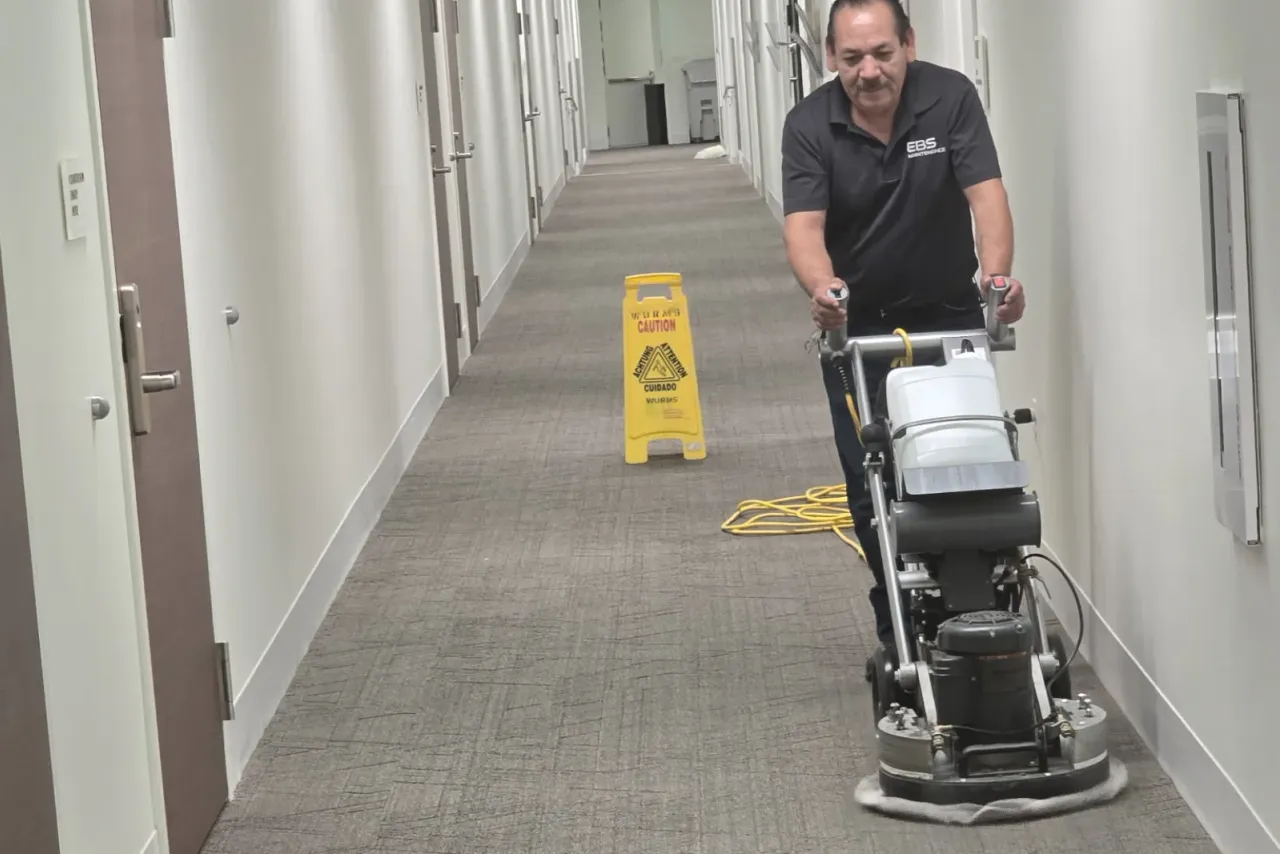
Yes. You can strip and wax floors without closing the building by refinishing one section at a time during evenings, overnight shifts or weekends, with a marked detour around each work zone. A section is stripped, rinsed, dried and given three to five thin coats of finish, each dried before the next. Light foot traffic can usually return about an hour after the last coat, heavy carts and furniture are better held until the next day, and the finish keeps curing for several days.
How to strip and wax without closing the building
Phasing is the whole method. Divide the floor into sections that can each be finished in one work window, choose the order so people always have a dry route, and publish the schedule to occupants ahead of time.
Two building rules shape every phase. Required exit routes must stay usable at all times, so a corridor that serves as an exit path is done in halves or with a clearly signed alternate route. An accessible route to restrooms, elevators and entrances must also stay open, which affects the order you pick for lobbies and elevator landings.
| Area | Phasing approach |
|---|---|
| Long corridors | Half-width at a time, one side then the other, with a walking lane left open |
| Main lobby or entry | Overnight, with an alternate entrance signed, or in two halves on consecutive nights |
| Elevator lobbies | One floor per night, so riders always have a dry landing on the floors in use |
| Offices and classrooms | Room by room, with furniture moved out and returned after the finish dries |
| Restrooms with hard floors | One restroom at a time, with the nearest alternate restroom signed |
| Retail sales floors | Overnight by fixture zone, with fixtures moved and replaced in the same shift |
Floor waxing drying time and cure
Drying is what limits each phase, so plan the window around it. Stripping solution needs the dwell time on its label to soften the old finish, then the slurry is scrubbed, picked up and rinsed, and the floor must be completely dry before the first coat. Each coat of finish typically dries in about 20 to 45 minutes in normal indoor conditions, longer in cool or humid air or with poor airflow.
After the final coat dries, light foot traffic can usually return in about an hour, but rolling carts, pallet jacks and furniture legs can mark finish that is still soft, so they should wait until the next day if possible. Full cure takes several days, and the first high-speed burnish waits until the label says the finish is ready. Always follow the specific product's directions, because chemistries vary.
After-hours floor stripping: odor and occupants
Floor strippers are strongly alkaline, and some contain solvents with a noticeable odor; finishes have a milder smell while drying. In a building with people present, use low-odor strippers where they perform adequately, keep the HVAC running with outside air if possible, and end the work early enough for the space to air out before occupants return.
Tell occupants which areas will be refinished and when, especially in schools, medical offices and buildings with people who are chemically sensitive. Keep the safety data sheets for every product on site so questions can be answered on the spot.
Ways to cut downtime
The fastest strip is the one you can postpone. These options reduce how often a full strip is needed, or how long each one takes:
- Scrub and recoat: a deep scrub and one or two new coats, instead of a full strip, restores most floors in far less time
- Spot stripping: strip only the worn traffic lanes and blend the edges
- UV-cured finishes: cured instantly by an ultraviolet lamp, so traffic can return right away
- Regular burnishing: keeps finish looking good longer and stretches the time between strips
- Better entry matting: less grit tracked in means less wear on the finish
Safety in a partly open building
Stripper slurry is one of the most slippery substances a building ever sees. Wet-floor signs alone are not enough; the work zone needs physical barriers such as cones with tape or retractable barricades at every approach, and doorways into the zone should be taped off. Crews should wear slip-resistant overshoes or stripping shoes.
Slurry and rinse water must never go into a storm drain. Many floor finishes contain metals such as zinc, and the waste should be disposed of only where the local sewer agency allows it, typically through a janitor's sink to the sanitary sewer, or collected for proper disposal.
How EBS schedules refinishing in occupied buildings
EBS Maintenance strips and refinishes vinyl and tile floors and keeps them up between cycles with high-speed burnishing, on quarterly, semi-annual or annual schedules. For buildings that stay open, the supervisor who walks the site maps out the phases, the detours and the windows, and crews work evenings, overnight or on weekends so each section is dry before people return. Completed areas are checked during routine inspections.
Related questions
Still not sure? A supervisor can answer at the walkthrough.
Request a walkthroughAll questionsHow long before people can walk on a newly waxed floor?
Usually about an hour after the final coat dries for light foot traffic, depending on the product, temperature, humidity and airflow. Hold carts and furniture until the next day if you can, and wait several days for full cure before burnishing.
Can you strip and wax a floor in one night?
Yes, for a defined area such as a corridor, a few offices or a small lobby. Large floors are split into phases over several nights or a weekend. Trying to do too much in one window usually means rushing the drying between coats, which shows up as a soft, dull or peeling finish.
Does the smell of floor stripper linger?
Not for long with good ventilation. Most of the odor comes from the stripping step and fades within hours once the area is rinsed and the air handlers are running. Low-odor strippers and finishes help in occupied buildings and sensitive spaces.
Is scrub and recoat as good as a full strip?
Often, if the existing finish is sound and only the top layers are worn or dirty. A full strip is needed when finish has built up unevenly, yellowed, or trapped dirt between coats. Many buildings alternate several scrub-and-recoat cycles between full strips.
Keep reading
Free site walkthrough
Talk to EBS about your facility
A few details and a supervisor calls you back the same business day.
- Call(949) 375-3305
- Emailinfo@ebsmaintenance.com
- HoursDaytime, evening, overnight and weekend schedules