
Large-scale warehouse programs
How Is a Million-Square-Foot Warehouse Cleaned?
At a million square feet, the building is too big to clean in one pass, one shift or one crew. The program has to be designed like an operation of its own.
The short answer
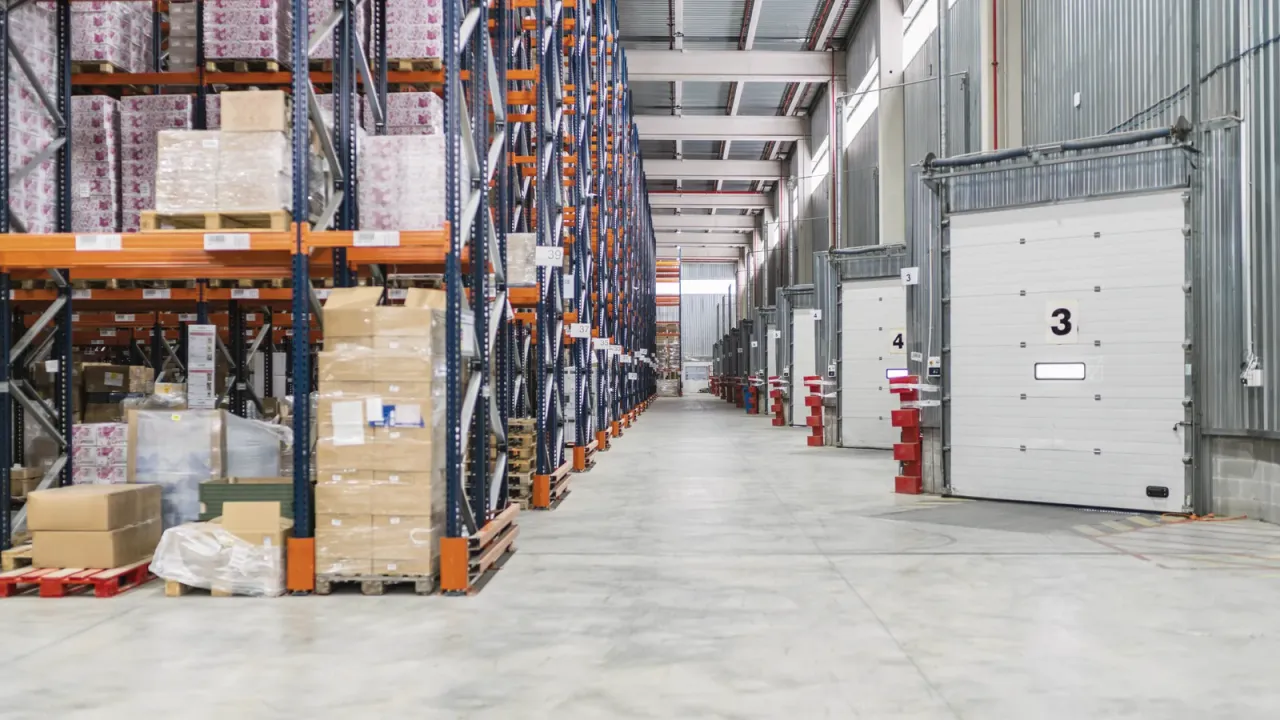
Million-square-foot warehouse cleaning is run as a program, not a single crew. The building is divided into zones, each with its own task list and frequency; ride-on scrubbers and sweepers work the travel aisles on a rotation; restrooms, break rooms and offices get dedicated cleaners on every shift; and overhead, dock and project work is booked into quiet windows. A site lead coordinates with operations every day, and zone-by-zone logs show what was cleaned and when.
Zoning a building too big to clean in one pass
The first step is a zone map drawn with the operations team. Each zone gets a task list, a frequency and a time window that fits how the space is used. Main travel lanes and cross-aisles with heavy forklift traffic may be scrubbed nightly, while racking aisles rotate so that every aisle is reached on a fixed cycle rather than all at once.
Zones also separate work that should never be mixed. Areas under or beside conveyors are cleaned only when the conveyor owner has locked out the equipment, in line with Cal/OSHA's lockout rules in Title 8 section 3314. Battery charging rooms, pick modules on mezzanines and temperature-controlled rooms each get their own instructions.
- Main travel lanes and cross-aisles
- Racking and pick aisles on a rotation
- Pack, sort and ship areas
- Inbound and outbound docks and staging lanes
- Mezzanines and pick modules
- Offices, restrooms, break rooms and locker areas
- Battery charging rooms and maintenance shops
- Entries, guard shacks and exterior walkways
The equipment fleet behind million-square-foot warehouse cleaning
Floor area at this scale is covered by machines, and the fleet needs as much planning as the crew. Each machine needs somewhere to charge, fill and dump, and a plan for the night one breaks down.
| Equipment | Where it works | Planning point |
|---|---|---|
| Ride-on scrubbers | Main lanes, cross-aisles, wide racking aisles | Charging space, fill and dump points, a spare or service plan |
| Ride-on sweepers | Docks, staging lanes, debris-heavy areas | Sweep before scrubbing where debris would clog the squeegee |
| Walk-behind and compact scrubbers | Narrow aisles, pick modules, break rooms | Storage near each zone to save travel |
| Aerial lifts | High dusting of racking tops, beams and lights | Trained operators, product protection, booked windows |
| Carts and tow units | Moving supplies and trash across the building | Staging points so cleaners are not walking the full length |
Staffing across shifts
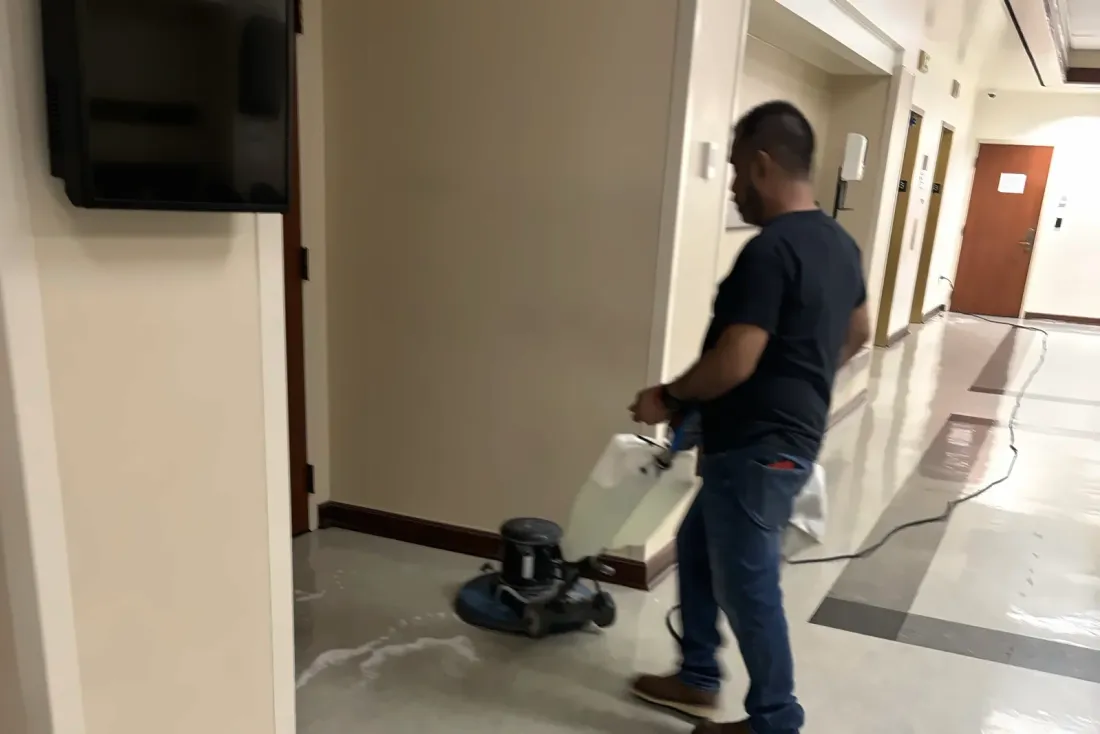
A building this size usually runs on several small teams instead of one big one. Machine operators work overnight or between waves when aisles are clear. Restroom and break room cleaners cover every shift, because a large workforce uses those rooms around the clock. A detail team handles docks, offices and entries, and a project team comes in on weekends for high dusting, scrubbing of hard-to-reach areas and pressure washing.
Distance is a real factor. Restrooms at opposite ends of the building can be a long walk apart, so supplies are staged in several janitor closets, crews carry radios, and each cleaner's route is laid out to avoid crossing the building more than necessary.
Working inside the operation
The site lead meets the operations team daily to learn which aisles will be free, when waves are scheduled and where trailers will be staged. During peak season, floor windows shrink and trash volumes climb, so the plan shifts toward more porter coverage and fewer scrubbing passes until volume drops.
Inland buildings bring heat into the plan. Cal/OSHA's indoor heat standard, Title 8 section 3396, applies once indoor temperatures reach 82 degrees Fahrenheit with employees present, so summer machine work and lift work are planned for cooler hours, with water and rest built in. Charging areas fall under Title 8 section 5185, which covers ventilation and facilities for flushing spilled battery electrolyte.
Proving the work in a building this size
Nobody can walk a million square feet each morning to check it, so the records have to do it. Zone logs show what was cleaned on each shift, a marked-up map shows which racking aisles were scrubbed in the rotation, machine hour meters confirm runtime, and supervisors inspect a sample of zones on a schedule, rotating so every zone is seen over a month. Periodic work such as high dusting and dock pressure washing runs on a calendar that operations can see in advance.
EBS and very large facilities
Scale is familiar ground for EBS: more than 10 million square feet serviced in total, and a single contract covering over 1 million square feet. Overnight and weekend schedules are standard for warehouse work, and EBS has the capacity for floor care, pressure washing and project work alongside daily cleaning. Backup staffing, field supervision and service logs keep a building this size covered and documented.
Related questions
Still not sure? A supervisor can answer at the walkthrough.
Request a walkthroughAll questionsHow many cleaners does a million-square-foot warehouse need?
It depends on the frequencies, the number of restrooms and break rooms, the shifts covered and how much floor is open to machines. The headcount comes from production rates for each task multiplied by how often it is done. Two buildings of the same size can need very different crews.
How long does it take to scrub the whole floor?
Usually it is not scrubbed in one go. Main lanes may be done nightly, with racking aisles spread across a rotation of several nights. The cycle length depends on machine width, how clear the aisles are and the windows operations can release.
Can the cleaning program include the truck yard and exterior?
Yes, as periodic work. Sweeping, litter pickup and pressure washing of dock aprons and entries are common add-ons. Wash water has to be handled under California stormwater rules, so it should be collected or directed to an approved drain rather than a storm drain.
What changes during peak season?
Trash, cardboard and stretch wrap volumes rise and floor windows shrink. Most programs add porter hours to keep docks, restrooms and break rooms under control, delay non-urgent scrubbing passes, and schedule a recovery deep clean once volume returns to normal.
Keep reading
Free site walkthrough
Talk to EBS about your facility
A few details and a supervisor calls you back the same business day.
- Call(949) 375-3305
- Emailinfo@ebsmaintenance.com
- HoursDaytime, evening, overnight and weekend schedules