
Warehouse traffic safety
Can Warehouse Cleaners Work Safely Around Forklifts?
Cleaning a distribution building while it ships means sharing the floor with lift trucks, order pickers and tuggers. The answer is a plan, not just a vest.
The short answer
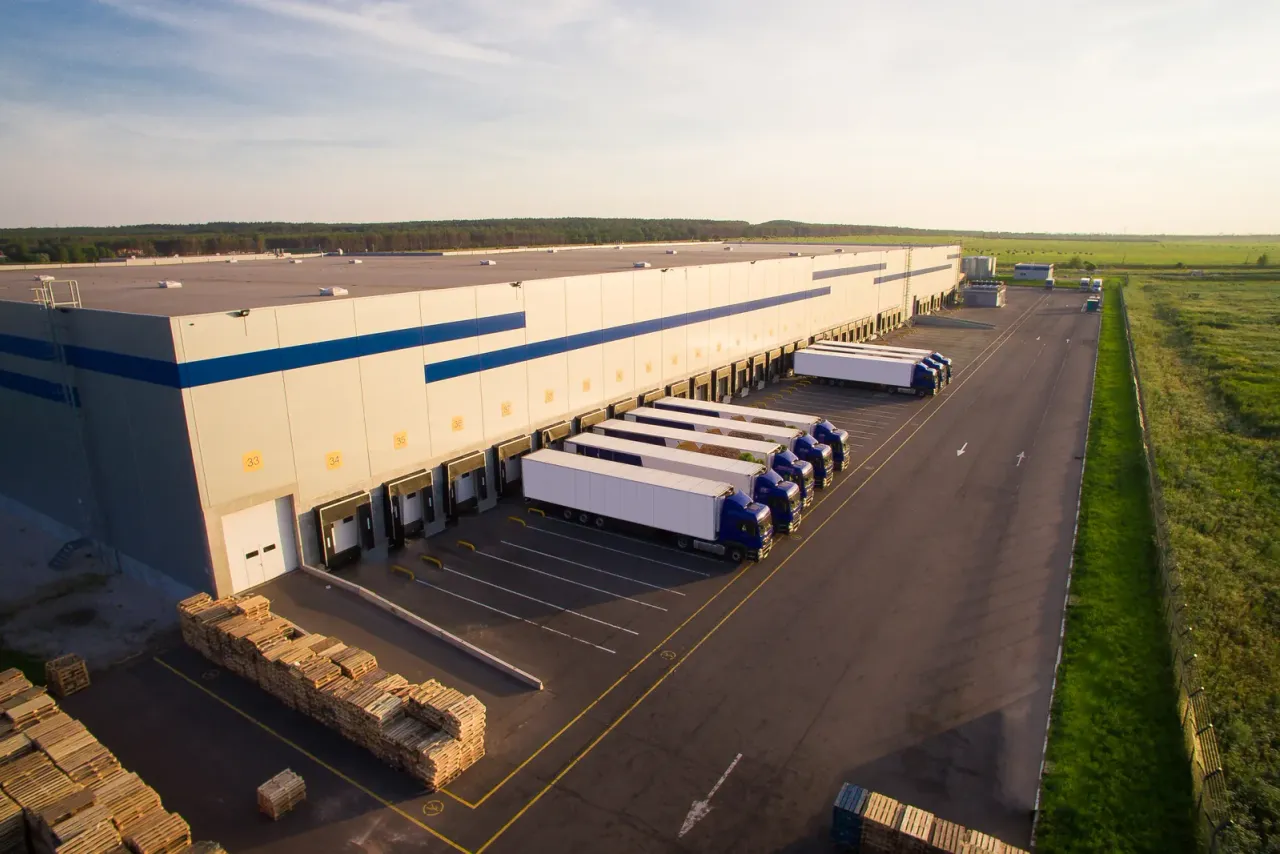
Warehouse cleaners can work safely around forklifts when cleaning is planned like any other traffic movement. Cleaners use marked pedestrian routes, clean racking aisles only after the shift lead closes them to lift traffic, wear high-visibility vests and stay in radio or visual contact with operators. Heavy floor scrubbing is timed for low-activity windows or non-operating days, and cleaners never drive forklifts unless they have been trained and evaluated under Cal/OSHA Title 8 section 3668.
A traffic plan for cleaning during warehouse operations
Write the plan with the operations manager, not around them. It should include a floor map showing pedestrian walkways, crossing points and one-way lanes; the aisles that can be closed for cleaning and how (chains, cones, signs or a lockout of a wire-guided aisle); a check-in routine with the shift lead at the start of every cleaning shift; and a radio channel or contact number for the crew lead.
The plan should also say who has authority to close an aisle. Cleaners should never decide that on their own. The shift lead releases a zone, the crew cleans it, and the crew lead hands it back before lift traffic returns.
Zones and timing
Every warehouse has quiet windows, and they differ by zone. Match the cleaning method to each one.
| Zone | Quietest window | How cleaners work |
|---|---|---|
| Main drive aisles | Non-operating shifts or weekends | Ride-on scrubbers in lanes released by operations |
| Narrow and very narrow racking aisles | Only when the aisle is closed to trucks | Aisle chained or locked out of use before anyone enters |
| Dock doors and staging lanes | Between trailer turns | Sweeping and spot scrubbing door by door, away from trailers being loaded |
| Battery charging area | When no trucks are changing or charging | Floor only, with permission; no contact with batteries or chargers |
| Pick modules and mezzanines | Between waves | Hand sweeping and trash, following the module's pedestrian rules |
| Restrooms, breakrooms and offices | Any time outside break rushes | Conventional cleaning, away from truck traffic |
Pedestrian rules for warehouse cleaners around forklifts
These rules should be part of every cleaner's site orientation and repeated in short refreshers:
- Wear a high-visibility vest or shirt on the warehouse floor at all times
- Walk only on marked pedestrian routes and cross at marked crossings
- Stop at intersections and blind corners; check mirrors and look for blue or red warning lights on approaching trucks
- Make eye contact with the operator before crossing in front of a truck
- Never walk or stand under raised forks or a raised load
- Never ride on a forklift or its forks
- Park carts and scrubbers off drive lanes, never at aisle ends
- No earbuds or phone calls while moving on the floor
- Report every near miss to the crew lead the same shift
Scrubbers, wet floors and forklift traction
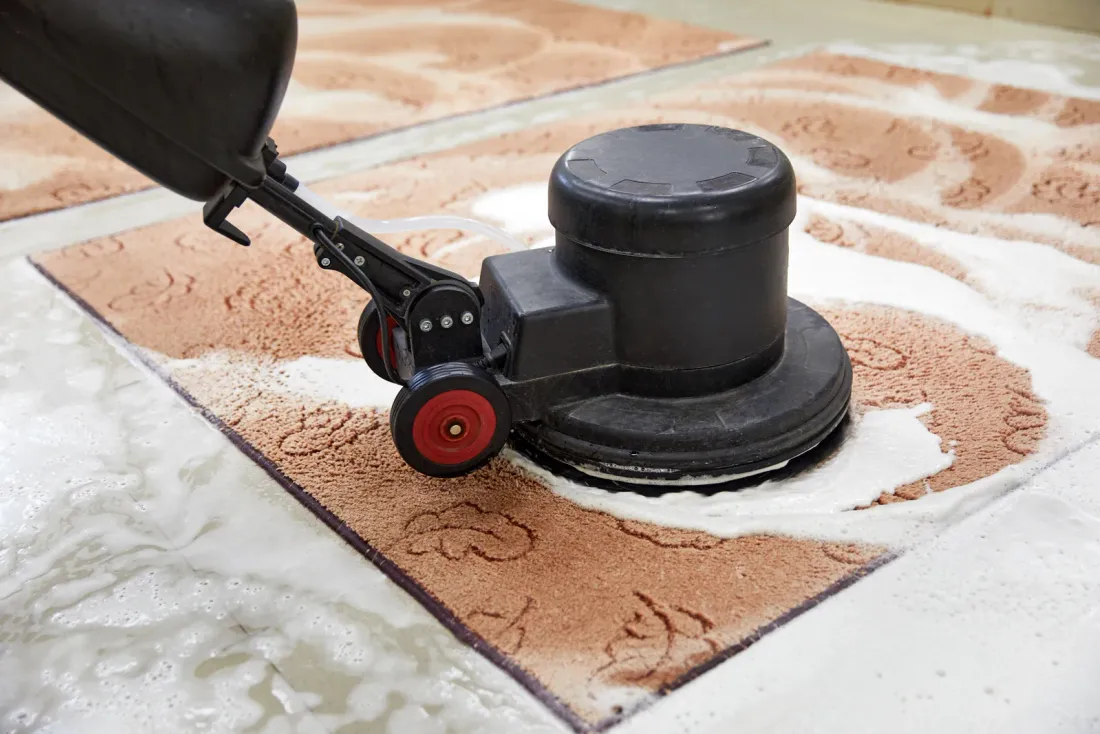
Water on sealed concrete reduces a forklift's traction and lengthens its stopping distance. That is why drive aisles are cleaned with auto-scrubbers that recover solution as they go, leaving the floor nearly dry behind the machine, rather than with mops and buckets. Oil and hydraulic fluid spills are absorbed first and then scrubbed, never just pushed around.
A ride-on scrubber is a vehicle too. Its operator needs training on the machine, should follow the same traffic rules as lift trucks, use the horn at intersections and yield as the site's rules require. At the docks, nobody cleans inside a trailer unless its wheels are chocked or the vehicle restraint is engaged.
Daytime warehouse cleaning vs off-shift work
During operating hours, daytime cleaning should stay light: restrooms and breakrooms, trash and cardboard, spill response and dock sweeping between trailers. Machine scrubbing of main aisles, high dusting from lifts and deep cleaning of racking lanes belong to non-operating shifts or weekends, when the floor can be closed in large sections.
Summer adds one more consideration. Title 8 section 3396 applies to indoor workplaces where the temperature reaches 82 degrees Fahrenheit, and cleaning crews in a hot warehouse need water, rest and cool-down access like everyone else, which affects how long a scrubber operator stays on the machine.
How EBS works inside running warehouses
Large distribution buildings are a core part of EBS Maintenance's work, and the company has serviced more than 10 million square feet in total, including a single contract covering over 1 million square feet. Warehouse programs combine machine scrubbing, dock and bay cleaning, high dusting, and restrooms and break areas, with overnight and weekend schedules available so heavy work happens when lift traffic is lowest. Supervisors coordinate zone releases with your operations leads, and service logs and inspections are kept for your safety team.
Related questions
Still not sure? A supervisor can answer at the walkthrough.
Request a walkthroughAll questionsDo warehouse cleaners need forklift training?
Only if they will operate a forklift or other powered industrial truck. Title 8 section 3668 requires operator training and an evaluation before anyone drives one. Cleaners who only work around trucks need pedestrian safety training instead, covering walkways, crossings, blind corners and eye contact.
Is it safer to clean a warehouse at night?
It is safer for heavy floor work when the night shift has little or no lift traffic, because whole zones can be closed. In facilities that run around the clock, the safest time is whatever window operations can release for each zone, which may be a weekend or a gap between waves.
Who decides when a racking aisle is closed for cleaning?
The operations shift lead. The crew lead asks for a zone, operations closes it with chains, cones or a system lockout, the crew cleans it, and the zone is handed back explicitly. Cleaners should never enter an aisle that has not been released.
What should a cleaner do if a forklift enters a closed aisle?
Stop, move to a safe spot out of the truck's path, make eye contact with the operator and wait until the truck leaves. Then report it to the crew lead and the shift lead the same shift, because a closure that is not respected is a gap in the traffic plan.
Keep reading
Free site walkthrough
Talk to EBS about your facility
A few details and a supervisor calls you back the same business day.
- Call(949) 375-3305
- Emailinfo@ebsmaintenance.com
- HoursDaytime, evening, overnight and weekend schedules