
Day porter programs
Professional Day Porter Services: What to Expect
Anyone can push a cart through a lobby. A professional porter program adds written post orders, supervision, reporting and coverage when someone is out.
The short answer
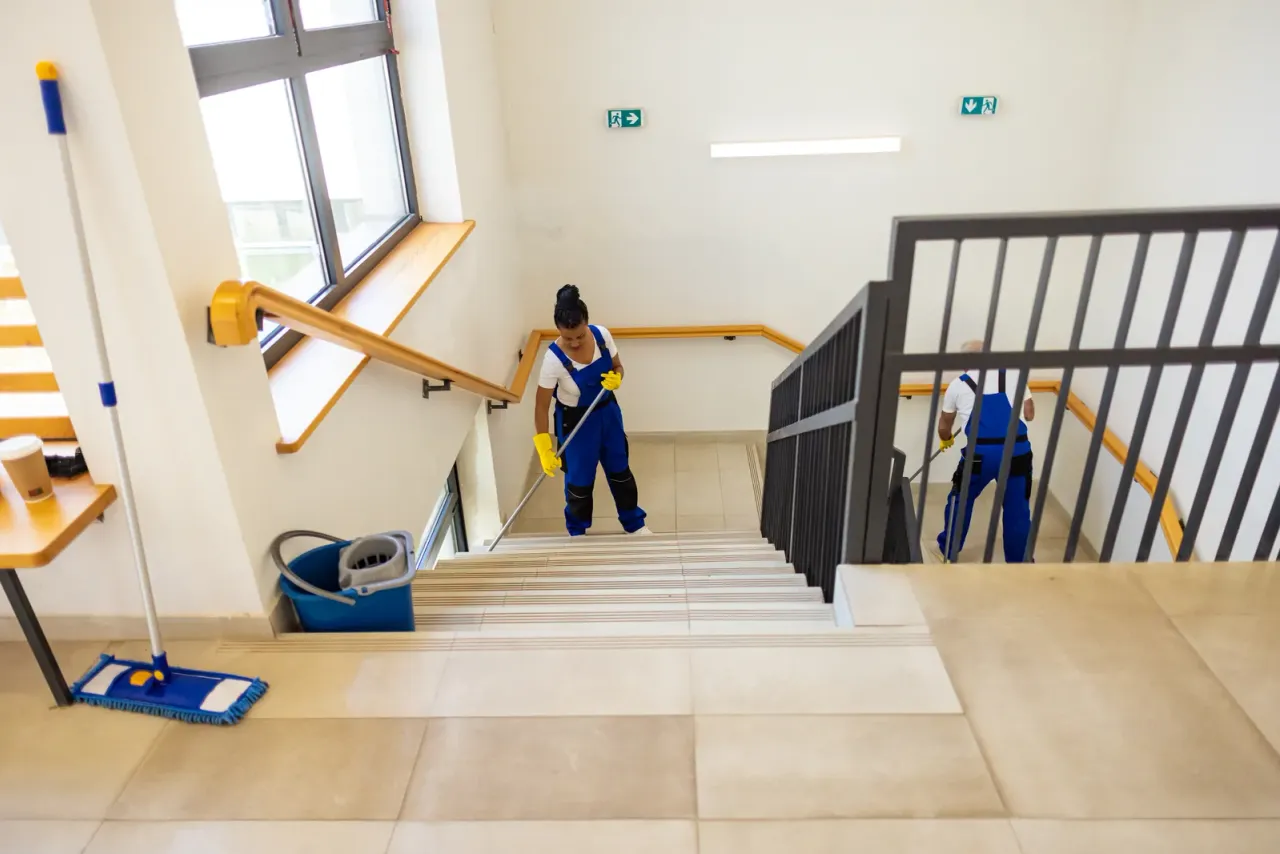
Professional day porter services put a uniformed, trained porter in your building during business hours under a written plan: set rounds for restrooms, lobbies and common areas, restocking to agreed levels, and immediate response to spills. What separates a professional program from simply adding a cleaner is the structure around the porter, including a supervisor who inspects the work, logs that show each round was done, a clear chain for requests, and trained relief when the porter is on break or absent.
What professional day porter services include
A day porter is the visible part of your cleaning program, working while tenants, staff and visitors are in the building. The job covers restroom checks and restocking, lobby and entrance upkeep, trash and liner service in common areas, touchpoint wipe-downs, and spill response. In many buildings it also covers conference room resets, amenity spaces and parking structure elevator lobbies.
The program around that job is what you are really buying. It should include post orders for each shift, a supervisor responsible for the account, documented rounds, a reporting channel for problems the porter finds, and a plan for breaks, absences and busy days. If a provider cannot describe each of those, you are hiring a person, not a program.
Uniforms, conduct and discretion
Porters work in front of your tenants and visitors, so appearance and conduct are part of the service. Expect a clean uniform with the company's name, visible identification, and a cart kept tidy and covered. Wet-floor signs should go down before mopping starts and come up when the floor is dry, not hours later.
Conduct standards matter as much as dress. A professional porter greets people, gives directions when asked and routes complaints to the right contact rather than debating them. On executive floors, in legal or financial suites and anywhere confidential material sits on desks, porters should know what not to touch, what not to read and when to come back later.
Post orders: the written plan for every shift
Post orders turn a porter's day into a sequence that can be checked. They list the rounds, the areas in each round, the restocking levels and the tasks that happen once a day. A simple structure for a weekday post looks like this, adjusted to the building's own peaks.
| Part of the day | Focus | Typical tasks |
|---|---|---|
| Opening | First impressions | Entrance glass, lobby floors, elevator cabs, restroom check before arrivals |
| Mid-morning | Restrooms and touchpoints | Restock, wipe counters and fixtures, door hardware, liner change in busy bins |
| Lunch peak | Food areas | Break room counters and tables, trash and organics, restroom recheck |
| Afternoon | Common areas | Conference room resets, stairwell check, spot-clean glass and spills |
| Closing | Handoff | Final restroom round and a written note to the night crew |

Supervision and reporting you should receive
A porter working alone all day needs someone checking the work and backing them up. A field supervisor should visit on a set schedule, inspect against the post orders and talk with your building contact, and those inspections should be recorded rather than remembered.
Reporting should flow in both directions. Round logs (often a sign-off sheet in each restroom or a digital record) show when areas were checked. Porters are well placed to spot problems before tenants do, such as a running toilet, a cracked tile, a ceiling stain or a door that no longer latches, and a professional program has a way to report them to building management the same day. Ask, too, for one rule on who can direct the porter, so tenant requests do not pull them off their rounds.
Hiring a day porter: coverage and the first 30 days
A full-day post is not one person standing in one place for the whole shift. California's meal and rest break rules mean every porter steps away during the day, so the post orders should say what happens to the building during those breaks, whether that is relief from another porter or simply scheduling breaks outside peak times.
Absences need a named answer too. Backup porters should be trained on your building before they are needed, not on the morning they arrive. For tenant events, move-ins and holiday periods, a good provider adds hours ahead of time rather than leaving one porter to absorb the extra traffic.
The first month tells you whether the program is working. By the end of it you should have post orders you have reviewed and signed off, a porter introduced to your front desk and engineering staff, at least a few recorded supervisor inspections, round logs you can read, and a short list of issues raised and closed. If rounds need to shift to match real traffic, that adjustment should happen in writing during this period.
How EBS staffs a porter post
EBS Maintenance porters are trained, vetted, uniformed and background-checked, and they work from post orders written after a walkthrough of your building. Field supervisors record inspections in eHub and track follow-up, backup staff cover absences, and porter coverage can be paired with evening or overnight janitorial. Posts are staffed from the Corona office across the company's Southern California service areas; call (949) 375-3305 to start with a walkthrough.
Related questions
Still not sure? A supervisor can answer at the walkthrough.
Request a walkthroughAll questionsWho directs a day porter during the day?
One named building contact should, usually the property or facility manager. Tenants can make requests through that contact or a set request channel, which keeps the porter on their rounds and stops competing instructions.
What should I look for in a day porter service company?
Look for written post orders, a named supervisor who inspects and records the work, trained backup staff, a clear uniform and conduct standard, and a reporting method for building issues. Ask to see a sample post order and inspection record before you sign.
Is one day porter enough for a multi-tenant building?
Often, for a mid-size building with one lobby and a few restroom cores. Larger buildings, several entrances, busy amenity floors or food service usually need more hours or a second porter at peak times. A walkthrough that maps the rounds will show whether one post can cover them.
Keep reading
Free site walkthrough
Talk to EBS about your facility
A few details and a supervisor calls you back the same business day.
- Call(949) 375-3305
- Emailinfo@ebsmaintenance.com
- HoursDaytime, evening, overnight and weekend schedules