
Two roles compared
Day Porter vs. Cleaner: What Is the Difference?
Both keep a building clean, but they work different hours, carry different equipment and are judged by different results. Here is how the jobs divide.
The short answer
The difference in day porter vs. cleaner comes down to timing and purpose. A cleaner, often called a night janitor, works after hours and completes the full cleaning of the building room by room from a set task list. A day porter works while the building is open, keeping restrooms stocked, lobbies presentable and spills handled as they happen. Busy buildings usually need both: the cleaner restores the building overnight and the porter holds that standard through the day.
Day porter vs. cleaner, side by side
The two jobs share a few tasks, but they are organized in opposite ways. A cleaner's shift is measured by what got finished. A porter's shift is measured by what never turned into a complaint. The comparison below shows how that plays out in a typical office or medical building.
| Aspect | Day porter | Cleaner (night janitor) |
|---|---|---|
| When they work | Business hours, with occupants present | Evenings or overnight, usually in an empty building |
| Main goal | Keep appearance and supplies steady all day | Complete the full scope on every visit |
| How work is organized | Repeating rounds plus on-call requests | Room-by-room task list set by frequency |
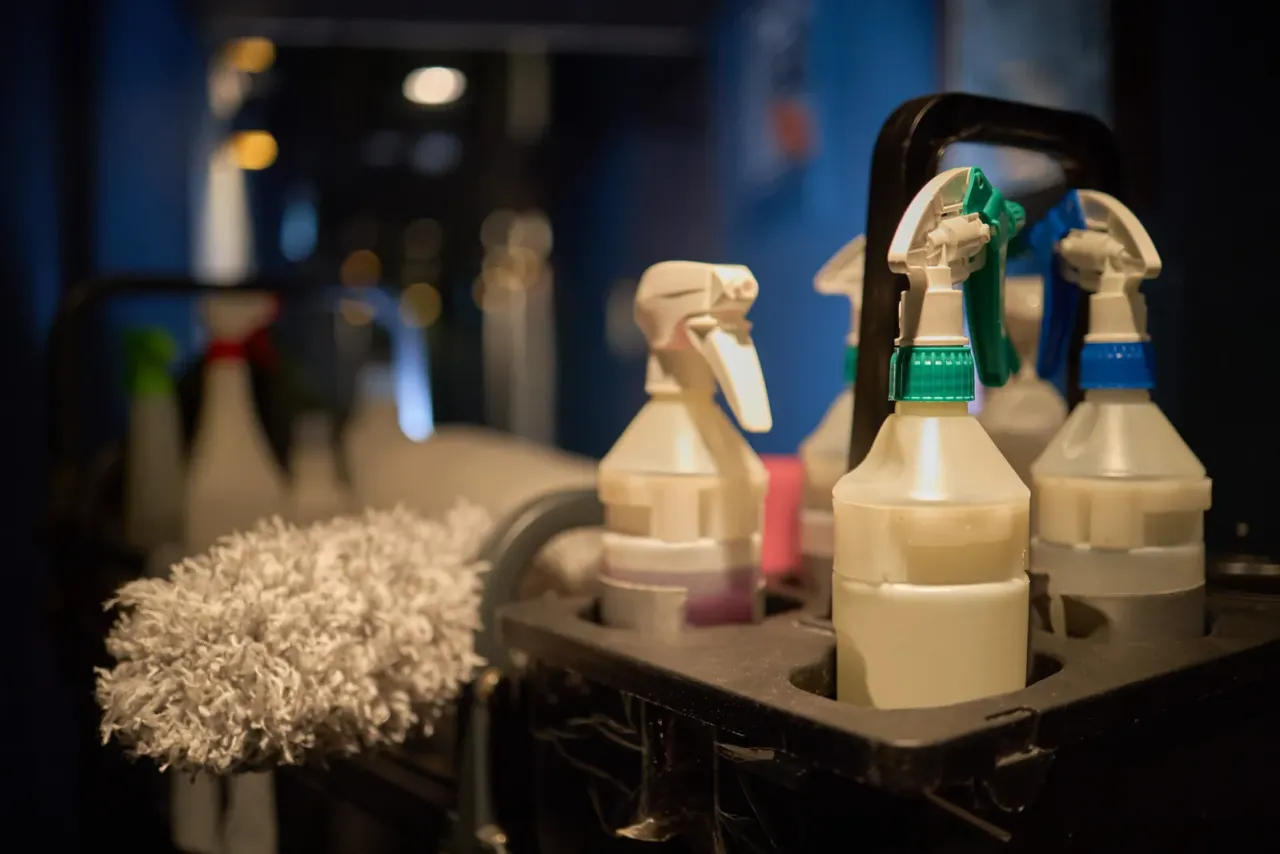
| Typical equipment | Light cart, caddy, wet-floor signs, small vacuum | Backpack or upright vacuums, mop systems or auto-scrubbers, full chemical kit |
| Visibility | Seen by tenants, patients and visitors | Rarely seen by occupants |
| How results are judged | Stocked restrooms and a presentable lobby at any hour | Inspection of completed tasks the next morning |
Day porter duties, listed
Porter duties are normally written as a route with timed checks, plus a list of tasks done on request. The items below cover what most office, medical and mixed-use buildings include. Industrial sites, venues and hotels add their own, and the frequency of each check depends on traffic.
- Restroom checks on a set interval: restock paper and soap, wipe counters, clear floors, report broken fixtures
- Lobby and entry upkeep: glass doors, directory boards, seating and entry mats
- Touch-point wiping: door handles, elevator buttons, handrails and shared counters
- Break room resets after peak use: counters, sinks, appliance fronts and coffee stations
- Trash and recycling emptied and relined before bins overflow, sorted to building rules
- Spill and mess response on calls from tenants or the front desk
- Conference room turnovers between meetings
- Exterior policing of entries, walkways, smoking areas and garage lobbies
- Elevator cab floors, walls and panels
- Supply tracking, with low stock reported through the building's ordering process
- Reporting leaks, burned-out lights, damage and trip hazards to the property manager
What a night cleaner does that a porter usually does not
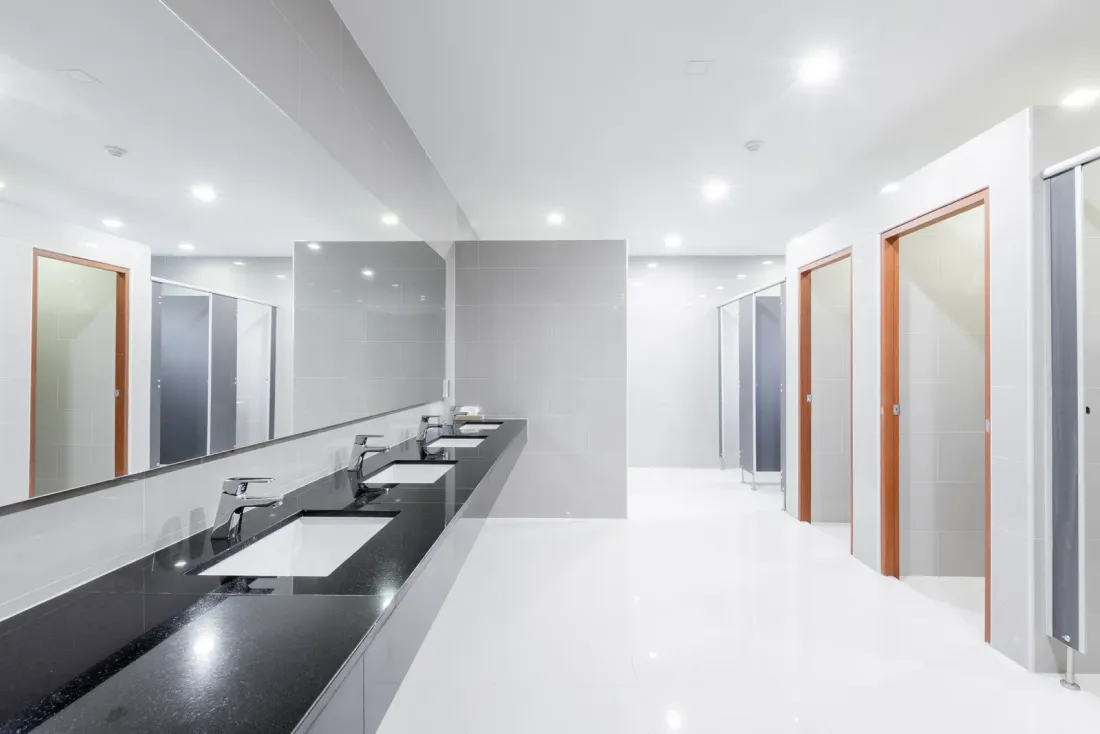
The night cleaner handles the work that is loud, wet or intrusive. Full vacuuming of every carpeted room, mopping or machine scrubbing of hard floors, detailed restroom cleaning down to partitions and floor drains, dusting of desks and ledges, and emptying every bin in private offices all go faster and safer in an empty building. A wet corridor is a slip hazard at noon and a non-issue at midnight.
Access is the other reason. Many tenants do not want anyone in private offices, labs or records rooms while staff are working there, so the full clean of those spaces is saved for after hours. The same goes for periodic work like refinishing hard floors, extracting carpet and dusting high ledges: it waits for evenings and weekends.
Day porter vs. janitor: where the work overlaps and hands off
Restrooms and trash are shared territory, and that is where problems start if nobody writes down who owns what. If the porter restocks at four in the afternoon, the night crew still checks every dispenser before leaving. If the night crew finds a stain it cannot remove, it should be logged so the porter does not spend the morning on it. A short shift note or log passed between crews keeps both sides informed.
Job titles vary by sector. Schools and public agencies often say custodian, office buildings say janitor or cleaner, and property managers and hotels use porter for the daytime role. The titles matter less than the scope: each task should have a named shift and a frequency.
Signs your building needs a porter as well as a cleaner
A small office with light visitor traffic and one or two restrooms is usually fine with a night cleaner alone. Multi-tenant buildings, medical buildings with waiting rooms, properties with public lobbies and sites that run more than one shift tend to need daytime coverage too. These signals usually show up first:
- Restrooms run out of paper or look neglected by early afternoon
- The lobby looks worn by midday, especially after rain or a busy morning
- Spills and messes wait until the evening crew arrives
- Front desk or office staff end up doing cleanup between their own tasks
- Tenant complaints cluster around the same areas and times of day
How EBS covers both shifts
EBS Maintenance provides janitorial crews and day porters, so one written scope can assign each task to a shift and a frequency. Both roles are filled by trained, vetted, background-checked staff in uniform, and supervisors inspect day and night work through eHub records with corrective actions tracked. Backup staff cover absences on either shift. To see how a split program would fit your building, book a walkthrough by calling (949) 375-3305.
Related questions
Still not sure? A supervisor can answer at the walkthrough.
Request a walkthroughAll questionsIs a day porter the same as a janitor?
No. Both are cleaning roles, but a janitor typically works after hours through a full task list, while a day porter maintains the building during business hours and responds to requests. Many contracts include both, and the same company often staffs each shift under one scope.
Can a day porter handle deep cleaning?
Not usually during occupied hours. Carpet extraction, floor scrubbing and high dusting are noisy, wet or disruptive, which is why they belong to the evening or weekend calendar. A porter can take on small periodic tasks, such as wiping baseboards in a quiet corridor, when the route leaves time.
Do day porters need different training from night cleaners?
They share the core training in products, equipment and safety, but porters also need to work around people: placing wet-floor signs, pausing for occupants, speaking with tenants and handling requests politely. In medical buildings, porters also learn which areas they may enter during patient hours.
Keep reading
Free site walkthrough
Talk to EBS about your facility
A few details and a supervisor calls you back the same business day.
- Call(949) 375-3305
- Emailinfo@ebsmaintenance.com
- HoursDaytime, evening, overnight and weekend schedules