
Touchpoint frequency
How Often Should High-Touch Surfaces Be Disinfected at Work?
A surface-by-surface schedule for door hardware, restrooms, break rooms and shared devices, and the conditions that call for more passes.
The short answer
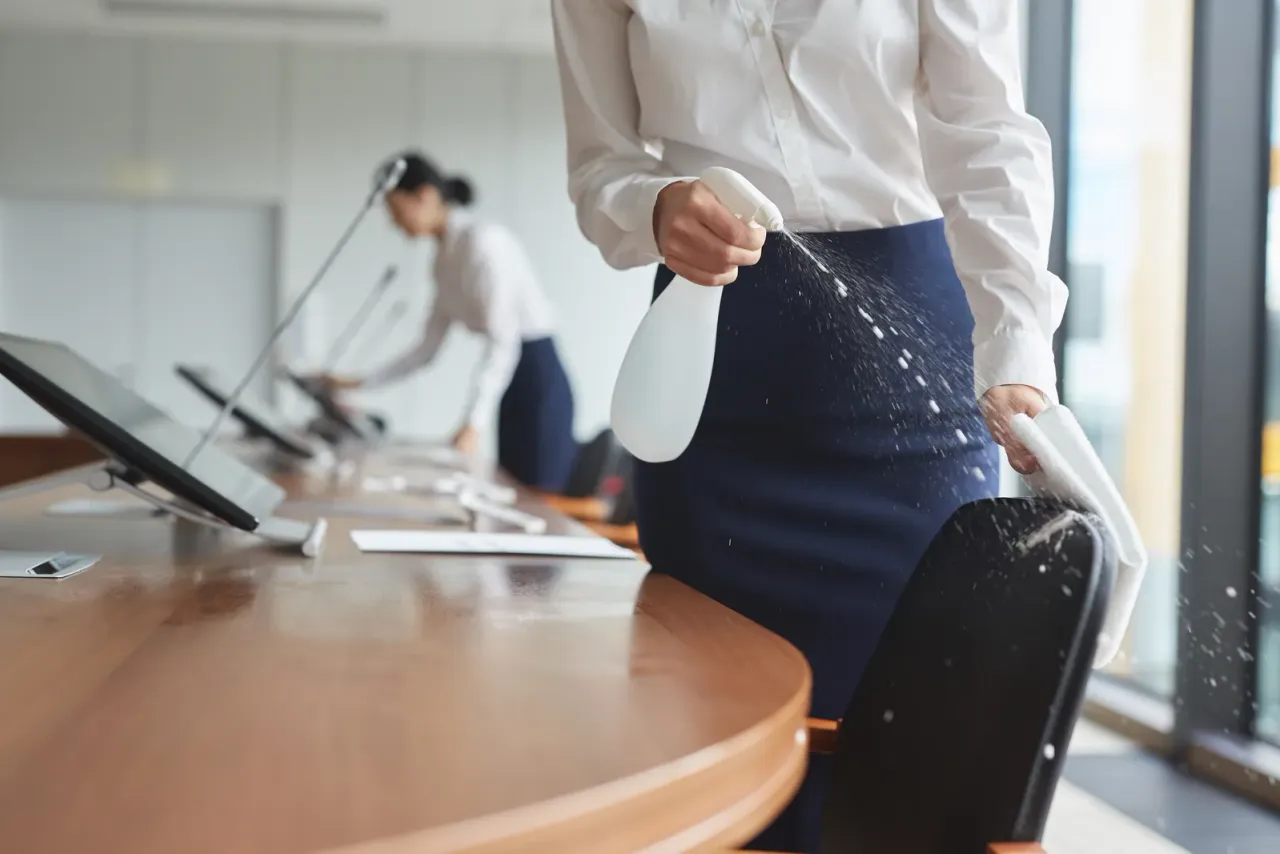
In most workplaces, you should disinfect high-touch surfaces such as door handles, elevator buttons, restroom fixtures and shared equipment at least once a day, and more often where many people share them. Busy restrooms, lobbies, break rooms and shared devices usually get one or more extra passes during occupied hours, and frequency should rise during cold and flu season or after someone goes home sick. Each pass only works if the disinfectant stays wet for the contact time printed on its label.
How often to disinfect high-touch surfaces, surface by surface
Frequency should follow how many different hands touch a surface between cleanings, not how dirty it looks. A door push plate at a building entry may be touched hundreds of times in a morning, while a desk assigned to one person is touched mostly by that person. The matrix below is a starting point that a facility manager can adjust after watching how the building is used.
| Surface | Light occupancy | Typical busy workplace | Flu season or illness on site |
|---|---|---|---|
| Entry doors, push plates, pulls | Nightly | Nightly plus a midday pass | Nightly plus several daytime passes |
| Elevator call and car buttons | Nightly | Nightly plus a midday pass | Nightly plus several daytime passes |
| Restroom flush valves, faucets, stall locks | Each service visit | Nightly plus daytime checks | Every restroom check |
| Break room appliance handles, coffee machines | Nightly | Nightly plus after the lunch peak | Nightly plus after each meal peak |
| Shared keyboards, kiosks, touchscreens | Nightly | Between users or by shift | Between users |
| Conference tables, remotes, room panels | Nightly | Nightly plus between booked meetings | Between meetings |
| Stair rails and handrails | Nightly | Nightly | Nightly plus a daytime pass |
| Assigned personal desks | Weekly on cleared surfaces | Nightly on cleared surfaces | Nightly on cleared surfaces |
What should raise or lower your workplace disinfection frequency
CDC guidance for facilities treats regular cleaning of high-touch surfaces as the baseline and says high-traffic spaces may need more frequent cleaning or disinfection in addition to cleaning. It also calls for disinfecting areas where someone has obviously been ill. In practice, five conditions move the schedule up or down.
- Number of different users per surface: public-facing counters outrank private offices
- Season: respiratory illness in Southern California usually peaks in late fall and winter
- Known illness: a sick employee, a vomiting incident or a local health department notice
- Vulnerable occupants: clinics, childcare rooms and senior programs justify a tighter schedule
- Food handling: break rooms where staff prepare meals need more passes than a coffee station
Clean first, then disinfect: why one wipe is not enough
Disinfectants are tested on prepared surfaces, and visible soil (skin oil, food residue, dust) shields germs from the active ingredient. A surface with grime on it should be cleaned first, then disinfected. A one-step cleaner-disinfectant can do both on lightly soiled surfaces if its label allows that use.
The other half is contact time, sometimes called dwell time: the number of minutes the surface must stay visibly wet to achieve the kill claims on the label. A quick spray-and-wipe that dries in seconds may not disinfect at all. Products with shorter contact times, or wipes that hold enough liquid to keep the surface wet, make a frequent touchpoint schedule realistic.
Food-contact surfaces follow a different rule
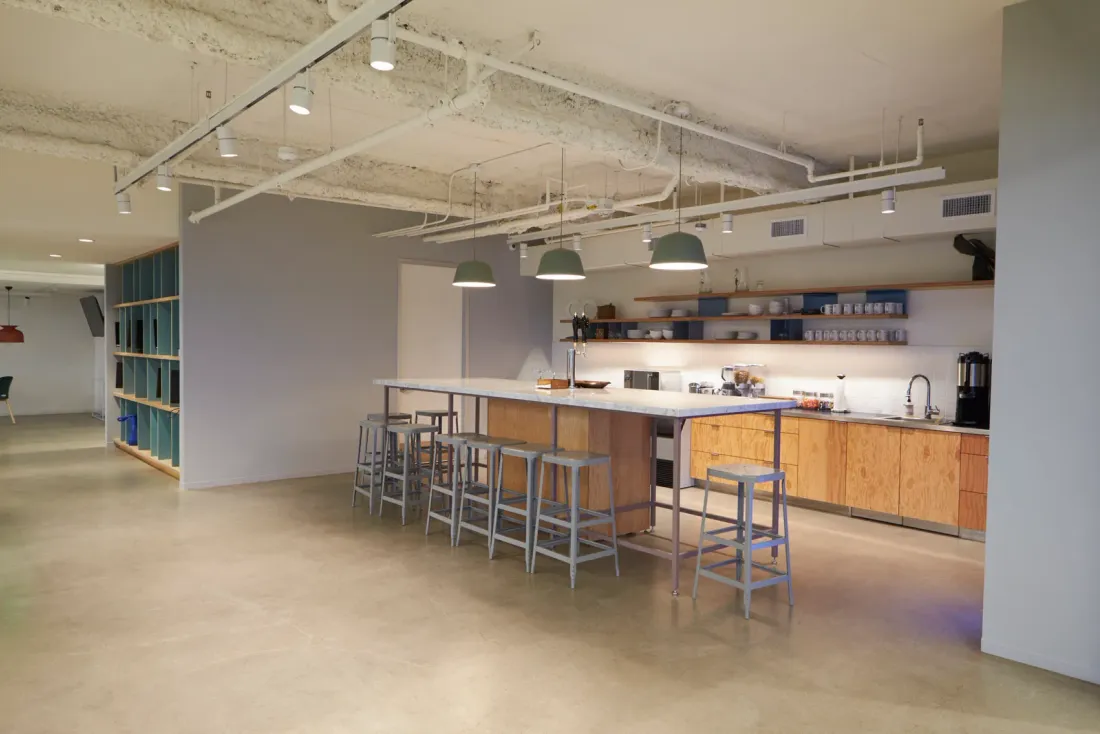
Break room counters where people set food down directly, cutting boards and the inside of shared refrigerators are food-contact surfaces. Many disinfectant labels require a potable water rinse after use on those surfaces, or call for a food-contact sanitizer instead. Read the directions for food-contact use before adding a product to the break room routine, and keep the restroom disinfectant and its cloths out of the kitchen entirely.
Turning a touchpoint cleaning schedule into something you can check
A frequency chart only helps if someone owns each pass. Write a numbered touchpoint list for each floor (every door, button panel, rail, dispenser and shared device), assign each daytime pass to a named shift or day porter, and have that person initial a log on completion. Supervisors can then spot-check the list instead of guessing.
Electrostatic spraying can supplement the schedule for large rooms with many surfaces, but it does not replace wiping. Spraying does not remove soil, so the touchpoints still need a cloth on them first.
How EBS sets up touchpoint disinfection
EBS Maintenance builds the touchpoint list into the written scope during the walkthrough, then assigns the passes to the nightly crew, a day porter or both. Disinfection uses EPA-approved products on high-touch surfaces, with crews trained to respect the label contact time, and full-space electrostatic application is available when a situation calls for it.
Disinfection can run as a one-time service, a recurring schedule or an after-hours visit, and supervisors confirm the touchpoint passes during their routine inspections.
Related questions
Still not sure? A supervisor can answer at the walkthrough.
Request a walkthroughAll questionsIs disinfecting once a day enough for most offices?
For a typical office with assigned desks, a thorough nightly cleaning and disinfection of touchpoints is usually enough outside flu season. Add daytime passes in restrooms, lobbies and break rooms when the building is busy, when many visitors come through, or when illness is going around the office.
Should personal desks be disinfected every night?
Usually not. Assigned desks are touched mostly by one person, so a nightly wipe of cleared surfaces is enough, and crews generally do not move personal papers or equipment. Shared and hot desks are different and should be wiped between users, because each new person touches the same surfaces.
What should happen after an employee goes home sick?
Clean and then disinfect the areas that person used, including their workstation, the restrooms and break room surfaces nearby and any shared equipment they touched. Use a product whose label lists the type of organism you are concerned about, and follow any instructions from your local health department.
Does electrostatic spraying replace wiping high-touch surfaces?
No. An electrostatic sprayer applies disinfectant evenly, but it does not lift soil, and soil protects germs from the product. Touchpoints still need to be cleaned with a cloth before or as part of disinfection. Spraying is a supplement for large rooms or after illness, not a substitute.
Do disinfectant wipes count as disinfecting?
Yes, if the wipe is an EPA-registered disinfectant and the surface stays wet for the full contact time on its label. One wipe that is wrung dry after a few surfaces stops disinfecting, so use a fresh wipe whenever the surface no longer stays visibly wet.
Keep reading
Free site walkthrough
Talk to EBS about your facility
A few details and a supervisor calls you back the same business day.
- Call(949) 375-3305
- Emailinfo@ebsmaintenance.com
- HoursDaytime, evening, overnight and weekend schedules