
Office cleaning frequency
How Often Should an Office Be Cleaned?
Most offices do not need the same frequency everywhere. Restrooms and kitchens set the pace; private offices and storage can wait.

The short answer
How often an office should be cleaned depends on headcount and use. A busy office with a full staff on site most days usually needs janitorial service every business day, typically in the evening. A small or lightly used office often does well with two or three visits a week. Restrooms, breakrooms and trash run on every visit, desks and floors several times a week, and carpet extraction and floor refinishing on quarterly to annual cycles.
Office cleaning frequency by area
The frequency that matters is the one for each area, not one number for the whole suite. A janitorial scope lists every area with its own frequency, so the crew spends its time where the dirt and the complaints actually come from.
| Area | Busy office (most staff on site) | Small or hybrid office |
|---|---|---|
| Restrooms | Every business day, porter checks midday | Every visit |
| Breakroom and kitchen | Every business day | Every visit |
| Trash and recycling | Every business day | Every visit |
| Lobby and reception | Every business day | Every visit |
| Open desks and shared workstations | Every business day | Every visit |
| Private offices | Two or three times a week | Weekly |
| Vacuuming high-traffic carpet | Every business day | Every visit |
| Hard floor mopping | Every business day | Every visit |
| Interior glass and partitions | Weekly | Every other week |
| Carpet extraction | Two to four times a year | Once or twice a year |
| Hard floor scrub and recoat or refinish | Quarterly to twice a year | Once or twice a year |
What pushes an office toward daily service
Restroom use is the strongest signal. Once a floor has enough people that restrooms need restocking before the next visit, every-other-day service starts producing complaints, and the fix is either daily janitorial or a day porter who covers restrooms during business hours.
Food is the second. Offices with a full kitchen, catered lunches or a coffee bar generate organic waste and sticky counters every day, and California's SB 1383 organics rules mean that waste has to be sorted and removed on a schedule rather than left for the end of the week.
- Most of the staff on site four or five days a week
- Clients or patients visiting the office
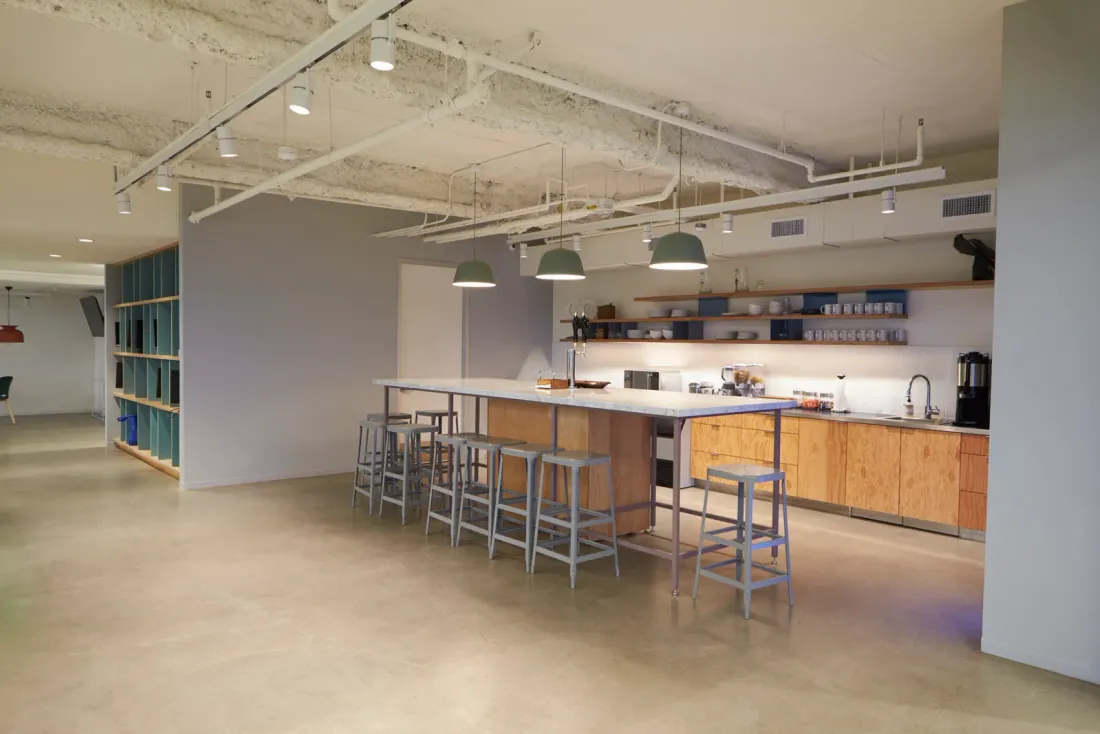
- A shared kitchen, catered meals or a coffee station
- Carpeted open plans with heavy foot traffic
- Shared desks used by different people on different days
When two or three visits a week are enough
A small professional office with a handful of people, a single restroom and no kitchen often does well with service two or three evenings a week. The same applies to hybrid offices where most people come in on the same two or three days: schedule the visits for the evenings after those days and the space stays presentable for the next one.
The risk with fewer visits is the gap between them. Trash and restrooms are usually the first things to slip, so many lighter schedules add a short mid-week trash and restroom check rather than a full clean.
Why a recurring schedule beats occasional deep cleans
An office that is cleaned on a fixed schedule rarely needs a rescue clean. Dust, grit on carpet and soap scum in restrooms build up slowly; regular service removes them before they set, which also extends the life of carpet and floor finish.
A recurring program also keeps the same crew in the building. People who clean the same suite every week learn where the problem areas are, which doors stay locked and who to call, and a supervisor can inspect against the same checklist each time. Occasional cleaning starts from scratch on every visit.
How the frequency is set for your office
At a walkthrough, a supervisor looks at headcount, the days people are actually in, restroom and kitchen use, floor types and how the space is presented to visitors. The result is a scope that lists each area with its frequency and a service window, usually evenings or overnight so cleaning never interrupts work.
Frequencies are not fixed forever. After the first month of service, the schedule can be adjusted area by area: more often where complaints show up, less often where the space stays clean.
Related questions
Still not sure? A supervisor can answer at the walkthrough.
Request a walkthroughAll questionsShould an office be cleaned every day?
A busy office with most of its staff on site most days usually should be, at least for restrooms, kitchens, trash and high-traffic floors. Private offices and low-use rooms can be done less often within the same daily program.
Is weekly office cleaning enough?
Weekly service works for very small offices with few people and no kitchen. Anywhere with regular restroom use or food, a week between visits usually means overflowing trash and restrooms that need attention before the crew returns.
How often should office carpets be deep cleaned?
Vacuum high-traffic carpet on every visit, and plan hot-water extraction or another deep-cleaning method two to four times a year for busy offices, or once or twice a year for quiet ones. Entry mats and walkways may need spot cleaning in between.
Can we start with fewer visits and add more later?
Yes. A recurring janitorial program can start at two or three visits a week and move to daily service as headcount or use grows. The scope lists frequencies by area, so changes can be made one area at a time.
What time of day is office cleaning done?
Most recurring office cleaning happens in the evening or overnight, after staff leave. Day porters can cover restrooms, kitchens and lobbies during business hours when a building needs attention while it is occupied.
Keep reading
Free site walkthrough
Talk to EBS about your facility
Tell us about the building and how often you need cleaning. A supervisor calls you back the same business day.
- Call(949) 375-3305
- Emailinfo@ebsmaintenance.com
- HoursDaytime, evening, overnight and weekend schedules